- Introduction
- What Makes Japanese Motorcycle Culture Unique
- The History of Japanese Motorcycles
- The Philosophy Behind Japanese Motorcycles
- Motorcycle Touring Culture in Japan
- Best Motorcycle Routes in Japan
- Japanese Rider Lifestyle
- Garage and Custom Culture
- Why Hamamatsu Is the Heart of Motorcycle Culture
- How to Experience Motorcycle Culture in Japan
- This Is Not a Trip. This Is a Turning Point.
- Japan: A Rider’s Dream Destination
- Conclusion
- RELATED ARTICLES
Introduction
Imagine riding through a silent mountain road in Japan at 7:00 AM.
The air is sharp. The road is perfectly smooth. There are no cars, no noise—just you, your motorcycle, and an endless sequence of flowing curves.
As you ride, something feels different.
This is not just about speed or performance.
It’s not just about machines.
In Japan, motorcycles are part of a deeper culture—one shaped by precision, discipline, and an almost obsessive attention to detail.
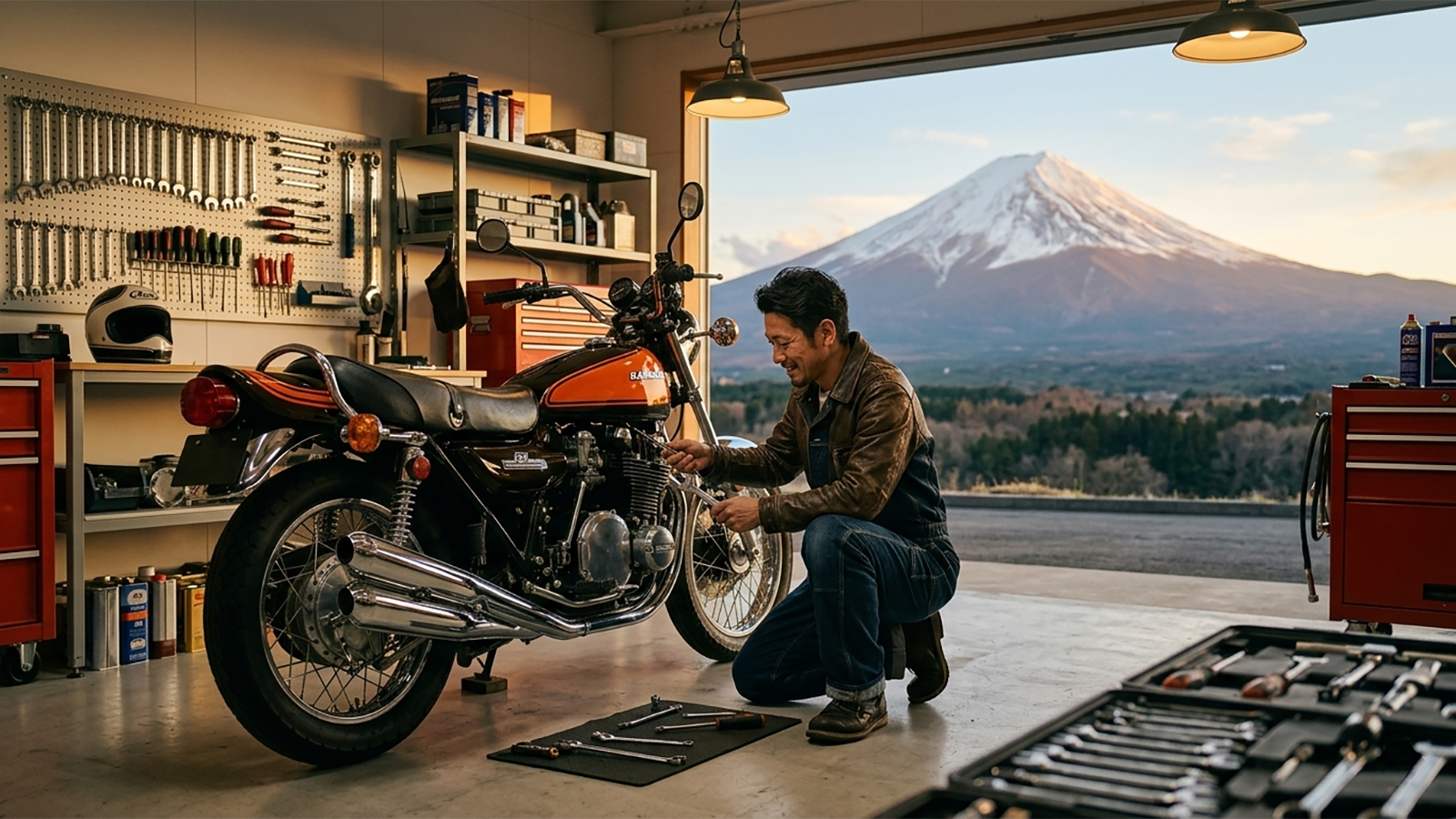
Riders maintain their bikes like craftsmen. Garages are treated as personal sanctuaries.
Even a short ride can feel like a form of meditation.
And then there is Hamamatsu.
Within a radius of just 30–40 kilometers, this quiet city gave birth to Honda, Yamaha, and Suzuki—three of the most influential motorcycle manufacturers in the world.
This is not normal.
This is not coincidence.
This is culture.
This guide will take you inside that world.
Not just to understand it—but to experience it.
What Makes Japanese Motorcycle Culture Unique
Japanese motorcycle culture is not loud. It does not try to impress from a distance.
Instead, it reveals itself through details.
Precision in Everyday Life
In Japan, even motorcycles that are over 10 years old are often maintained in near-perfect condition.
Riders clean areas most people ignore—under the engine, inside wheel rims, and even small bolts.
This is not about showing off. It is about respect.
Perfection is not expected. But the pursuit of it never stops.
Quiet Discipline
In Japan, riding faster does not make you better. Riding with intention does.
Group rides are controlled and organized.
Riders maintain formation, avoid unnecessary noise, and follow rules strictly.
The culture values harmony over aggression.
The History of Japanese Motorcycles
Japan’s motorcycle industry began out of necessity.
Post-War Origins
After World War II, small engines were attached to bicycles to create affordable transportation.
The Rise of the Big Four
Honda focused on reliability and mass production.
Yamaha combined performance with design.
Suzuki advanced lightweight engineering from its origins in textile machinery.
Kawasaki pushed high-speed engineering and power.
By the 1970s, Japanese motorcycles dominated the global market.
The Philosophy Behind Japanese Motorcycles
At the core is Monozukuri—the philosophy of making things with precision and pride.
More Than Manufacturing
It includes continuous improvement, craftsmanship, and attention to detail.
This is why Japanese motorcycles feel balanced and reliable.
In Japan, you don’t just own a motorcycle. You build a relationship with it.
Motorcycle Touring Culture in Japan
Touring is central to Japanese motorcycle life.
In Japan, even a one-hour ride can feel more meaningful than a full day elsewhere.
Accessibility
Within 1–2 hours from major cities, riders can reach completely different environments.
From Tokyo to Hakone is about 80 km (90 minutes).
From Nagoya to the Gifu mountains is under 2 hours.
You can ride mountains, coastlines, and countryside in a single day.
Seasonal Riding
Spring offers cherry blossoms.
Summer brings coastal rides.
Autumn provides colorful mountain roads.
Winter is limited but still possible in warmer regions.
Best Motorcycle Routes in Japan
Izu Skyline (Shizuoka)
Length: approximately 40 km
Best time: early morning (6:30–9:00 AM)
Mount Fuji can be seen to the north.
Suruga Bay stretches to the west.
The Pacific Ocean appears to the east.
The road surface is smooth and traffic is minimal.
Hakone Turnpike
One of Japan’s most famous driving roads, known for smooth curves and scenic views.
Japanese Rider Lifestyle
Solo Riding
Many riders choose to ride alone.
It is intentional time for focus and reflection.
Group Touring
Group rides are structured with spacing, order, and mutual respect.
Garage and Custom Culture
Garages in Japan are not just storage spaces.
Personal Sanctuary
Even small garages are organized with extreme care.
Tools are placed precisely, and space is used efficiently.
Custom Culture
Japanese custom bikes focus on detail, balance, and minimal design.
Why Hamamatsu Is the Heart of Motorcycle Culture
Hamamatsu is one of the most unique motorcycle cities in the world.
Within 30–40 km:
Honda was founded in Hamamatsu.
Yamaha is located in nearby Iwata, about 20 km away.
Suzuki is headquartered in Hamamatsu.
This concentration of global manufacturers is extremely rare.
For riders, the area feels like a living museum.
This is not just where motorcycles are made. This is where their spirit was shaped.
How to Experience Motorcycle Culture in Japan
Start with the Shizuoka and Hamamatsu region.
Visit Yamaha headquarters in Iwata.
Ride coastal roads near Hamamatsu.
Explore mountain routes in Tenryu.
This area offers history, accessibility, and authentic riding culture.
Some people come to Japan to see motorcycles. Others come to understand them.
This Is Not a Trip. This Is a Turning Point.
Before coming to Japan, riding a motorcycle might have meant speed, freedom, or escape.
Weekend rides. Loud engines. Open highways.
But after experiencing Japan, something changes.
You begin to notice the details.
The silence. The precision. The intention behind every movement.
Riding is no longer just something you do. It becomes something you feel.
A short ride turns into a form of meditation. Maintaining your bike becomes a personal ritual.
The road is no longer a place to rush through—but a place to exist.
And it often starts in places like Hamamatsu and Shizuoka.
You travel across the world, step into the birthplace of legendary machines, and ride through landscapes that reshape how you think about motorcycles.
When you return home, your bike is the same.
But you are not. And that is the real reason people come here.
Japan: A Rider’s Dream Destination
Japan offers riders something rare.
Within one country, you can experience:
- Motorcycle manufacturers
- Scenic roads
- Rider cafes
- Gear brands
- Custom culture
This makes Japan a dream destination for motorcycle enthusiasts worldwide.
Conclusion
Japanese motorcycle culture cannot be fully understood through information alone.
It is experienced through riding, maintaining, and living with a motorcycle.
If you are looking for more than speed, Japan offers something deeper.
And once you experience it, it will change how you see motorcycles forever.
Japan does not just show you motorcycles. It changes your relationship with them.
RELATED ARTICLES
- Why Japanese Motorcycles Are Famous
- Why Japan Became the Motorcycle Capital of the World
- Motorcycle Pilgrimage in Hamamatsu
- Best Roads in Shizuoka
- Japanese Custom Builders
- Yamaha Factory Tour Guide
- Honda History in Japan
- Riding Rules in Japan
- Beginner Guide to Touring Japan
- Japanese Garage Lifestyle
- Motorcycle Events in Japan