- Introduction
- Who This Article Is For
- Best Time for Motorcycle Touring in Japan
- Japan’s Weather and Riding Seasons Overview
- Spring (March–May): The Beautiful Season Everyone Chooses
- Summer (June–August): The Season That Separates Tourists from Riders
- Autumn (September–November): When Japan Finally Lets You Ride
- Winter (December–February): Two Japans Most Riders Never Understand
- So, When Should You Actually Ride?
- Real Rider Experience
- Conclusion
- FAQ
- Related Articles
Introduction
Cold air.
A quiet coastal road.
Mount Fuji — sharp, white, exactly as you’ve always imagined it.
No crowds. No buses. No waiting.
Just the sound of your engine,
and a road that feels like it belongs only to you.
Most travelers avoid Japan in winter.
Too cold. Too risky. Not worth it.
That’s what they believe.
But here’s what they don’t know:
The Mount Fuji they came to see…
doesn’t exist in summer.
The snow is gone.
The shape feels different.
That iconic image — disappears.
The Fuji you remember from photographs?
It only appears in winter.
And on clear days,
you don’t need to climb anything.
You ride toward it.
Through dry air.
Empty roads.
And a silence you won’t find in any other season.
If you know where to go,
winter isn’t a limitation.
It’s the moment Japan becomes real.
Some riders come to Japan for Niseko’s powder snow.
But once you’ve had your fill of winter,
you don’t have to leave Japan behind.
Just head south.
Within a day,
you’re riding along the coast —
with Mount Fuji in front of you.
👉 For a complete travel plan including routes, costs, and rentals:
Ultimate Guide to Motorcycle Touring in Japan
Who This Article Is For
If you’ve ever thought:
- I want to see the real Mount Fuji — not the crowded version.
- I don’t want another predictable Japan itinerary.
- I’d rather ride a quiet road than stand in line for a photo.
Then this is your kind of journey.
This is for riders who don’t just want to visit Japan —
but to experience it in a way most people never will.
Best Time for Motorcycle Touring in Japan
Most guides will tell you this:
“Ride in spring or autumn.”
And they’re not wrong.
April, May, October, November —
comfortable weather, clear skies, easy riding.
If you want the safest, most predictable experience,
those are your months.
But here’s the problem.
That’s when everyone else goes.
The roads are busier.
The famous spots are crowded.
And the experience becomes… expected.
So the real question isn’t:
“When is the best time to ride in Japan?”
It’s this:
👉 Do you want the perfect conditions —
or a ride that actually feels like yours?
For route planning, check:
👉 Ultimate Guide to Motorcycle Touring in Japan
Japan’s Weather and Riding Seasons Overview
Japan is often described as a country with four seasons.
And that’s true.
But for riders, that description is too simple.
Because what really matters isn’t the season —
it’s where you are.
In the mountains, winter can shut everything down.
Snow, ice, closed roads.
But move just a few hours south,
and the story changes completely.
Dry air.
Clear skies.
Coastal roads you can ride all year.
The same country.
A completely different experience.
So instead of asking:
“What is Japan like in each season?”
Ask this:
👉 “Where in Japan does this season actually work for riding?”
That’s where the real journey begins.
Spring (March–May): The Beautiful Season Everyone Chooses
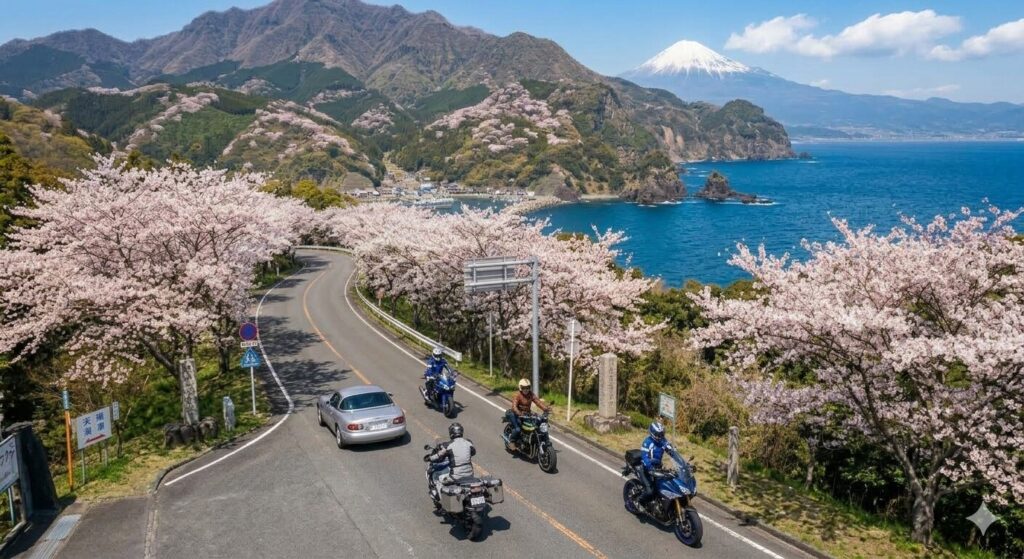
Spring is what most people imagine when they think of riding in Japan.
Soft air.
Cherry blossoms drifting across the road.
Mountains turning green again.
It’s easy to understand why riders choose it.
The weather is comfortable.
The roads are predictable.
Everything feels… right.
But there’s a trade-off.
You won’t be alone.
Famous routes fill up quickly.
Hotels book out.
And some of the most iconic spots feel more like destinations than journeys.
Spring gives you beauty.
But not always space.
If you’re chasing the classic image of Japan,
this is where you’ll find it.
→ Mount Fuji Motorcycle Touring Guide
→ Izu Peninsula Motorcycle Route Guide
Summer (June–August): The Season That Separates Tourists from Riders
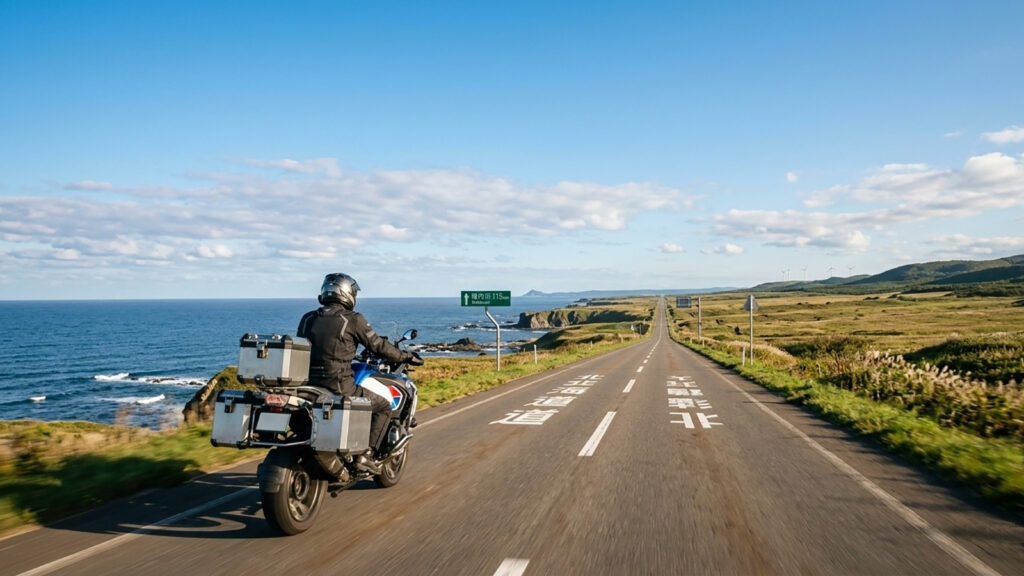
Heat rising off the asphalt.
Air that clings to your skin.
Engines running hotter than usual.
This is when most travelers start to struggle.
Japan in summer isn’t gentle.
It’s humid, heavy, and unpredictable.
And if you follow the typical tourist route,
you’ll feel it immediately.
Crowds. Traffic. Slow movement.
But riders who understand Japan don’t fight summer.
They change the map.
What Summer Really Feels Like
25–35°C (77–95°F)
Humidity that doesn’t let go
Sudden rain. Sudden sun. Repeat.
Mid-June to early July brings the rainy season.
Wet roads.
Foggy mountain passes.
Visibility that disappears without warning.
This isn’t the season for casual riding.
But it’s not a bad season either—
if you know where to go.
The Smart Escape: Go North
While the rest of Japan slows down,
Hokkaido opens up.
Cool air.
Dry roads.
Horizons that actually feel wide.
No congestion.
No pressure.
Just long, flowing roads built for distance.
This is where summer riding in Japan makes sense.
Where It Becomes Worth It
Furano — endless rolling fields
Biei — quiet roads through open countryside
Shiretoko Peninsula — raw, untouched coastline
Here, riding stops being survival.
It becomes freedom again.
→ Hokkaido Motorcycle Touring Guide
Autumn (September–November): When Japan Finally Lets You Ride
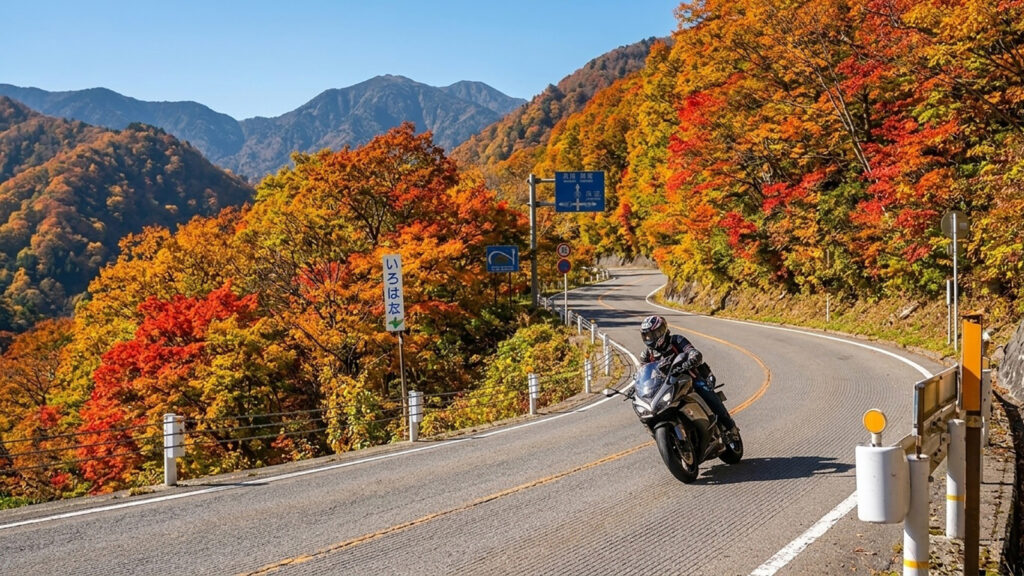
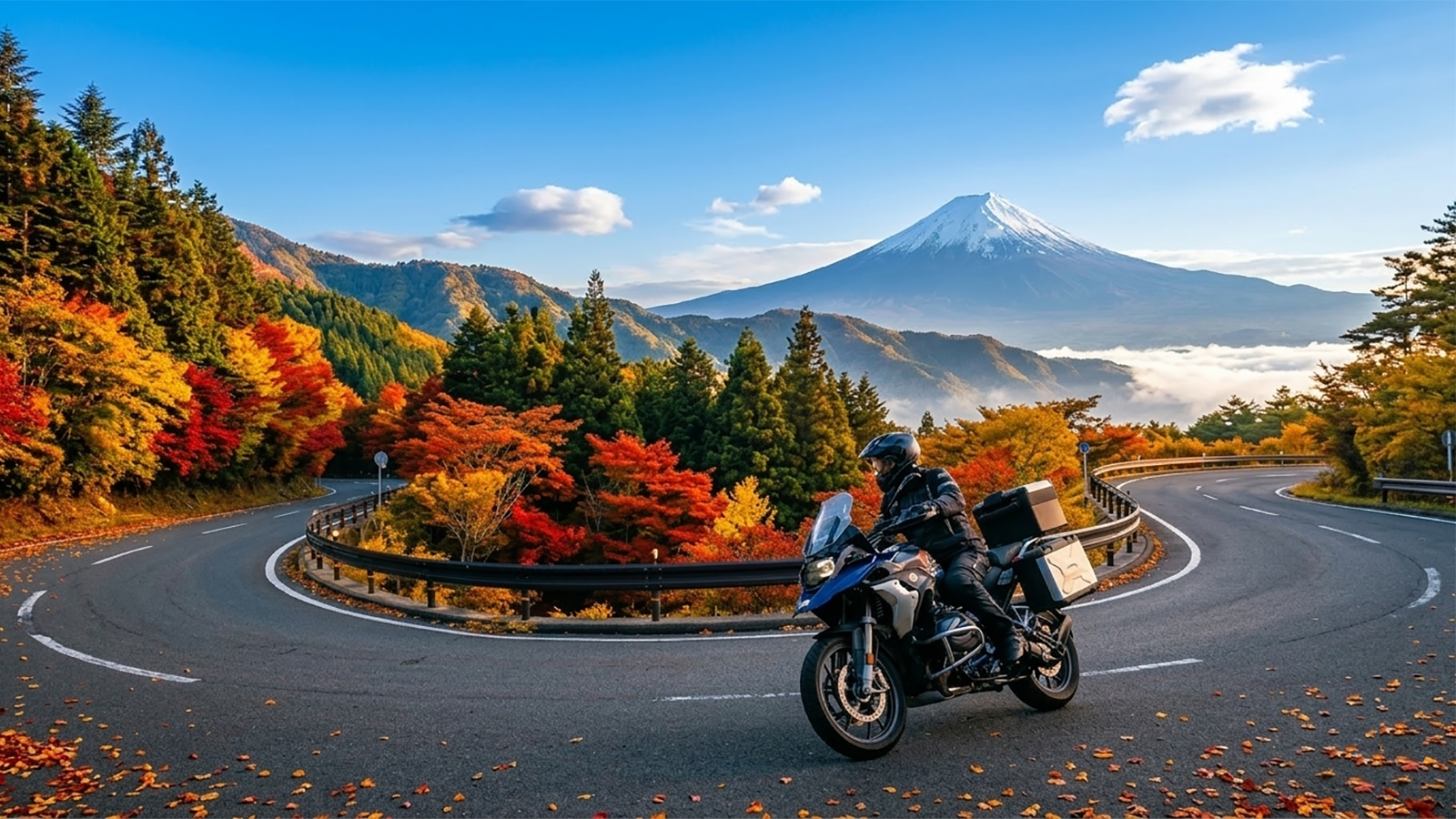
Cool air settling into the mountains.
Leaves turning slowly under a clear sky.
A road that feels… calm.
Not empty. Not silent.
Just balanced.
This is when Japan stops resisting you.
Spring is beautiful.
But it’s crowded. Predictable. Shared.
Autumn is different.
Fewer people.
Sharper air.
More space to ride at your own pace.
No rush. No pressure.
Just you, your machine, and a country finally in rhythm.
What Makes Autumn Different
10–20°C (50–68°F)
Dry air
Consistent weather
But numbers don’t explain it.
It’s the visibility.
Mountains feel closer.
Colors feel deeper.
Distances feel clearer.
You don’t just ride through Japan—
you understand its shape.
Where It All Comes Together
Hakone Turnpike — smooth curves with open views
Nikko Irohazaka — technical roads wrapped in color
Japanese Alps — long, quiet stretches at altitude
This is not aggressive riding.
It’s controlled. Intentional.
The kind of riding you remember years later.
When to Go
October to mid-November
Miss this window, and you miss the balance.
Too early, and it still feels like summer.
Too late, and winter starts closing the roads.
👉 Hakone Motorcycle Route Guide
👉 Nikko Motorcycle Route
👉 Mount Fuji 5th Station Motorcycle Guide
👉 Lake Hamana Touring Guide
Winter (December–February): Two Japans Most Riders Never Understand
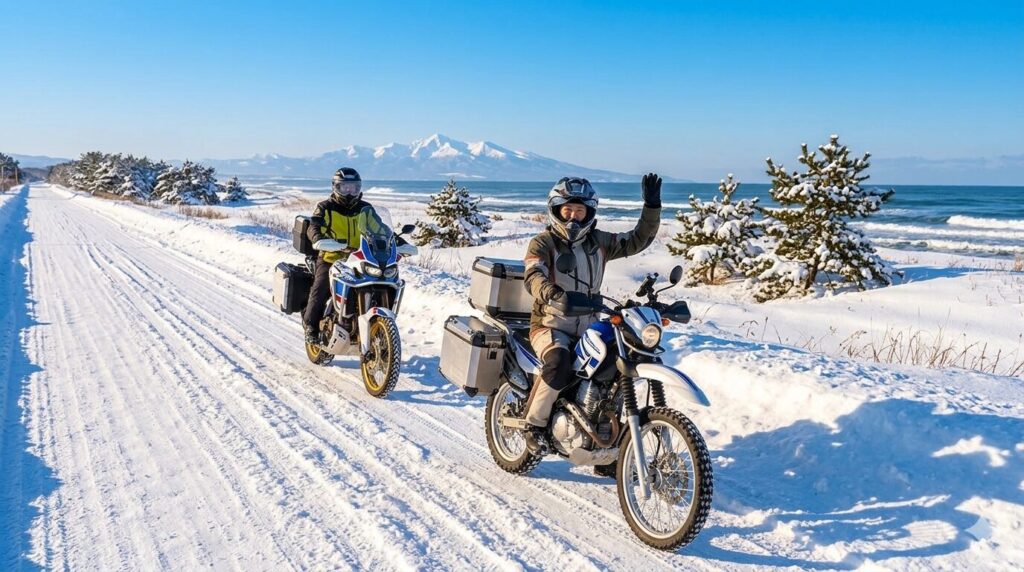
Cold air that cuts clean.
A horizon with no haze.
Mount Fuji, finally wearing the shape you’ve seen your whole life.
Winter in Japan doesn’t disappear.
It splits.
Most travelers avoid this season.
They imagine snow, danger, closed roads—
and they stop there.
But riders who understand Japan see something else.
Two completely different worlds.
The Extreme — Hokkaido
Silence that feels absolute.
Roads buried under snow.
A machine pushed to its limit.
This isn’t touring.
It’s commitment.
A New Year ride here isn’t about distance or comfort.
It’s about proving something to yourself.
And like Mount Fuji in winter—
underestimate it, and it will punish you.
Preparation isn’t optional.
It is the ride.
The Clear Japan — Pacific Coast (Shizuoka / Mie)
Now shift south.
The air changes.
Dry. Bright. Stable.
Roads are open.
Traffic is light.
And the sky—
crystal clear.
This is where winter becomes something else.
Not harsh. Not extreme.
Refined.
Why Riders Who Know Choose This
No snow in coastal Shizuoka.
No chaos.
No summer humidity.
Just clean air and long coastal lines.
And Mount Fuji—
not the summer version.
Not the red silhouette.
But the one the world remembers.
White. Sharp. Distant. Perfect.
You don’t climb it.
You ride with it.
From Izu to Hamamatsu,
from clear ocean roads to quiet industrial towns,
this is a version of Japan most travelers never reach.
Add to that:
Fresh winter seafood
Local ports with no crowds
Evening air that makes every stop feel earned
Mie offers another layer.
Ise Shrine — calm, grounded, timeless
Matsusaka — depth of flavor you don’t rush
Shima Peninsula — oysters in their best season
And if you understand routes—
ride, ferry, ride again.
A line from Hamamatsu to Irago,
then down toward Shima.
Not efficient.
But unforgettable.
Who Should Ride Japan in Winter
Not beginners.
Not checklist travelers.
This season belongs to riders who choose:
Clarity over convenience
Silence over crowds
Precision over comfort
👉 A winter road adventure in Hokkaido (Coming Soon)
👉 Winter Motorcycle Touring in Shizuoka (Coming Soon)
👉 Winter Motorcycle Touring in Mie (Coming Soon)
So, When Should You Actually Ride?
If you want comfort, go in spring.
If you want balance, go in autumn.
If you want to understand Japan differently—
choose winter, and choose carefully.
Because in Japan,
the season doesn’t just change the weather.
It changes the kind of rider you become.
Real Rider Experience
What It Actually Feels Like — Late October Ride
Late October.
You start the engine in the morning, and the air is already different.
Cool, but not cold.
Dry enough that every sound feels sharper.
In Hakone, the curves flow.
Not crowded. Not empty.
Just enough movement to remind you—
you’re not alone, but you’re not rushed either.
By the time you reach the Japanese Alps,
the light changes.
Mountains feel closer.
Colors stop being “scenery” and start becoming depth.
You don’t chase the road.
You read it.
I’ve ridden here in spring too.
Beautiful, yes.
But busy. Predictable.
Autumn gives you space.
And that space changes how you ride.
If you’re deciding between seasons—
this is the one where Japan stops performing for tourists,
and starts revealing itself to riders.
Conclusion
So—When Will You Ride Japan?
If you want something easy,
go in spring.
If you want something refined,
go in autumn.
If you want distance,
go north in summer.
But if you want to experience Japan differently—
not as a visitor,
but as a rider who understands the country—
there’s another choice.
Winter.
Not everywhere.
Not for everyone.
But in the right places,
at the right time,
Japan becomes quieter.
Clearer.
More honest.
The roads don’t change.
You do.
Choose your season carefully.
Because in Japan,
you’re not just planning a trip—
you’re deciding what kind of rider you want to be.
👉 15 Best Motorcycle Routes in Japan
👉 Lake Hamana Motorcycle Loop Guide
FAQ
When is the best month for motorcycle touring in Japan?
If you want comfort, choose spring.
If you want balance, choose autumn.
If you want something most travelers never experience—choose winter, but choose your region carefully.
Is summer a bad time to ride?
In most of Japan, yes—it’s hot, humid, and slow.
But in Hokkaido, it becomes one of the most open and liberating riding seasons you’ll find.
Can you ride in Japan during winter?
Yes—but Japan splits in two.
North becomes extreme.
South (like Shizuoka) becomes clear, quiet, and surprisingly rideable.
When can I see Mount Fuji the way I imagine it?
Not in summer.
The iconic white peak appears from December to March—
and on clear days, you don’t need to climb it. You ride toward it.