- Introduction
- Why Unagi Is Expensive (And Why It’s Worth It)
- Why Hamamatsu Is Famous for Unagi
- Best Unagi Restaurants in Hamamatsu (Top Picks)
- Local Hidden Gems
- How to Visit These Local Spots
- Is It Worth the Effort?
- How to Choose the Right Unagi Restaurant
- How to Order Unagi in Japan (Step-by-Step Guide)
- How to Order Unagi Without Confusion
- Unagi Eating Guide: Styles, Tips & Culture
- Common Mistakes to Avoid
- Travel Tips: Lines, Timing & Reservations
- Plan Your Perfect Unagi Experience
- Conclusion
- RELATED ARTICLES
Introduction
Hamamatsu is one of the best places in Japan to experience unagi (grilled eel).
But here’s the truth — this is not just about food.
Eating unagi in Hamamatsu is a complete cultural experience, shaped by nature, history, and craftsmanship.
From the waters of Lake Hamana to the precise grilling techniques perfected over generations, every bite tells a story.
This guide will not only show you the best unagi restaurants, but also help you order confidently, avoid common mistakes, and fully enjoy the experience.
Why Unagi Is Expensive (And Why It’s Worth It)
Many visitors are surprised by the price of unagi.
Typical cost:
- Unagi bowl: ¥2,500–¥4,000
This is because:
- Eel is carefully farmed
- Preparation takes time
- It is considered a premium dish
👉 It’s not everyday food — it’s a special experience
Why Hamamatsu Is Famous for Unagi
Lake Hamana is a unique brackish lake connected to the ocean.
This environment creates ideal conditions for eel growth.
Key reasons:
- Rich nutrients from both river and sea
- Stable water temperature
- Perfect for aquaculture
In the Edo period, travelers passing through the Tokaido road discovered the region’s eel and spread its reputation.
Later, Hamamatsu became a center of eel farming and production.
Today, unagi here represents:
- Nature
- Technique
- Travel culture
Best Unagi Restaurants in Hamamatsu (Top Picks)
Yaotoku (Near Hamamatsu Station)
Famous for Hitsumabushi-style eel.
Why it’s great:
- Interactive eating style
- Popular among international visitors
- Easy access
Unagi Fujita
A more refined dining experience.
- English menu available
- Calm atmosphere
- High-quality presentation
Unasumitei
Casual but authentic.
- Easy to enter
- Good balance of price and quality
Shibuki (Lake View)
Located near Lake Hamana.
- Beautiful scenery
- Great for photos
- Relaxed atmosphere
Kantarou
Known for charcoal grilling.
- Strong aroma
- Live cooking experience
Local Hidden Gems
What Makes These Restaurants Different
Unlike tourist-friendly restaurants, these places focus almost entirely on quality and tradition.
Offer a more local, authentic experience — but expect long lines.
Key characteristics:
Minimal tourist adaptation
Strong local reputation
High-level grilling techniques
Long wait times (often worth it)
Atsumi – A True Local Favorite
Atsumi is one of the most respected unagi restaurants in Hamamatsu.
What to expect:
- Long lines, especially during lunch
- Deep, rich flavor from carefully grilled eel
- A strong following among Japanese food enthusiasts
This is not a casual stop.
It’s a destination for those who want to experience unagi at a serious level.
Saku-me – A Hidden Gem Worth the Wait
Located near Lake Hamana, Saku-me is known as a “hidden masterpiece.”
Highlights:
- Soft, perfectly cooked eel
- Quiet, local atmosphere
- Limited seating
Be prepared:
- Waiting time can exceed one hour
- Access may require a car
Chigusa – Balanced and Highly Rated
Chigusa is another well-known restaurant among locals.
Why people love it:
- Consistent quality
- Well-balanced flavor
- Reliable reputation
It’s a great middle ground between accessibility and authenticity.
Kamo – For True Craftsmanship
Kamo is known for its high-level technique and has even been recognized in major food guides.
What sets it apart:
- Precision grilling
- Clean, refined taste
- Attention to detail
This is the kind of place where you can truly appreciate the skill behind unagi preparation.
Katsumi & Nishikawa – Local Legacy
These restaurants represent the long-standing tradition of unagi culture in the Hamana area.
Features:
- Established history
- Strong local customer base
- Classic preparation style
They may not be widely known internationally, but they are part of what makes Hamamatsu special.
How to Visit These Local Spots
These restaurants are not always designed for international tourists.
Tips to prepare:
- Check opening days in advance
- Arrive early (before opening if possible)
- Bring cash (some places do not accept cards)
- Use Google Translate (camera function helps)
Is It Worth the Effort?
Yes — if you are looking for more than just a meal.
These places offer:
- Authentic atmosphere
- Deep cultural connection
- A sense of discovery
But they also require:
- Patience
- Flexibility
- Curiosity
How to Choose the Right Unagi Restaurant
Not all restaurants are the same.
Choose based on your goal:
- First time → Yaotoku
- Scenic experience → Shibuki
- Fine dining → Fujita
- Local authenticity → Atsumi
How to Order Unagi in Japan (Step-by-Step Guide)
- Enter the restaurant
- Wait to be seated
- Check the menu (photos help)
- Order by pointing or simple English
- Wait (cooking takes time)
- Enjoy your meal
- Pay at register
Useful phrase:
- “Osusume wa dore desu ka?” (What do you recommend?)
How to Order Unagi Without Confusion
Unagi menus can be confusing.
Common menu terms:
- Unadon → eel on rice (simple bowl)
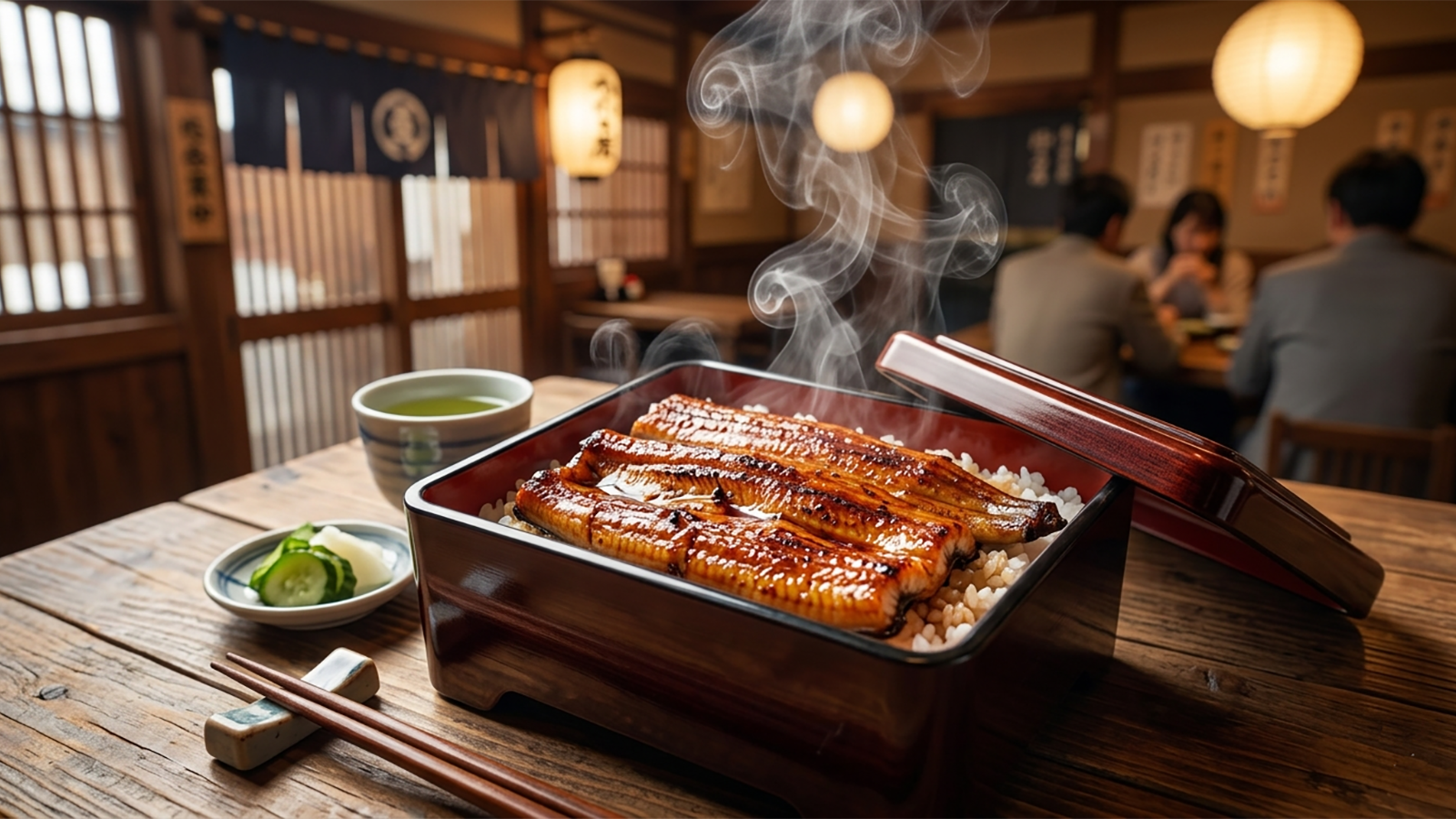
- Unaju → eel in a lacquer box (premium style)
- Double (or “ni-mai”) → more eel
👉 If unsure, order: “One unaju, please”
Unagi Eating Guide: Styles, Tips & Culture
Kabayaki vs Shirayaki
- Kabayaki → sweet soy sauce
- Shirayaki → grilled with salt
Tips:
- Add sansho (pepper) slowly
- Don’t pour too much sauce
- Eat rice and eel together
Cultural note:
In Japan, balance matters
Different Ways to Enjoy Unagi
In some places (especially Nagoya-style):
You may find hitsumabushi, eaten in 3 steps:
- Eat as is
- Add condiments
- Add broth (ochazuke style)
👉 This creates a multi-stage experience
Expect a Waiting Time
Unagi is freshly grilled.
- Waiting time: 20–40 minutes
👉 Good food takes time
Common Mistakes to Avoid
- Arriving too late (sold out)
- Not checking closing days
- Underestimating wait time
- Overusing condiments
- Not checking price before entering
- Being surprised by waiting time
- Not understanding portion size
👉 A little preparation makes the experience much better
Travel Tips: Lines, Timing & Reservations
Enjoy the Waiting Time: A Cultural Opportunity
Waiting in line is part of the experience at popular unagi restaurants in Japan.
Instead of seeing it as a delay, you can turn it into a small cultural moment.
If you feel comfortable, you might try a simple conversation with the people around you.
However, keep in mind:
- Many Japanese people are not confident in speaking English
- Some may feel shy or prefer quiet time
- Elderly people may feel uncomfortable being approached
👉 If you sense hesitation, simply smile and give space.
That said, there are exceptions.
Fellow travelers — especially motorcycle riders — are often more open to conversation.
Riders share a common spirit of journey and adventure, which can naturally create a connection.
A simple comment like:
- “Nice bike!”
- “Where are you riding today?”
can sometimes lead to a friendly exchange.
Even a short interaction can become a memorable part of your trip.
Or, you may simply enjoy the quiet atmosphere — something uniquely Japanese.
👉 Either way, the waiting time itself becomes part of the experience.
Smart strategies:
- Arrive 30 minutes before opening
- Visit on weekdays
- Bring water or portable fan
Cultural tips:
- Line up properly
- Some places use waiting lists
Plan Your Perfect Unagi Experience
Suggested route:
- Hamamatsu Station
- Lunch (unagi)
- Lake Hamana drive
- Sunset at Bentenjima
For scenic routes, see:
👉 Lake Hamana Scenic Drive Guide
Conclusion
Hamamatsu’s unagi is more than just delicious food.
It is the result of nature, craftsmanship, and history.
Each bite carries a story — and each visit becomes a memory.
Take your time, embrace the experience, and enjoy every moment.