- Introduction
- Why Kawasaki Became Popular in Europe and North America
- Kawasaki’s Origins in Aircraft Engineering
- Kawasaki’s First Motorcycles (1960s)
- The Legendary Kawasaki Z1 (1970s)
- The Speed Wars of the 1980s and 1990s
- Watch Legendary Kawasaki Motorcycles (1980–1999)
- More Legendary Kawasaki Ninja Motorcycles
- The Rise of the Ninja Series (1980s)
- The Birth of the Ninja Brand
- Global Expansion and Performance Wars (1990s)
- Modern Kawasaki Innovation (2000–Present)
- Kawasaki Motorcycle Culture and Touring
- Why Kawasaki Motorcycles Are Unique
- Why These Kawasaki Motorcycles Are Still Popular Today
- Kawasaki Fan Culture Around the World
- Conclusion
- RELATED ARTICLES
Introduction
Kawasaki motorcycles are known for speed, power, and aggressive styling. From the legendary Z1 to the modern Ninja H2, Kawasaki has built a reputation for producing some of the most exciting motorcycles in the world.
Unlike other Japanese motorcycle manufacturers, Kawasaki began as a heavy industrial company. This background influenced the brand’s engineering philosophy and performance-focused approach.
Today, Kawasaki is one of Japan’s “Big Four” motorcycle manufacturers alongside Honda, Yamaha, and Suzuki. However, Kawasaki has always followed its own path, focusing on performance, innovation, and bold design.
This article explores the complete history of Kawasaki motorcycles, from their origins in aircraft engineering to modern-day superbikes.
This article also supports our pillar guide:
The Complete History of Japanese Motorcycles
Why Kawasaki Became Popular in Europe and North America
During the 1980s and 1990s, Kawasaki gained massive popularity in Europe and North America. This success was driven by Kawasaki’s focus on performance, speed, and aggressive styling.
Unlike some competitors, Kawasaki emphasized high-speed performance and powerful engines. This appealed strongly to riders in the United States and Europe, where long-distance highways and sport riding were popular.
Kawasaki motorcycles became known for:
- Powerful engines
- High top speeds
- Aggressive styling
- Racing-inspired performance
This performance-focused identity helped Kawasaki build a loyal global fan base.
Kawasaki’s Origins in Aircraft Engineering
Kawasaki Heavy Industries was founded in 1896. The company originally focused on shipbuilding and heavy industry.
During World War II, Kawasaki produced aircraft engines and military equipment. This aerospace background influenced Kawasaki’s motorcycle engineering philosophy.
After the war, Kawasaki transitioned to consumer products, including motorcycles.
This engineering heritage gave Kawasaki a unique advantage in performance development.
Kawasaki’s First Motorcycles (1960s)
Kawasaki entered the motorcycle market in the early 1960s.
In 1960, Kawasaki acquired Meguro Manufacturing Company. Meguro was one of Japan’s oldest motorcycle brands.
This acquisition allowed Kawasaki to enter motorcycle production quickly.
Early models included:
- Kawasaki Meguro K1
- Kawasaki W1
The W1 became Kawasaki’s first major success.
The Legendary Kawasaki Z1 (1970s)
In 1972, Kawasaki launched the legendary Z1.
The Z1 featured:
- 903cc engine
- Inline-four design
- High performance
The Z1 became one of the fastest motorcycles in the world.
This motorcycle established Kawasaki’s reputation for performance.
The Speed Wars of the 1980s and 1990s
During the 1980s and 1990s, motorcycle manufacturers competed to build the fastest motorcycles in the world.
This period became known as the “Speed Wars.”
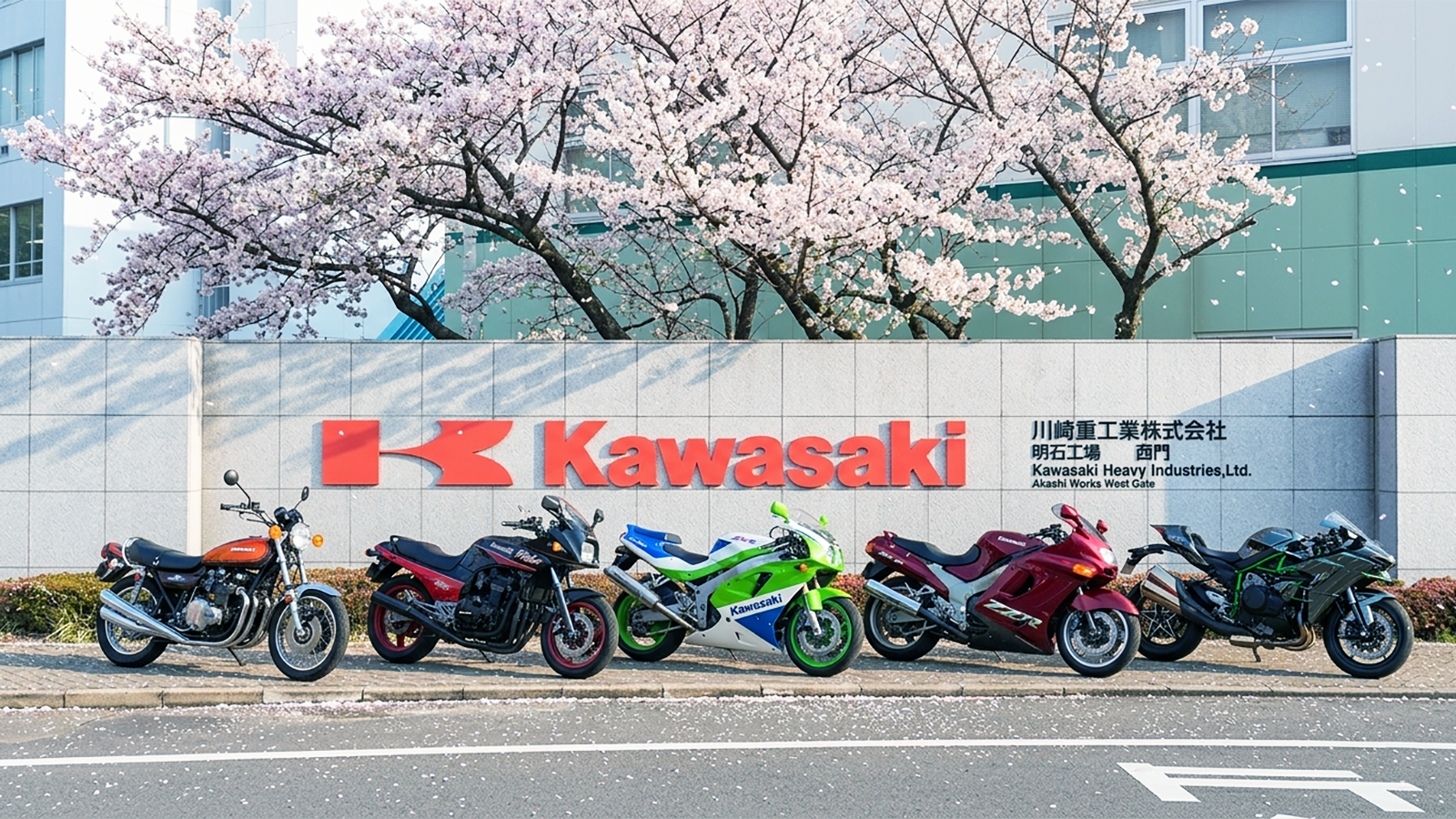
Kawasaki played a major role in this competition with models such as:
- GPZ900R
- ZX-10
- ZZR1100
These motorcycles pushed performance limits and captured global attention.
The speed wars helped establish Kawasaki as a performance leader.
Watch Legendary Kawasaki Motorcycles (1980–1999)
To better understand why Kawasaki motorcycles became so popular in Europe and North America during the 1980s and 1990s, watch the video below featuring some of the most iconic Kawasaki machines from this golden era.
These motorcycles helped define Kawasaki’s aggressive performance identity and established the brand as a global leader in high-speed motorcycles.
Featured motorcycles in this video include:
- Kawasaki GPZ900R Ninja
- Kawasaki ZX-7R
- Kawasaki ZX-9R
- Kawasaki ZZR1100 / ZX-11
These legendary machines played a major role in Kawasaki’s global success during the performance wars of the 1980s and 1990s.
More Legendary Kawasaki Ninja Motorcycles
For more iconic Kawasaki Ninja motorcycles from the 1980s and 1990s, watch the video below. This clip highlights the aggressive styling and performance that made Kawasaki famous worldwide.
These motorcycles helped define Kawasaki’s performance-focused identity and built a loyal fan base across Europe and North America.
The Rise of the Ninja Series (1980s)
The Ninja series changed Kawasaki forever.
In 1984, Kawasaki launched the Ninja GPZ900R.
This motorcycle became famous after appearing in the movie Top Gun.
The Ninja became synonymous with speed and performance.
The Birth of the Ninja Brand
Watch the Evolution of Kawasaki Ninja Motorcycles
The Ninja series became one of the most iconic motorcycle brands in the world. From the legendary GPZ900R to modern high-performance machines, the Ninja lineup has continued to push performance boundaries.
Watch the video below to explore the evolution of Kawasaki Ninja motorcycles and understand why they became so popular in Europe and North America.
The Ninja series helped define Kawasaki’s identity as a performance-focused motorcycle manufacturer. These bikes combined speed, aggressive styling, and advanced engineering.
Popular models featured include:
- Kawasaki GPZ900R Ninja
- Kawasaki ZX-7R
- Kawasaki ZX-9R
- Kawasaki ZX-10
- Kawasaki ZX-11 / ZZR1100
The launch of the GPZ900R in 1984 marked the beginning of the legendary “Ninja” brand.
The Ninja name quickly became associated with:
- Speed
- Precision
- Performance
The success of the GPZ900R led to the expansion of the Ninja lineup, including models such as:
- Ninja ZX-7R
- Ninja ZX-9R
- Ninja ZX-11
Today, the Ninja name remains one of the most recognized motorcycle brands in the world.
The Ninja brand helped define Kawasaki’s identity and continues to influence modern motorcycle design.
Global Expansion and Performance Wars (1990s)
Kawasaki continued developing high-performance motorcycles.
Popular models included:
- Kawasaki ZX-7R
- Kawasaki ZX-9R
- Kawasaki Ninja ZX-11
Modern Kawasaki Innovation (2000–Present)
Modern Kawasaki motorcycles include:
- Ninja H2
- Z900
- Versys
Kawasaki Motorcycle Culture and Touring
Popular Kawasaki touring routes in Japan:
- Hakone Turnpike
- Mount Fuji
- Izu Peninsula
Why Kawasaki Motorcycles Are Unique
Kawasaki focuses on:
- Power
- Performance
- Aggressive styling
Why These Kawasaki Motorcycles Are Still Popular Today
Many Kawasaki motorcycles from the 1980s and 1990s remain popular among riders and collectors today.
Reasons include:
- Iconic styling
- Strong performance
- Mechanical simplicity
- Historical significance
These motorcycles represent a golden era of performance engineering.
Many enthusiasts still ride and restore these machines today.
Kawasaki Fan Culture Around the World
Kawasaki has developed a strong global fan culture, particularly in Europe and North America.
Kawasaki riders often appreciate:
- Performance-oriented motorcycles
- Unique styling
- Racing heritage
Motorcycle events, group rides, and online communities continue to celebrate classic Kawasaki models.
This strong community helps preserve Kawasaki’s legacy.
Conclusion
Kawasaki motorcycles have shaped global motorcycling culture. From aircraft engineering roots to modern superbikes, Kawasaki continues pushing performance boundaries.
RELATED ARTICLES
- History of Honda Motorcycles in Hamamatsu
- History of Yamaha Motorcycle
- History of Suzuki Motorcycles
- Why Japanese Motorcycles Are Famous
- The Complete History of Japanese Motorcycles
- Motorcycle Pilgrimage Hamamatsu
- Japanese Motorcycle Culture
- Kawasaki Ninja History
- Kawasaki Z Series
- Best Kawasaki Motorcycles
- Kawasaki Touring Japan