- Introduction
- 🎧 Song of the Day: Kenny Loggins – Danger Zone
- Who This Article Is For
- Kawasaki’s Origin: Born from Aircraft Engineering
- Why Kawasaki Became Popular Worldwide
- The First Kawasaki Motorcycles
- The Legendary Z1 and Performance Identity
- The Speed Wars Era (1980s–1990s)
- The Birth of the Ninja Series
- What Makes Kawasaki Feel Different
- Is Kawasaki Too Powerful?
- Kawasaki vs Other Japanese Brands
- Which Kawasaki Model Should You Choose?
- Kawasaki Culture in Japan
- What Surprises Riders in Japan
- Experience Kawasaki in Shizuoka
- Real Experience
- How to Ride Kawasaki in Japan
- Why Kawasaki Still Matters Today
- Plan Your Kawasaki Journey
- Why Hamamatsu & Shizuoka Are Perfect for Kawasaki Riders
- 🎧 Drive into the golden era: Kenny Loggins – Footloose
- Conclusion
- FAQ
- Related Articles
Introduction
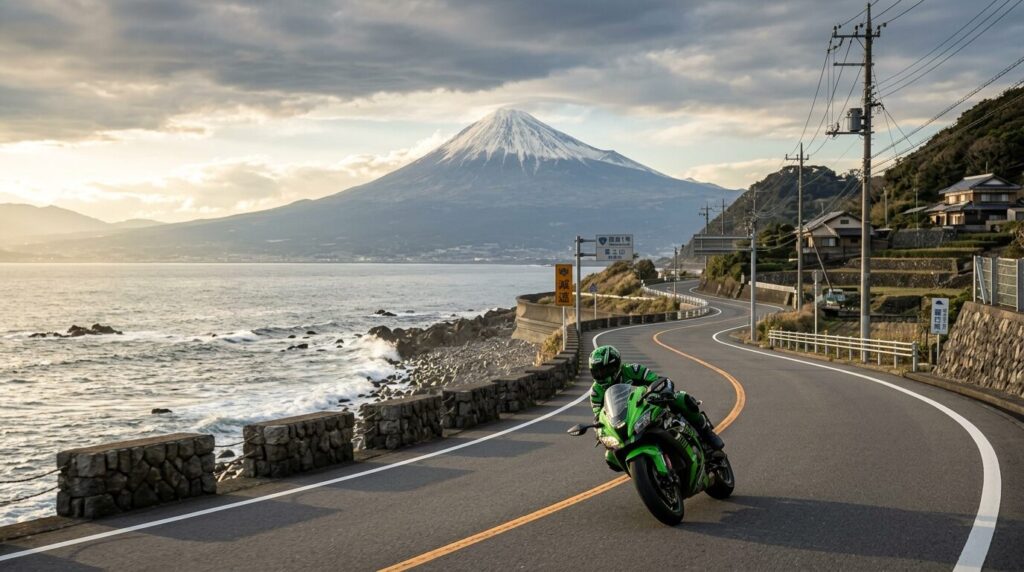
Imagine riding through Japan on a machine built for speed.
Tight mountain curves.
Open coastal roads.
Perfect asphalt beneath your tires.
And suddenly, everything makes sense.
Why Kawasaki feels different.
Why riders around the world are drawn to its power.
And why many of them eventually end up in one place:
Japan.
This article will not just teach you Kawasaki history.
It will show you:
- Why Kawasaki motorcycles feel so aggressive
- How that philosophy was born
- And how you can experience it yourself in Japan
👉 By the end, you won’t just understand Kawasaki.
👉 You’ll want to ride it here.
👉 For a complete travel plan including routes, costs, and rentals:
Ultimate Guide to Motorcycle Touring in Japan
🎧 Song of the Day: Kenny Loggins – Danger Zone
Hand-picked 80s songs for touring, driving, and exploring Japan’s golden era.
The 1980s marked Japan’s golden age — when Japanese motorcycles, synthesizers, black audio electronics, car audio systems, karaoke machines, City Pop, and model kits helped shape modern global culture.
👇 Press play before reading
Before diving into the legacy of Kawasaki motorcycles, press play—this track captures the raw speed, tension, and thrill of pushing machines to their limits.
“Danger Zone” by Kenny Loggins is pure high-octane 80s music—driving guitars, soaring vocals, and a relentless sense of motion. Beneath its rock surface, you can feel the era’s transition into sharper, more controlled production, where synth accents and layered audio engineering added precision to power. It’s not just a song—it’s acceleration in sonic form.
This sound didn’t exist in isolation. The clarity and punch of this electronic sound were shaped by advancements in Japanese music culture. Yamaha’s instruments, Roland and Korg synth technology, and BOSS guitar effectors helped define the textures of global hits like this. At the same time, Sony’s Walkman made this intensity portable—suddenly, adrenaline could live in your headphones, anywhere in Japan or beyond.
And that’s where Kawasaki comes in. Born from aircraft engineering, their motorcycles embody the same philosophy: speed balanced with control, power refined through precision. It’s the same mindset behind Japanese manufacturing—from instruments to model kits—where every detail matters.
You can almost feel it: gripping the throttle, engine roaring, coastline rushing past. This is not just movement—it’s engineered emotion.
If you want to experience where that spirit was forged, look to Hamamatsu and Shizuoka—the heart of Japan’s innovation.
Press play, and enter the danger zone.
Who This Article Is For
This guide is perfect for:
- Riders interested in Kawasaki motorcycles history
- Fans of Ninja, Z series, or classic bikes
- Travelers planning a motorcycle trip to Japan
- Riders choosing between Japanese brands
- Anyone curious about why Kawasaki feels different
Kawasaki’s Origin: Born from Aircraft Engineering
Kawasaki did not start as a motorcycle company.
It began in 1896 as a heavy industry manufacturer.
Shipbuilding.
Aircraft.
Industrial machinery.
This background matters.
Because Kawasaki motorcycles were never designed to be “easy.”
They were designed to be powerful.
Why Kawasaki Became Popular Worldwide
In the 1980s and 1990s, Kawasaki exploded in Europe and North America.
Why?
Because riders wanted speed.
And Kawasaki delivered:
- Powerful engines
- High top speeds
- Aggressive styling
👉 While others focused on balance, Kawasaki focused on excitement.
The First Kawasaki Motorcycles
Kawasaki entered the motorcycle market in the 1960s.
After acquiring Meguro, it launched:
- Kawasaki W1
This became its first major success.
The Legendary Z1 and Performance Identity
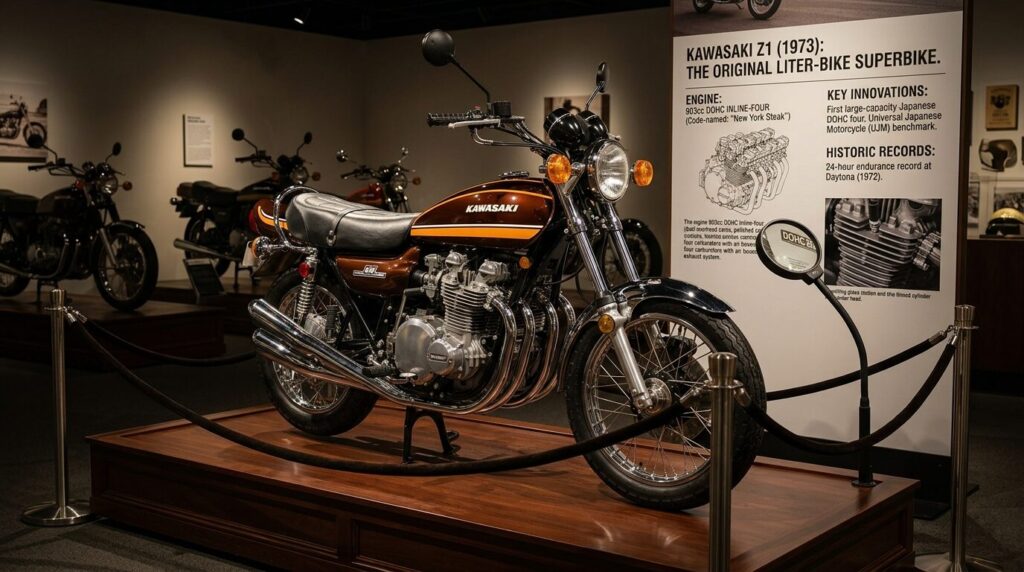
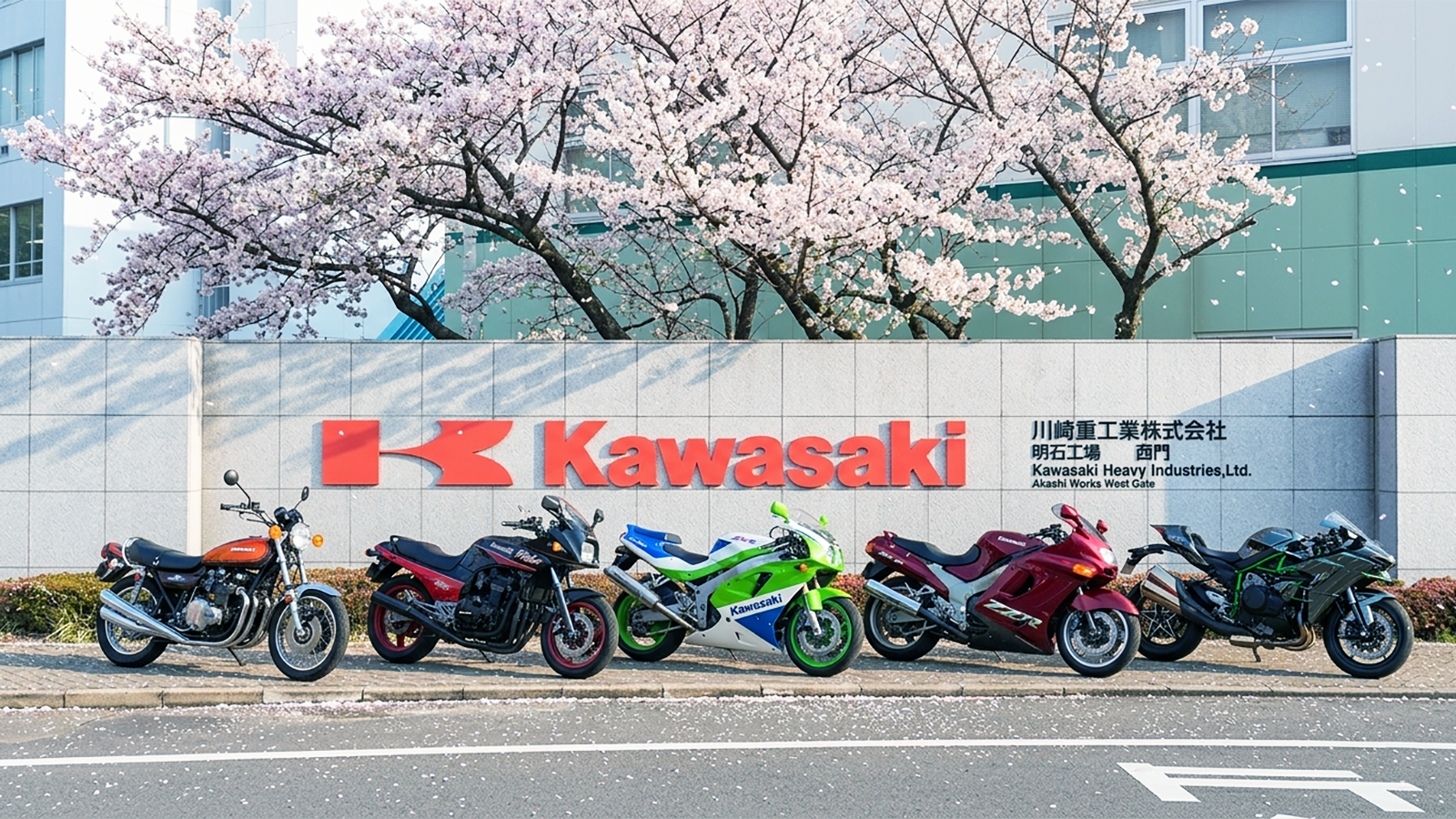
In 1972, Kawasaki released the Z1.
- 903cc engine
- Inline-four
- High performance
This bike changed everything.
👉 Kawasaki became “the performance brand.”
The Speed Wars Era (1980s–1990s)
Manufacturers competed to build the fastest bike.
Kawasaki responded with:
- GPZ900R
- ZX-10
- ZZR1100
👉 This era defined Kawasaki’s DNA.
The Birth of the Ninja Series
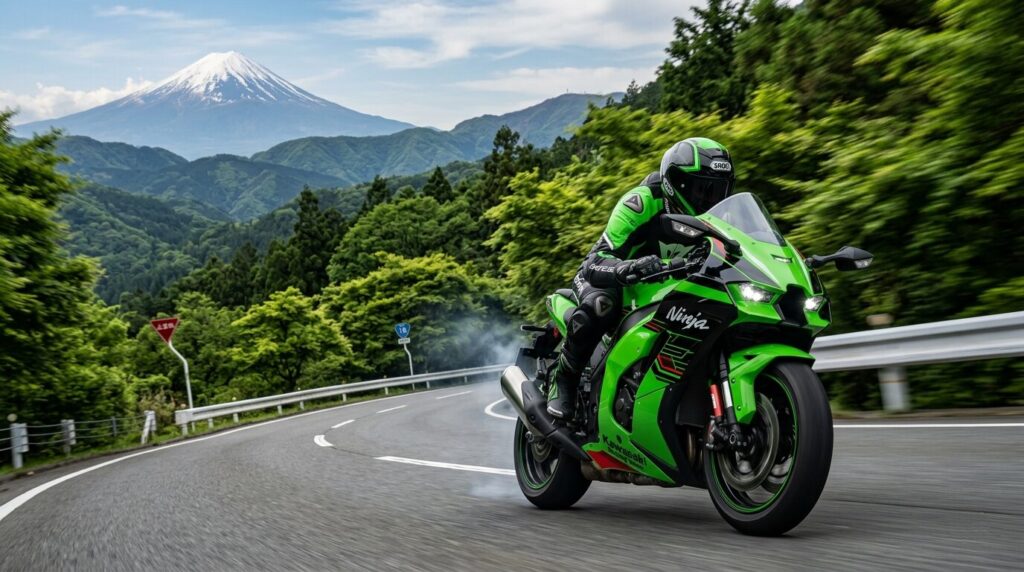
The Ninja GPZ900R launched in 1984.
It became globally famous.
The Ninja brand came to represent:
- Speed
- Precision
- Aggression
👉 Today, Ninja is one of the most recognized motorcycle names in the world.
What Makes Kawasaki Feel Different
Kawasaki is not subtle.
It is aggressive.
- Strong acceleration
- Sharp response
- Bold design
👉 It demands skill—but rewards control.
Is Kawasaki Too Powerful?
Many riders think:
“Kawasaki looks too aggressive… is it hard to ride?”
This is a very common concern.
The truth is:
👉 Kawasaki is not “difficult”
👉 It is “honest”
What does that mean?
- The throttle responds immediately
- The power is direct
- The feedback is clear
For beginners, this can feel intense at first.
But here’s the key:
👉 Once you understand it, it becomes predictable
And predictable means:
👉 Safe
👉 Controllable
👉 Enjoyable
If you start with the right model, Kawasaki can be one of the most rewarding brands to ride.
Kawasaki vs Other Japanese Brands
Kawasaki vs Honda
Honda → Stable, beginner-friendly
Kawasaki → Aggressive, performance-focused
Kawasaki vs Yamaha
Yamaha → Emotional, sporty
Kawasaki → Raw, powerful
Kawasaki vs Suzuki
Suzuki → Balanced
Kawasaki → Extreme
Which Kawasaki Model Should You Choose?
Choosing the right bike is important.
Here’s a simple guide:
For Beginners
- Ninja 250 / 400
👉 Easy handling, manageable power
For Sport Riders
- Ninja ZX-6R / ZX-10R
👉 High performance, track-ready
For Touring Riders
- Versys 650 / 1000
👉 Comfortable, long-distance capable
👉 If you’re planning to ride in Japan, start with a mid-size model for balance and control.
Kawasaki Culture in Japan
In Japan, motorcycles are part of daily life.
- Clean roads
- Safe traffic
- Easy navigation
You can ride without stress.
👉 This is why Japan is ideal for touring.
What Surprises Riders in Japan
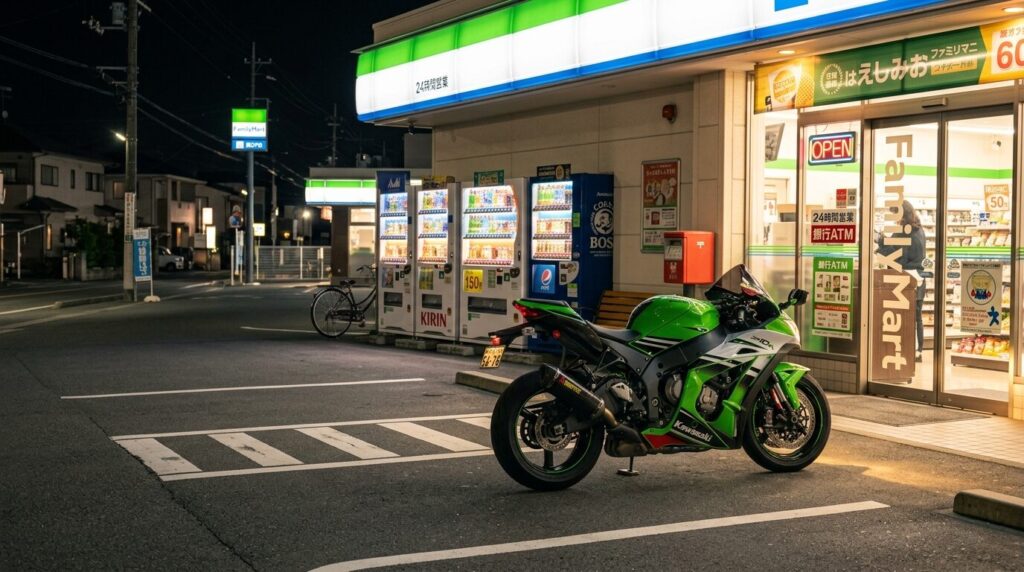
Most overseas riders are surprised by:
- Extremely clean roads
- Almost no road damage
- Clear road signs
- Quiet countryside
And one more thing:
👉 Convenience stores (Konbini)
You can:
- Rest
- Eat
- Use the restroom
- Buy drinks
All within minutes.
👉 This makes long-distance touring incredibly easy.
Experience Kawasaki in Shizuoka
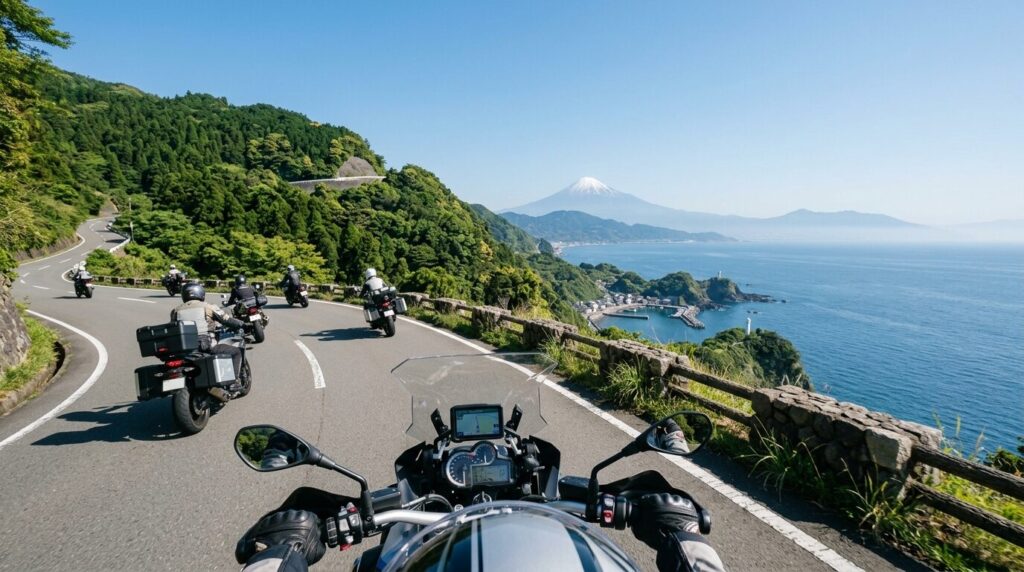
Shizuoka is one of the best riding areas in Japan.
- Mountain roads (Tenryu)
- Coastal roads (Enshu-nada)
👉 If you want the perfect riding experience, Hamamatsu is one of the best areas in Japan.
Real Experience
I remember riding a Kawasaki through a mountain road in Shizuoka.
The throttle felt immediate.
The acceleration was intense.
At first, it felt almost too much.
But once I understood it…
It became addictive.
👉 That’s Kawasaki.
How to Ride Kawasaki in Japan
Step 1: Rent a Motorcycle
You can rent high-quality bikes easily.
👉 No need to bring your own.
Step 2: Choose the Area
Hamamatsu gives access to both mountains and coast.
Step 3: Plan Your Route
👉 Plan your route here: Best Motorcycle Roads in Japan
Step 4: Stay Nearby
Stay close to riding areas to maximize time.
Step 5: Understand Japanese Riding Rules
Before riding in Japan, you should know:
- Drive on the left side
- Follow speed limits strictly
- Stop completely at intersections
Also:
👉 Japanese drivers are very polite
This makes riding much less stressful than many countries.
Why Kawasaki Still Matters Today
Kawasaki continues to push limits.
Modern bikes like:
- Ninja H2
- Z900
👉 Still focused on performance.
Plan Your Kawasaki Journey
👉 Rent a bike
👉 Ride in Shizuoka
👉 Experience real Japanese roads
Because reading is not enough.
You need to ride it.
Why Hamamatsu & Shizuoka Are Perfect for Kawasaki Riders
If you want to experience Kawasaki properly:
You need the right environment.
Shizuoka offers:
- Fast coastal roads (perfect for power)
- Technical mountain routes (perfect for control)
- Low traffic compared to big cities
👉 This balance is rare.
And Hamamatsu is right in the center of it.
👉 If you want the perfect riding experience, Hamamatsu is one of the best areas in Japan.
🎧 Drive into the golden era: Kenny Loggins – Footloose
👇 Feel the golden era again
🎧Every article features a curated 80s hit or Japanese City Pop track.
Press play and experience how Japan, synth culture, and 80s music shaped global sound.
👉 How Japan Shaped Modern Music: The 1980s Synth Revolution, Sony Walkman, and the Rise of Global Sound Culture
👉 80s Music Culture
👉 80s Hobby Culture
Conclusion
Kawasaki is not about comfort.
It is about excitement.
From aircraft engineering to modern superbikes:
👉 It has always pushed limits.
And the best place to understand that…
👉 is Japan.
FAQ
Q1: Why is Kawasaki so powerful?
Because of its engineering roots in heavy industry and aircraft.
Q2: Is Kawasaki good for beginners?
Some models are, but many are performance-focused.
Q3: Where can I ride in Japan?
Shizuoka offers the best balance of roads.
Q4: Can I rent a bike?
Yes, easily.
Q5: Best season?
Spring and autumn.
Related Articles
- Why Smart Riders Skip Tokyo — And Discover Japan’s Hidden Motorcycle & 80s Hobby Culture Paradise Instead
- Ultimate Guide to Japanese Motorcycle Culture
- Complete History of Japanese Motorcycles
- Why Japan Dominated Motorcycles (1980–1999)
- Why Japanese Motorcycles Are So Popular Worldwide
- Why Japanese Motorcycles Feel Different
- Honda Motorcycle History
- Suzuki Motorcycle History
- Yamaha motorcycle history