- Introduction
- Who This Article Is For
- 🎧 Song of the Day: Billy Idol – Speed
- Mistake Most Riders Make
- Expressway vs Local Roads in Japan
- Quick Checklist Before Using Expressways
- What Are Japan Expressways?
- Unique Things About Japan Highways
- How Toll Systems Work in Japan
- ETC System Explained for Motorcycle Riders
- How Much Do Expressways Cost?
- When Should You Use Expressways?
- Riding Rules and Safety on Expressways
- Critical Mistakes & How to Stay Safe on Japan Expressways
- Golden Rule: “Don’t Fix It Now”
- Emergency Mindset for Riders
- The Most Important Rule: Never Panic
- Pro Tip: Why Experienced Riders Rarely Stress
- Smart Alternatives: Scenic Roads & Local Routes
- What Makes Riding in Japan Unique?
- Quick Decision Guide (Save This)
- Conclusion
- FAQ
- Related Articles
Introduction
The road is wide.
Perfect asphalt. No interruptions.
You move fast. Smooth. Efficient.
And after a while, something feels off.
You’re covering distance—
But not really experiencing anything.
No small towns.
No unexpected turns.
No moments that stay with you.
That’s when it becomes clear:
In Japan, how you move doesn’t just change your route.
It changes what kind of journey you end up having.
👉 For a complete travel plan including routes, costs, and rentals:
Ultimate Guide to Motorcycle Touring in Japan
Who This Article Is For
This guide is perfect for:
- First-time riders in Japan
- Riders planning long-distance touring
- Travelers worried about highway costs
- Riders deciding between scenic roads vs expressways
- Anyone who wants to ride efficiently and save money
🎧 Song of the Day: Billy Idol – Speed
Hand-picked 80s songs for touring, driving, and exploring Japan’s golden era.
The 1980s marked Japan’s golden age — when Japanese motorcycles, synthesizers, black audio electronics, car audio systems, karaoke machines, City Pop, and model kits helped shape modern global culture.
👇 Press play before reading
Before you even think about merging onto a Japanese expressway, press play. Let “Speed” by Billy Idol hit first—because this isn’t just a ride… it’s controlled acceleration.
This track screams pure 80s music attitude, driven by gritty guitar, punchy rhythm, and a raw edge that feels like opening the throttle. But listen closer—there’s a tight, engineered audio precision underneath. The balance, the punch, the subtle electronic sound shaping the mix—it’s the kind of sonic control that defined the era. Add in the influence of synth-driven production, and you get a track that feels fast even when you’re standing still.
And yeah… this is where Japan enters the lane.
Think Yamaha’s relentless pursuit of performance, Roland’s legendary synth and BOSS effects shaping guitar tone, and the evolution of Japanese audio culture through Sony. That same obsession with precision engineering? It’s what built Japan’s expressways—and the rules that govern them.
Because here’s the truth: speed alone means nothing in Japan.
Expressways demand awareness—ETC gates, toll systems, lane discipline. It’s not about going fast. It’s about flowing fast, correctly.
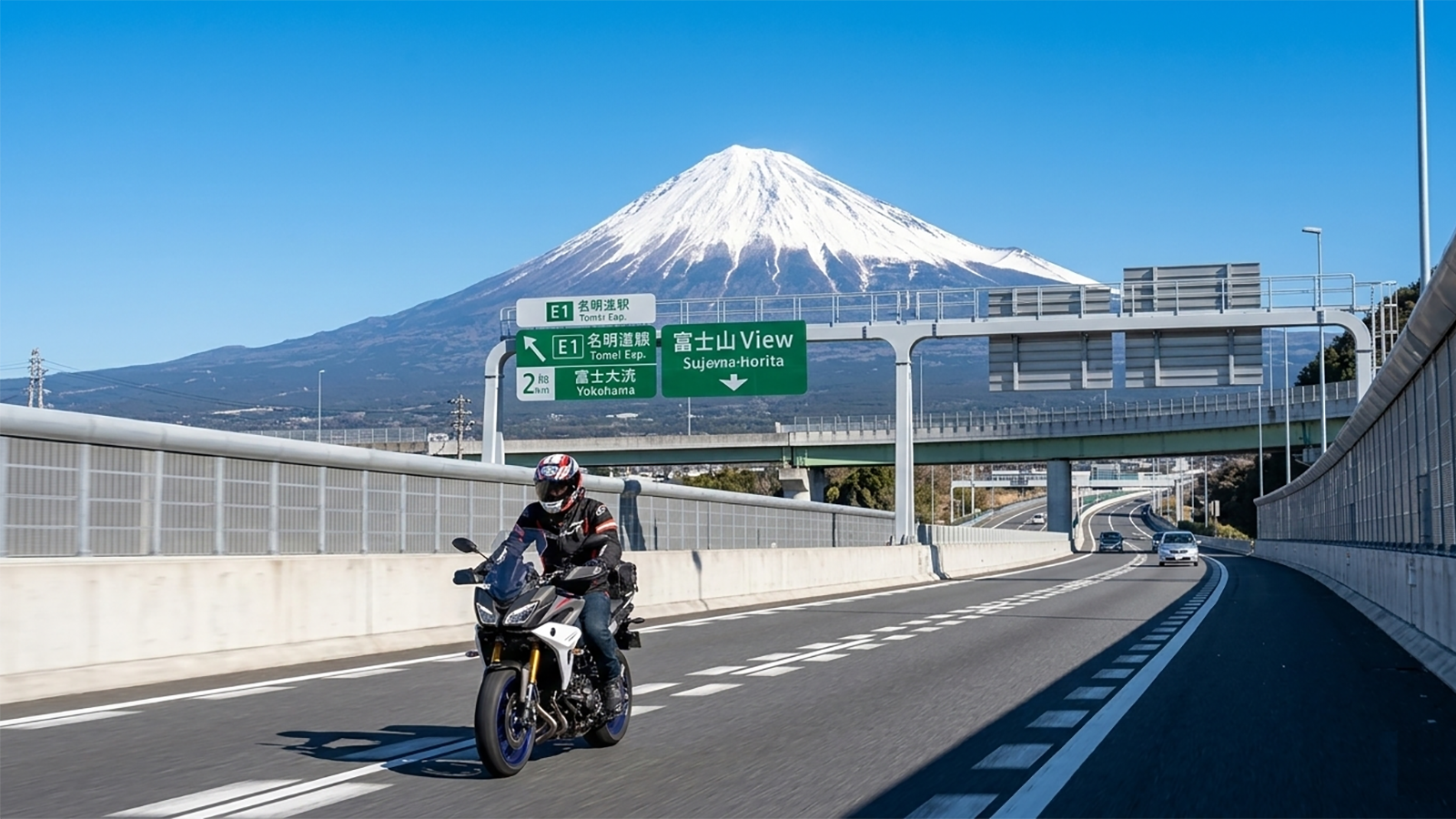
Picture yourself on a Shizuoka expressway, engine humming, road stretching clean and endless. The machine responds perfectly. The system works flawlessly.
That’s when it clicks.
Speed isn’t freedom.
Control is.
Press play—and ride it right.
🎧 Bonus Track Awaits
Finish the article to unlock a hidden track for your ride.
If you love “Speed” by Billy Idol, here’s another iconic 80s track you need to hear.
Both songs are born from the big screen—built for motion, tension, and adrenaline.
Mistake Most Riders Make
Many riders take expressways to save time.
But they end up missing:
- Local roads
- Hidden scenery
- Real Japan experience
👉 Expressways save time—but cost experience.
Expressway vs Local Roads in Japan
| Factor | Expressway | Local Roads |
|---|---|---|
| Cost | Expensive | Free |
| Speed | Fast | Slow |
| Experience | Low | High |
| Flexibility | Low | High |
Quick Checklist Before Using Expressways
- Do I need speed?
- Is weather bad?
- Am I skipping scenic roads?
👉 If not, avoid expressways.
What Are Japan Expressways?
Japan’s expressways (高速道路, kōsokudōro) are high-speed roads designed for efficiency.
Key Features
- Extremely clean and well-maintained
- No traffic lights
- Service areas every 30–80 km
- Very safe compared to many countries
Speed Limits & Enforcement
- Typical: 80–100 km/h
- Strict enforcement (cameras + police)
👉 Speeding in Japan is not worth it—fines are real.
Unique Things About Japan Highways
- Extremely clean roads
- Safe driving culture
- Amazing service areas
- Easy access to convenience stores
How Toll Systems Work in Japan
Entry & Exit System
- Take a ticket when entering
- Pay when exiting
Payment Methods
- Cash
- Credit card
- ETC (electronic toll collection)
👉 No payment = no exit. It’s that strict.
ETC System Explained for Motorcycle Riders
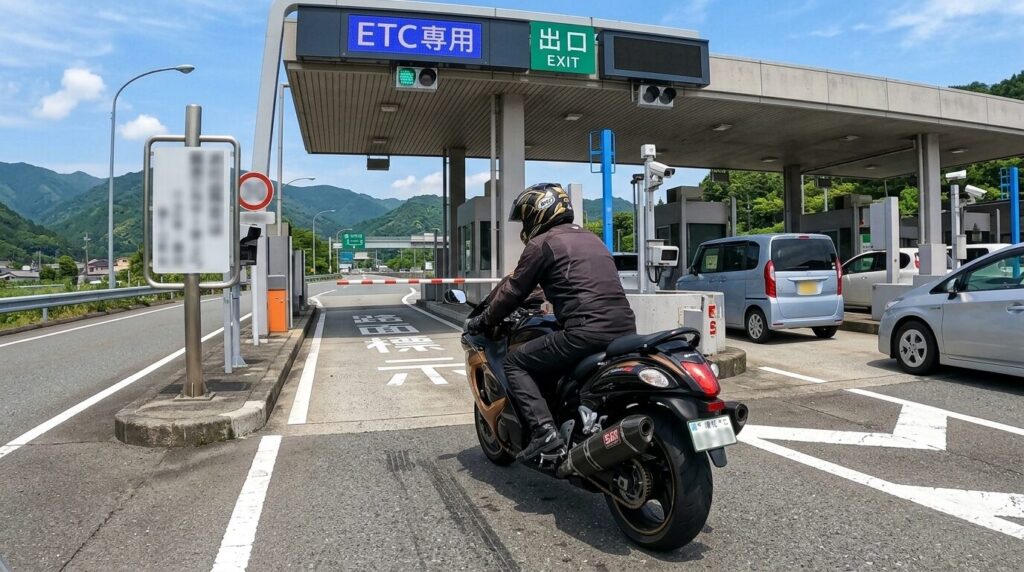
ETC lets you pass toll gates without stopping.
Benefits
- No waiting
- Slight discounts
- Stress-free riding
Downsides & Rental Tips
- Requires ETC card + bike unit
- Not all rental bikes have it
👉 If you rent a bike, confirm ETC availability before booking.
👉 Book your bike here: Japan Motorcycle Rental Guide
How Much Do Expressways Cost?
Let’s be honest—this is where it hurts.
Real Cost Examples
- Osaka → Hiroshima: ~¥8,000
- Tokyo → Nagoya: ~¥6,000
Budget Strategy
- ¥20–¥30 per km
- Long trips get expensive fast
👉 Plan your budget here: Japan Motorcycle Touring Cost Guide.
When Should You Use Expressways?
Best Use Cases
- Long-distance travel
- Bad weather
- Tight schedule
When to Avoid Them
- Scenic rides
- Short distances
- Budget trips
👉 Rule:
Use expressways for transport—not experience
Real Rider Experience
I once took the expressway from Tokyo to Nagoya to save time.
It was fast—but honestly, I missed everything that makes Japan special.
On the way back, I chose local roads.
I rode through small towns, stopped at local restaurants, and saw views I would have completely missed.
👉 That’s when I realized: expressways are useful—but they are not the experience.
Riding Rules and Safety on Expressways
Key Rules
- Minimum speed: ~50 km/h
- No stopping except emergencies
- Stay left unless overtaking
Safety Tips
- Watch for strong crosswinds
- Maintain safe distance
- Be careful at merge points
Service Areas (SA) & Parking Areas (PA): Japan’s Hidden Advantage
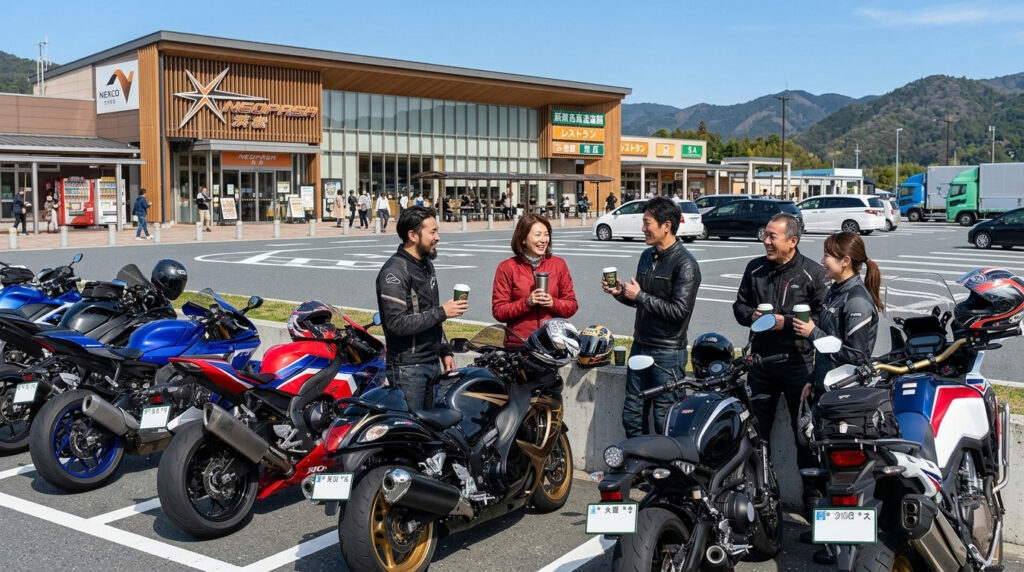
This is where Japan is different.
Service areas are not just rest stops.
They have:
- Clean toilets
- Restaurants
- Convenience stores
- Fuel stations
👉 Some even feel like mini shopping malls.
This is one reason Japan is one of the easiest countries to tour by motorcycle.
👉 Explore:
Unique Service Areas in Shizuoka for Riders: Food, Views & Hobby Culture (coming soon)
Critical Mistakes & How to Stay Safe on Japan Expressways
Japan’s expressways are safe—but mistakes can become dangerous very quickly.
Most serious accidents involving foreign riders happen not because of speed—but because of panic.
👉 The biggest rule:
Never panic. Never force a correction.
Mistake 1: Missing Your Exit
This happens more often than you think.
Signs can be confusing, especially around Tokyo, Nagoya, and Osaka.
❌ What NOT to Do
- Do NOT stop suddenly
- Do NOT try to cut across lanes
- Do NOT attempt illegal maneuvers
👉 These actions cause serious accidents.
✅ What to Do Instead
- Stay calm
- Continue riding
- Exit at the next interchange
- Re-route using navigation
👉 In Japan, you can always fix it safely later.
Mistake 2: Entering the Wrong Expressway
Example:
- You enter Tomei Expressway instead of Shin-Tomei
- You take a completely different route than planned
This is very common—even for experienced riders.
✅ Solution
- Continue riding safely
- Exit at the next available interchange
- Re-enter the correct expressway
👉 Do NOT attempt to turn around.
Mistake 3: Choosing the Wrong Direction (Inbound vs Outbound)
Japan uses:
- 上り (Nobori) → toward Tokyo
- 下り (Kudari) → away from Tokyo
This confuses many foreign riders.
❌ Dangerous Reaction
- Trying to fix direction immediately
- Sudden lane changes
✅ Safe Solution
- Continue riding
- Use the next Service Area (SA) or exit
- Re-enter in the correct direction
👉 Some service areas allow walking between directions.
Mistake 4: Confusing Junctions (Especially in Cities)
Urban expressways are complex.
Even with GPS, you may hesitate.
🔥 Prevention Strategy
- Check your route BEFORE entering
- Use audio navigation
- Follow lane signs early
✅ If You Miss It
- Do NOT panic
- Continue
- Re-route calmly
Mistake 5: Missing ETC / Wrong Toll Lane
❌ What NOT to Do
- Do NOT reverse
- Do NOT stop suddenly
✅ What to Do
- Use general toll lane if unsure
- Ask staff for help if needed
👉 Staff in Japan are extremely helpful.
Golden Rule: “Don’t Fix It Now”
If you make a mistake:
👉 Do not try to fix it immediately.
Fixing it “right now” is how accidents happen.
👉 The correct mindset:
- Keep riding
- Stay safe
- Fix it later
Emergency Mindset for Riders
If something goes wrong:
- Stay calm
- Keep moving safely
- Trust that there is always a solution
Japan is one of the safest countries to ride.
Even if you make mistakes—you will be okay if you stay calm.
The Most Important Rule: Never Panic
Almost all serious accidents happen when riders panic.
Trying to fix a mistake immediately leads to:
- Sudden braking
- Dangerous lane changes
- Illegal maneuvers
👉 The safest action is always:
Keep riding. Fix it later.
In Japan, there is always a safe way to recover.
Pro Tip: Why Experienced Riders Rarely Stress
Experienced riders don’t avoid mistakes.
👉 They avoid panic.
That’s the real difference.
👉 Want to discover the best places to stop along the way?
Plan your ride here: Unique Service Areas in Shizuoka (Food, Views & Hidden Spots)
Smart Alternatives: Scenic Roads & Local Routes
Expressways are fast—but boring.
Instead, use:
- National routes
- Mountain roads
- Coastal roads
👉 Plan your ride here: 15 Best Motorcycle Routes in Japan
Pro Strategy
- Use expressway to exit city
- Switch to local roads for experience
👉 This is how experienced riders travel Japan.
Smart Alternatives: Scenic Roads & Local Routes
Expressways are fast—but they’re not why you came to Japan.
If you want the real experience, you need to leave them.
Instead, ride:
- National routes
- Mountain roads
- Coastal roads
👉 Explore more routes across Japan: 15 Best Motorcycle Routes in Japan
Ride Beyond Expressways: Discover the Lake Hamana Motorcycle Route
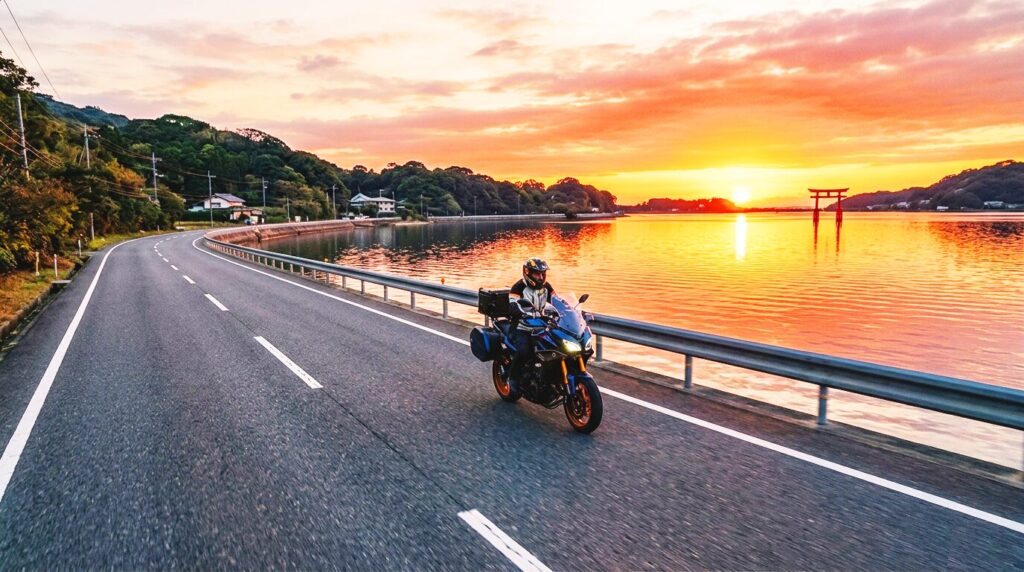
Most riders use expressways just to move.
But the moment you exit in Shizuoka—everything changes.
Within minutes, you can ride:
- Along the ocean
- Through quiet local towns
- Into scenic mountain roads
This is where real motorcycle touring in Japan begins.
One of the best places to experience this is around Hamamatsu and Lake Hamana.
👉 Start your ride here: Lake Hamana Motorcycle Route Guide (From Tokyo & Osaka)
What Makes Riding in Japan Unique?
Japan is not just another country to ride.
- Roads are extremely clean
- Drivers are predictable and polite
- Convenience stores are everywhere
- Even rural areas feel safe
You can ride:
- Mountains
- Coastlines
- Cities
👉 All in one day.
If you want the perfect riding experience, Hamamatsu and Shizuoka are among the best areas in Japan.
Quick Decision Guide (Save This)
Use expressways when:
- You need speed
- You are tired
- Weather is bad
Avoid them when:
- You want scenery
- You want culture
- You want the “real Japan”
👉 Screenshot this before your trip.
Conclusion
Japan’s expressways are powerful tools.
But smart riders don’t rely on them—they use them strategically.
If you balance:
- Speed
- Cost
- Experience
You’ll unlock the best motorcycle trip possible.
👉 Start planning your full journey here: Ultimate Motorcycle Touring Guide in Japan
FAQ
Q: Do motorcycles pay tolls in Japan?
Yes. Motorcycles pay the same tolls as cars.
Q: Is ETC necessary for riding in Japan?
No, but it makes your trip much easier.
Q: Are expressways worth it in Japan?
Only for long distances or time-saving—not for sightseeing.
Q: Can I avoid expressways completely?
Yes. Japan has excellent free roads.
Q: Are service areas safe for riders?
Yes. They are clean, safe, and very convenient.
Related Articles
- Why Smart Riders Skip Tokyo — And Discover Japan’s Hidden Motorcycle & 80s Hobby Culture Paradise Instead
- How to Rent a Motorcycle in Japan
- 15 Best Motorcycle Routes in Japan
- Japan Motorcycle Touring Cost Guide
- Lake Hamana Motorcycle Touring Guide
- Best Time for Motorcycle Touring in Japan
Bonus track: Bob Seger – Shakedown
👇 Feel the golden era:
Bob Seger – Shakedown
A high-energy track that captures pure 80s cinematic excitement.
Driven by punchy beats and sharp electronic sound, it keeps your pulse elevated.
That unmistakable groove makes every moment feel like a chase scene.
It’s the kind of song that turns any ride into something thrilling.
Once it kicks in, there’s no slowing down—just pure anticipation.
🎧Every article features a curated 80s hit or Japanese City Pop track.
Press play and experience how Japan, synth culture, and 80s music shaped global sound.
👉 How Japan Shaped Modern Music: The 1980s Synth Revolution, Sony Walkman, and the Rise of Global Sound Culture
👉 80s Music Culture
👉 80s Hobby Culture