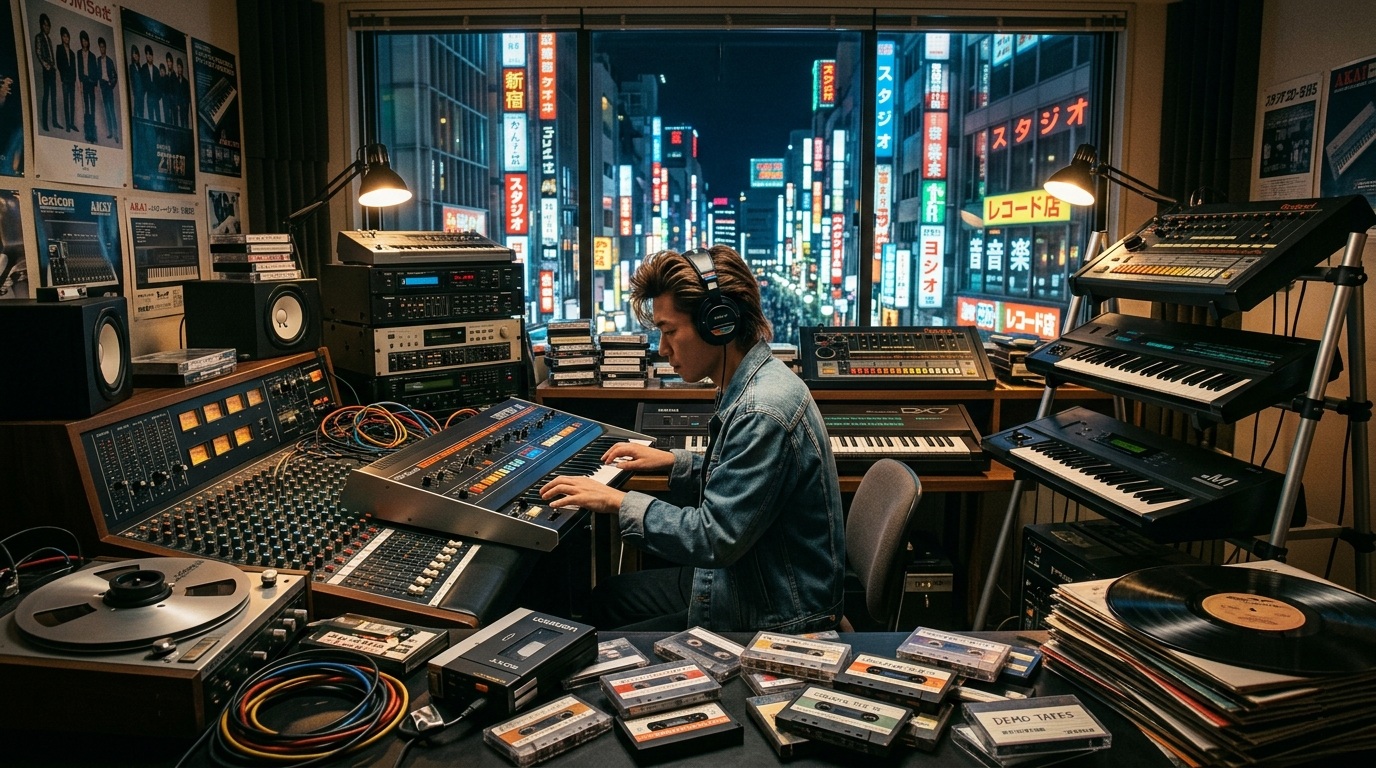
- Introduction: When Japan Quietly Changed Global Music
- 🎧 Song of the Day
- The 1980s: When Japan Changed Global Music
- The Rise of Japanese Synthesizers
- Hamamatsu: The Hidden City Behind the Sound Revolution
- Yamaha, Roland, and Korg: The Companies That Shaped Sound
- The Birth of Home Music Production
- Sony Walkman and the Personal Music Revolution
- Japan’s Audio Industry and the Golden Age of Black Electronics
- City Pop and Japanese Sound Culture
- How Japan Influenced Global Electronic Music
- The Rise of European Club Culture
- The Digital Era: Japan’s Continued Influence
- From City Pop to K-Pop: Asia’s Sound Evolution
- Why Japan Still Shapes Music Today
- Conclusion: Japan Designed Modern Music
- FAQ: Japan’s Influence on Modern Music (Extended)
- Related Articles
Introduction: When Japan Quietly Changed Global Music
Before Spotify.
Before laptops.
Before bedroom producers.
Modern music was shaped by a quiet revolution — and that revolution began in Japan.
During the 1980s, Japan transformed the global music landscape. Japanese companies didn’t just manufacture instruments or electronics — they fundamentally changed how music was created, recorded, and experienced.
Synthesizers from Yamaha, Roland, and Korg made electronic music accessible.
Sony’s Walkman transformed personal listening.
Japanese artists pioneered new genres like City Pop.
Together, these innovations created the foundation for modern music.
Today’s EDM, pop, hip-hop, and even K-Pop all trace their roots back to Japan’s technological and cultural breakthroughs.
This is the story of how Japan shaped modern sound.
🎧 Song of the Day
Hand-picked 80s songs for touring, driving, and exploring Japan’s golden era.
The 1980s marked Japan’s golden age — when Japanese motorcycles, synthesizers, black audio electronics, car audio systems, karaoke machines, City Pop, and model kits helped shape modern global culture.
👇 Press play before reading
Before exploring how Japan shaped modern music, press play on “Take On Me” by A-ha. Few songs capture the spirit of the 1980s synth revolution quite like this one. It’s bright, futuristic, and instantly recognizable — the sound of a world stepping into the digital age.
Released in 1985, Take On Me became a defining moment in 80s music, blending soaring vocals with shimmering synth lines and crisp electronic sound. The production feels clean, precise, and optimistic — a perfect reflection of a decade driven by innovation. This wasn’t just pop music; it was technology becoming emotion.
Behind that iconic audio clarity was the rapid rise of Japanese music culture. Yamaha synthesizers, Roland drum machines, and Korg keyboards powered studios around the world. Meanwhile, Sony’s Walkman transformed how people experienced music — suddenly, songs like Take On Me became personal soundtracks for commuting, traveling, and dreaming.
This same innovation connects Hamamatsu’s cultural DNA:
Music → Yamaha instruments
Sound → Sony electronics
Precision → motorcycles and model kits
One region helped shape global creativity.
Picture neon city lights, headphones on, Take On Me playing — that feeling began with Japan’s technological imagination, and it still resonates today.
Press play — and step into the sound that changed everything. 🎶
The 1980s: When Japan Changed Global Music
The 1980s marked a turning point in music history.
Before this era, music production was expensive and limited to professional studios. Large analog synthesizers were costly and difficult to use.
Japan changed that.
Japanese companies began producing affordable, compact, and innovative electronic instruments. This made music production accessible to individuals for the first time.
Suddenly:
• Musicians could create music at home
• New genres emerged
• Electronic sound became mainstream
This shift transformed music forever.
The Rise of Japanese Synthesizers
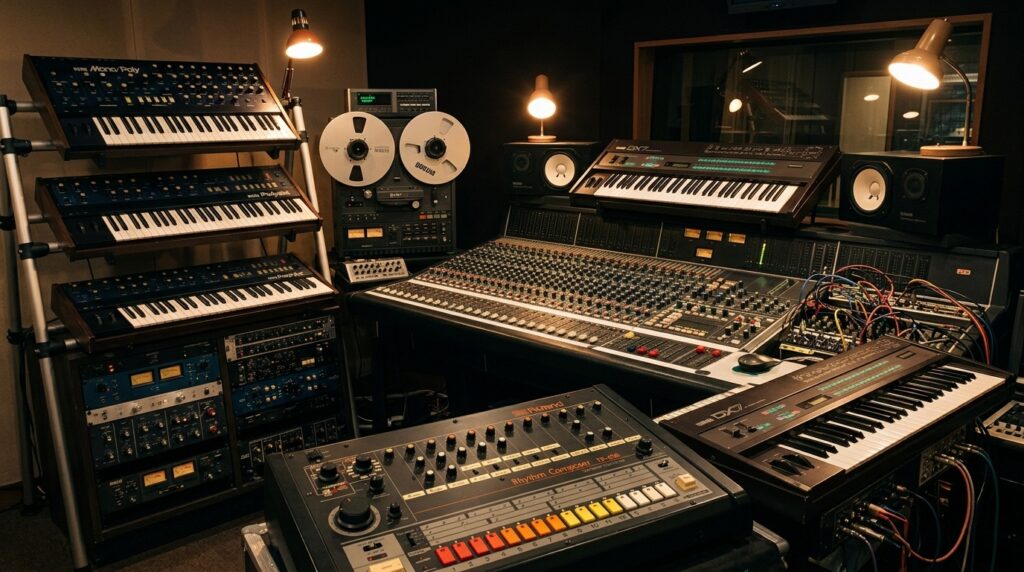
Japanese synthesizers became the backbone of modern music.
In the early 1980s, companies like Yamaha, Roland, and Korg introduced groundbreaking instruments.
These instruments were:
• Affordable
• Portable
• Powerful
One of the most influential instruments was the Yamaha DX7.
Released in 1983, the DX7 became one of the best-selling synthesizers in history. Its digital FM synthesis defined the sound of the 1980s.
Meanwhile, Roland introduced legendary machines:
• Roland TR-808
• Roland TR-909
• Roland TB-303
These machines shaped:
• Hip-hop
• Techno
• House
• EDM
Today, these sounds still dominate global music.
Hamamatsu: The Hidden City Behind the Sound Revolution
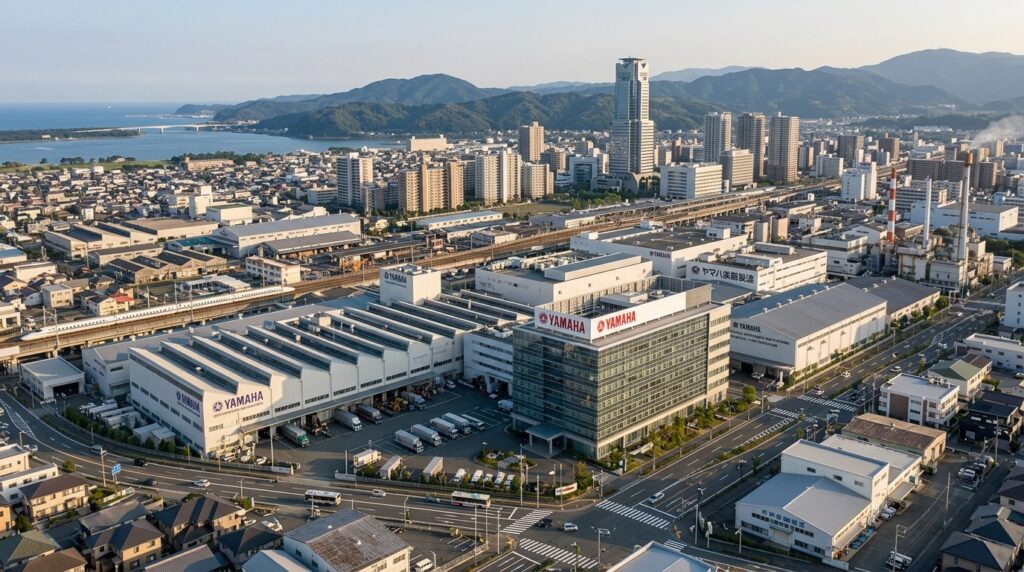
What made Japan unique was not just the instruments themselves, but where they came from.
Many of the world’s most influential music technologies originated from a single region: Hamamatsu, a city in Shizuoka Prefecture.
Hamamatsu became home to major musical instrument manufacturers including Yamaha, Roland, Kawai, and Suzuki. This concentration of companies created a rare industrial ecosystem where innovation accelerated rapidly.
Unlike Western countries, where music companies were often separated geographically, Hamamatsu developed as a tightly connected manufacturing cluster.
Engineers, designers, and musicians worked within the same region, sharing ideas and pushing technological boundaries.
This unique environment helped Japan lead the global synthesizer revolution.
Today, Hamamatsu remains one of the most important cities in global music history — though few outside Japan realize its impact.
Yamaha, Roland, and Korg: The Companies That Shaped Sound
Japan’s major synthesizer companies each contributed unique innovations.
Yamaha: Digital Sound Revolution
Yamaha focused on digital synthesis and accessibility.
The DX7 changed music production forever.
Roland: Rhythm Machines and Electronic Innovation
Roland pushed rhythm machines and electronic innovation.
The TR-808 became one of the most influential instruments ever created.
Korg: Experimental Sound Design
Korg experimented with new sound design and user-friendly synthesizers.
Together, they created a powerful ecosystem.
This ecosystem made Japan the global center of electronic music technology.
The Birth of Home Music Production
Japan also helped create home music production.
Compact synthesizers
Affordable drum machines
Portable recorders
These tools allowed musicians to produce music outside studios.
This led to:
• Independent music
• Electronic genres
• Bedroom producers
This movement continues today.
Modern DAWs and home studios trace their origins to this era.
Sony Walkman and the Personal Music Revolution
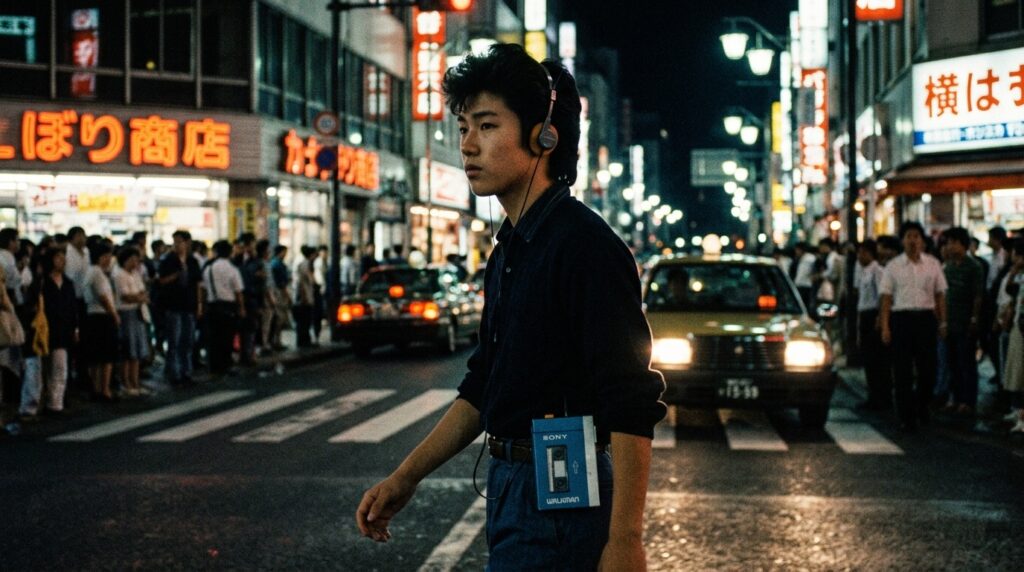
In 1979, Sony released the Walkman.
This device changed music forever.
For the first time:
• Music became portable
• Listening became personal
• Music became lifestyle
The Walkman changed how people experienced music.
It also influenced music production.
Artists began creating music designed for headphones.
This changed sound design.
Japan’s Audio Industry and the Golden Age of Black Electronics
At the same time, Japan’s consumer electronics industry played a crucial role in shaping music culture.
Companies such as Sony, Toshiba, Panasonic, and Pioneer were not just electronics manufacturers — they were deeply connected to the music industry.
Japan developed a unique structure where audio equipment, recording technology, and music production evolved together.
Cassette players, CD players, and Hi-Fi systems became part of everyday life in Japan during the 1980s.
This fusion of electronics and music created what many enthusiasts now call the “Golden Age of Japanese Audio.”
Unlike in many countries, where music and electronics developed separately, Japan merged both industries into a single cultural movement.
This synergy helped define how the world listens to music today.
City Pop and Japanese Sound Culture
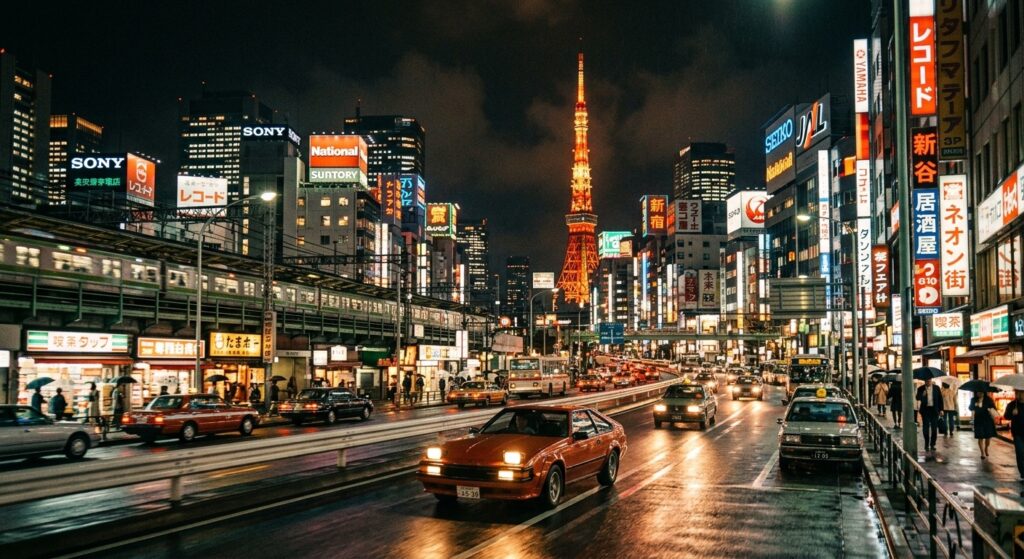
City Pop emerged in 1980s Japan.
This genre blended:
• Jazz
• Funk
• Pop
• Electronic music
Artists like:
• Tatsuro Yamashita
• Mariya Takeuchi
• Anri
created sophisticated soundscapes.
Today, City Pop is globally popular again.
YouTube and streaming revived interest.
How Japan Influenced Global Electronic Music

Japanese technology spread worldwide.
Western artists adopted Japanese instruments.
Hip-hop producers used the TR-808.
Electronic artists used Roland synths.
Pop artists used Yamaha keyboards.
Japan’s influence became global.
The Rise of European Club Culture
Japanese instruments also played a key role in the rise of European club culture.
In cities like Chicago, Detroit, and Berlin, musicians embraced affordable Japanese drum machines and synthesizers.
The Roland TR-808 and TR-909 became essential tools in house, techno, and electronic dance music.
These sounds spread across Europe, shaping the underground club scene that later influenced mainstream music worldwide.
Without Japanese instruments, the global electronic music movement may have evolved very differently.
The Digital Era: Japan’s Continued Influence
The influence of Japanese music technology continues in today’s digital era.
Modern producers, YouTube creators, and bedroom musicians still rely on tools inspired by Japanese innovation.
Software synthesizers, MIDI controllers, and home recording setups all trace their roots to the 1980s Japanese revolution.
Even today, many global hits are produced using techniques developed during this period.
From City Pop to K-Pop: Asia’s Sound Evolution
Modern Asian pop owes much to Japan.
Production techniques
Electronic sounds
Studio culture
All influenced modern pop.
K-Pop producers still use Japanese-inspired production.
Why Japan Still Shapes Music Today
Japanese companies still innovate.
Yamaha
Roland
Korg
continue shaping sound.
Japan’s influence remains strong.
🎧Every article features a curated 80s hit or Japanese City Pop track.
Press play and experience how Japan, synth culture, and 80s music shaped global sound.
👉 How Japan Shaped Modern Music: The 1980s Synth Revolution, Sony Walkman, and the Rise of Global Sound Culture
👉 80s Music Culture
👉 80s Hobby Culture
Conclusion: Japan Designed Modern Music
Japan didn’t just create instruments.
Japan created modern music.
From synthesizers to personal audio, Japan transformed how we create and experience sound.
Today’s music world still echoes the innovations of 1980s Japan.
FAQ: Japan’s Influence on Modern Music (Extended)
1. What is the Yamaha DX7 and why is it important?
The Yamaha DX7, released in 1983, was a revolutionary digital synthesizer that introduced FM synthesis to a global audience. It became one of the best-selling synthesizers of all time and defined the sound of 1980s pop, rock, and electronic music.
2. Why is the Roland TR-808 still famous today?
The Roland TR-808 is one of the most influential drum machines ever created. Its unique sound shaped hip-hop, trap, and electronic music, and it is still widely used in modern music production today.
3. How did Japan influence the rise of bedroom producers?
By creating affordable and compact music equipment, Japanese companies made it possible for individuals to produce music at home. This laid the foundation for today’s bedroom producer culture and modern digital music creation.
4. What is City Pop and why is it popular again?
City Pop is a genre of Japanese music from the 1980s that blends jazz, funk, and pop with electronic sounds. It has recently gained global popularity through YouTube and streaming platforms due to its nostalgic and sophisticated sound.
5. How is modern music still influenced by 1980s Japan?
Many modern music tools and techniques — including digital synthesizers, MIDI systems, and home recording setups — are direct evolutions of technologies developed in Japan during the 1980s. This influence continues to shape global music today.
Related Articles
- Why Smart Riders Skip Tokyo — And Discover Japan’s Hidden Motorcycle & 80s Hobby Culture Paradise Instead
- How Japan Shaped Modern Music
- Hamamatsu: The City That Shaped Global Sound
- Japanese Motorcycle Manufacturing Culture
- Why Japan is a Paradise for Hobby Lovers
- Ultimate Guide to Japanese Hobby Culture
- Ultimate Guide to Motorcycle Touring in Japan