
- Introduction: When Japan Designed the Sound of the Modern World
- Why 80s–90s Japan Dominated Electronics
- The Rise of Japanese Hi-Fi Culture
- Sony Walkman and the Personal Audio Revolution
- Cassette Decks and Home Recording Culture
- CD Players and the Digital Revolution
- Japanese Black Electronics Design Philosophy
- The Global Impact of Japanese Audio
- Why Japanese City Pop Sounded So Advanced
- Hamamatsu and Japan’s Sound Industry
- From Electronic Instruments to DJ Culture
- Why DJs Still Trust Japanese Equipment Today
- Experience the Legacy in Japan
- Why You Should Visit Shizuoka and Hamamatsu
- It Wasn’t Just Sony — It Was Japan
- Conclusion: Japan Designed Modern Sound Culture
- FAQ: Japanese Electronics Golden Age
- Q: What is the Japanese Electronics Golden Age?
- Q: Why are 80s–90s Japanese electronics still popular today?
- Q: What made Japanese Hi-Fi systems special?
- Q: How did the Sony Walkman change music culture?
- Q: Why did Japan dominate electronics in the 1980s?
- Q: Are vintage Japanese audio systems still worth buying?
- Q: Where can you experience Japanese electronics culture today?
- Q: Why is Hamamatsu important in Japanese sound culture?
- Q: How did Japanese electronics influence modern music?
- Q: Why should I visit Japan for electronics and music culture?
- Related Articles
Introduction: When Japan Designed the Sound of the Modern World
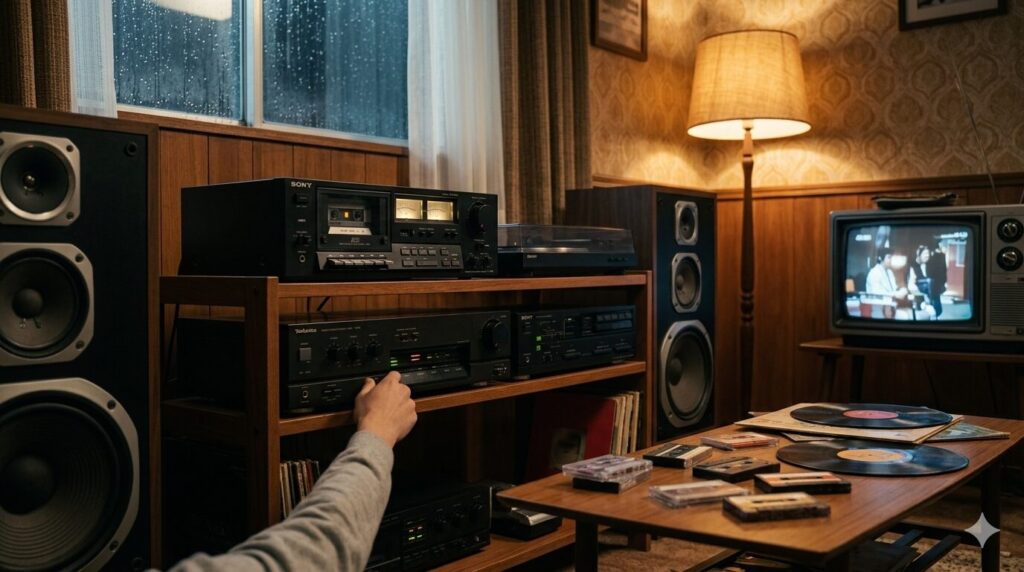
Before smartphones.
Before streaming.
Before digital music.
There was a golden age of electronics — and Japan stood at the center of it.
During the 1980s and 1990s, Japanese electronics companies didn’t just manufacture devices. They created an entirely new way of experiencing music, entertainment, and everyday life.
Sony.
Panasonic.
Toshiba.
Pioneer.
These companies transformed how the world listened to music.
From portable cassette players to high-end Hi-Fi systems, Japan built the foundation of modern audio culture.
This era is now known as the Golden Age of Japanese Electronics.
Even today, collectors, audiophiles, and technology enthusiasts around the world still admire 80s–90s Japanese electronics.
But why?
Why do these devices still fascinate the world?
To understand how Japanese music technology evolved during this period, see our related guide:
👉 How Japan Shaped Modern Music: The 1980s Synth Revolution
Why 80s–90s Japan Dominated Electronics
The 1980s and 1990s marked a unique period in global technology.
Japan was not just competing — it was leading.
Japanese companies focused on:
• Precision engineering
• Sound quality
• Design aesthetics
• User experience
Unlike many Western manufacturers, Japanese companies pursued perfection.
This philosophy created devices that were:
• Durable
• Beautiful
• Innovative
Japan wasn’t just building electronics.
Japan was designing experiences.
The Rise of Japanese Hi-Fi Culture
One of Japan’s greatest contributions was Hi-Fi home audio.
In the 1980s, Japanese homes began adopting high-quality audio systems.
These systems included:
• Amplifiers
• Cassette decks
• CD players
• Speakers
Companies like Sony, Pioneer, and Panasonic led this movement.
Hi-Fi systems were not just electronics.
They were lifestyle products.
Music became an experience.
People sat down, listened carefully, and appreciated sound quality.
This culture influenced the entire world.
Sony Walkman and the Personal Audio Revolution
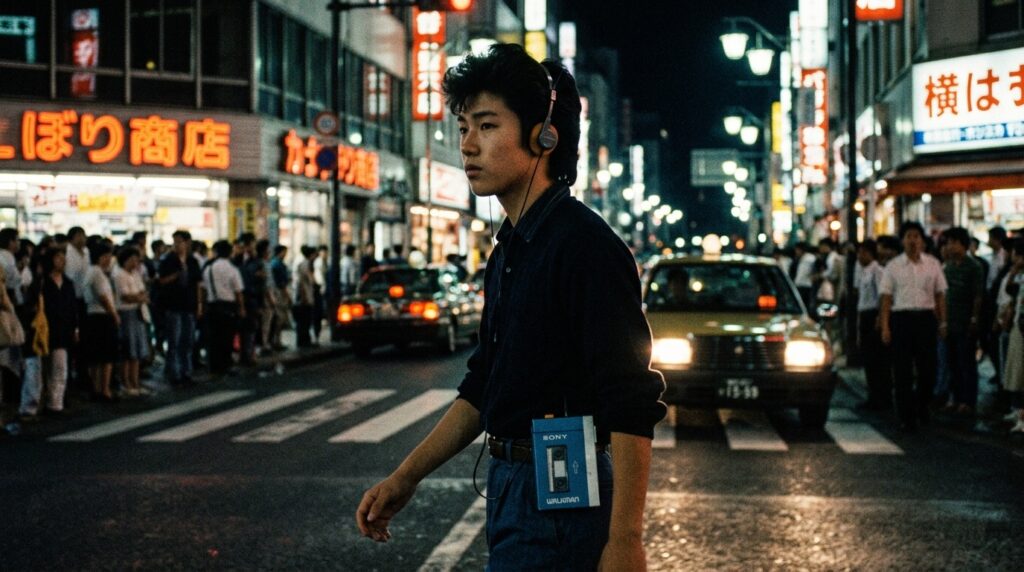
In 1979, Sony released the Walkman.
This small device changed everything.
For the first time in history:
• Music became portable
• Listening became personal
• Music became part of everyday life
The Walkman created a new cultural shift.
People began listening to music while:
• Walking
• Traveling
• Commuting
This changed how music was produced.
Artists began designing music for headphones.
Sound design evolved.
The Walkman didn’t just sell millions.
It changed human behavior.
To understand how this technology influenced music culture, see:
👉 How Japan Shaped Modern Music in the 1980s
Cassette Decks and Home Recording Culture
Cassette decks became extremely popular during the 1980s.
People began recording:
• Music
• Radio
• Personal mixes
This created mix tape culture.
Mix tapes allowed people to:
• Share music
• Discover new artists
• Express emotions
This was an early form of playlist culture.
Long before Spotify, people curated their own music.
Japan played a major role in this cultural shift.
CD Players and the Digital Revolution
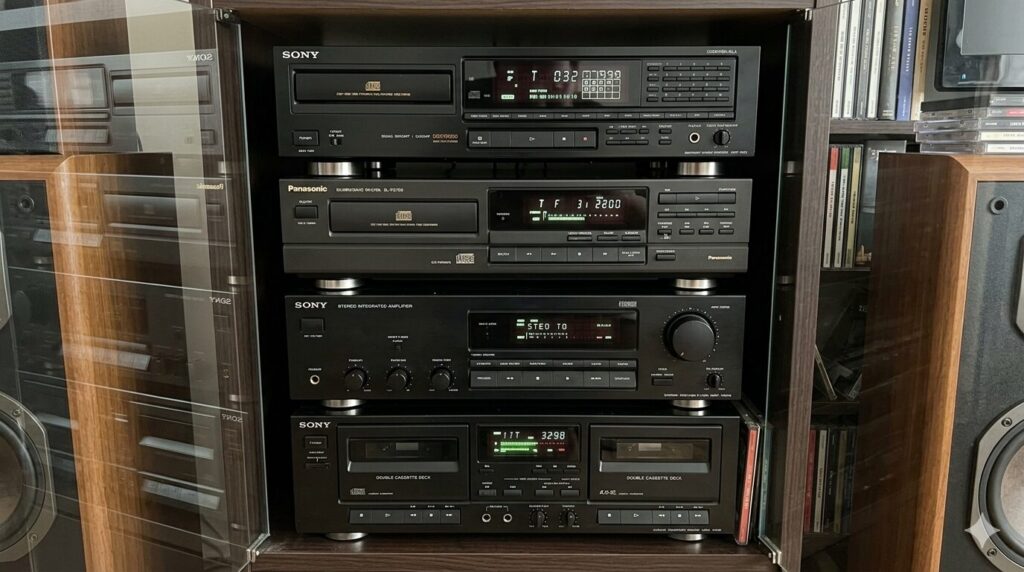
Japan also led the transition to digital audio.
Sony and Philips introduced the compact disc in 1982.
Japanese companies quickly developed:
• CD players
• Portable CD players
• Mini Hi-Fi systems
Digital sound quality improved dramatically.
This era marked the transition to modern music listening.
This listening culture also shaped modern music production:
👉 How Japan Shaped Modern Music
Japanese Black Electronics Design Philosophy
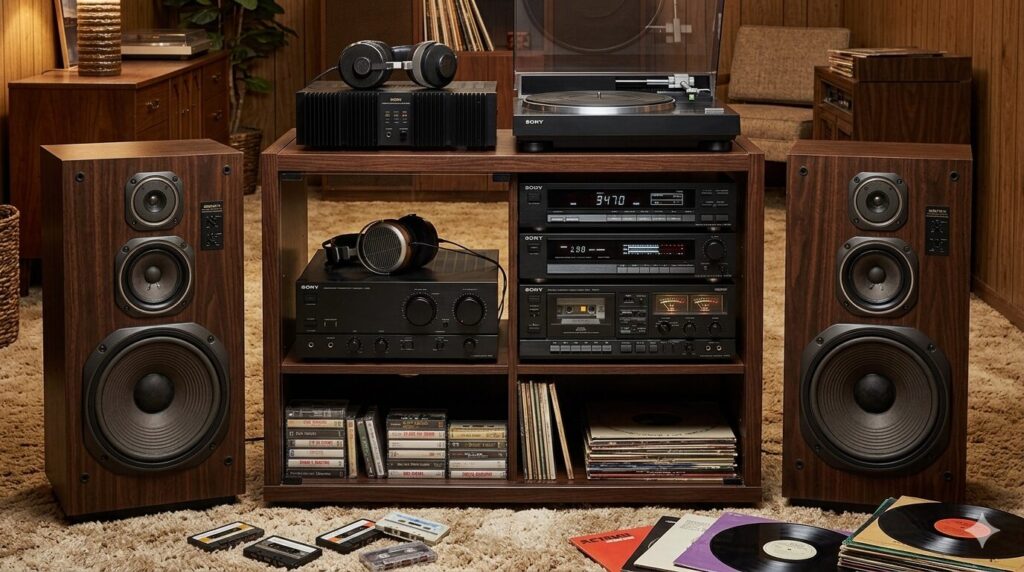
One of the most iconic aspects of this era was Black Electronics.
Japanese audio systems often featured:
• Matte black finishes
• Clean layouts
• Precision buttons
These designs became iconic.
They represented:
• Professional quality
• Minimalism
• Technology sophistication
Even today, vintage Japanese audio equipment is admired for its design.
The Global Impact of Japanese Audio
Japanese electronics spread worldwide.
American and European consumers embraced Japanese devices.
Japanese audio influenced:
• Music production
• Home entertainment
• Portable listening
Japan’s electronics became global standards.
Why Japanese City Pop Sounded So Advanced

Japanese City Pop in the 1980s did not emerge by accident.
It was the result of a unique environment that existed only in Japan at the time.
During the 1980s, Japan had one of the largest music markets in the world.
With a large population and strong consumer demand, record sales were extremely high.
This created an environment where artists could invest more in production quality.
At the same time, Japan’s electronics manufacturers played a major role.
Companies like Sony were not only producing consumer electronics, but also professional recording equipment.
In some cases, they even owned record labels and music distribution networks.
This meant that Japan had a complete music ecosystem:
• Musical instruments
• Recording equipment
• Audio playback devices
• Record labels
• Music distribution
• Consumers
Few countries in the world had all of these elements working together.
Japanese musicians also played a critical role.
Session musicians in Japan during the 1980s were known for their exceptional technical skills.
Many artists had strong musical training and professional studio experience.
This resulted in highly polished recordings with precise arrangements and sophisticated sound design.
Japanese musicians also had access to cutting-edge technology.
Synthesizers from Yamaha, Roland, and Korg were widely available.
Professional recording studios were equipped with advanced Japanese audio gear.
This allowed Japanese artists to experiment with new sounds and production techniques.
As a result, City Pop developed a polished and sophisticated sound that still feels modern today.
International artists from the US and UK also toured Japan frequently during the 1980s.
Japan’s large market made it one of the most important destinations for global musicians.
This constant exposure to global trends helped Japanese artists stay at the forefront of modern music.
In many ways, Japan was not just producing music — it was building a complete sound culture.
This unique environment helped create the high-quality sound that defines Japanese City Pop.
Hamamatsu and Japan’s Sound Industry
Few people realize that Japan’s sound industry had a geographic center.
Hamamatsu, in Shizuoka Prefecture, became home to:
• Yamaha
• Roland
• Kawai
• Suzuki
This created a unique ecosystem.
Instrument makers and electronics companies influenced each other.
This environment accelerated innovation.
Hamamatsu became one of the most important cities in global sound history.
Today, visitors can still explore this cultural heritage.
From Electronic Instruments to DJ Culture
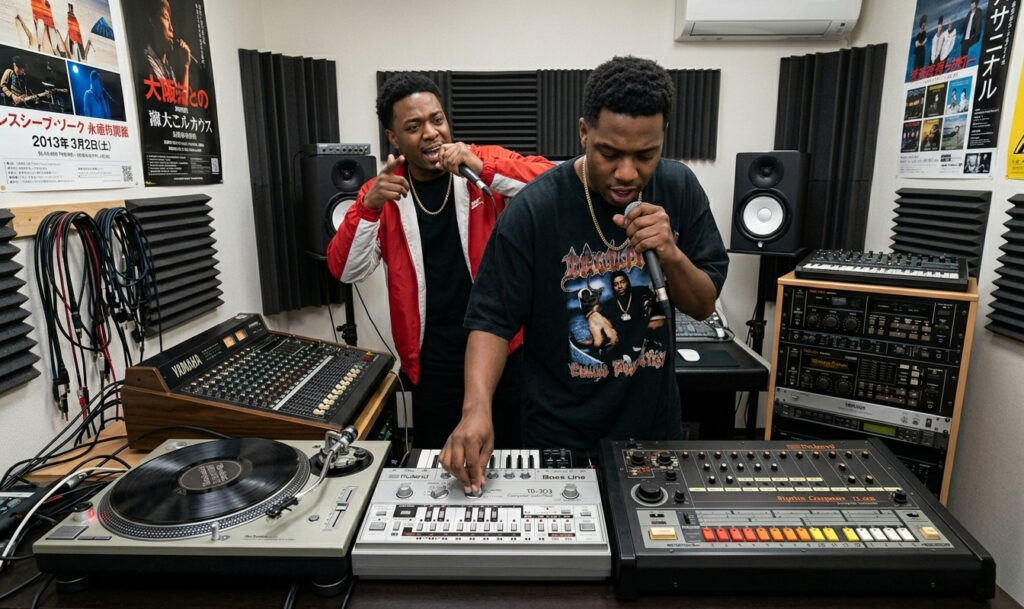
Japanese electronic instrument manufacturers also played a major role in the development of DJ and groove culture.
Companies such as Roland, Yamaha, and Korg did not only produce traditional musical instruments.
They created rhythm machines, synthesizers, and groove devices that became essential tools for electronic music.
Roland’s SP404 sampler and Effector, TR-808 and TR-909 drum machines helped shape hip-hop, techno, and house music.
Korg introduced grooveboxes such as the Electribe, making electronic music production more accessible.
Yamaha also developed synthesizers and music production tools used by artists worldwide.
These instruments blurred the line between musicians and DJs.
Electronic music producers began performing live using drum machines, synthesizers, and sequencers.
This shift helped create modern DJ and live electronic performance culture.
In many ways, Japanese electronic instrument manufacturers helped shape not only music production — but also club culture itself.
Why DJs Still Trust Japanese Equipment Today

Even in the digital age, Japanese audio equipment remains essential in modern music culture.
Today, many DJs use laptops, software, and controllers.
However, classic Japanese hardware still dominates professional environments.
Technics turntables from Panasonic remain industry standards.
Pioneer DJ systems continue to be used in clubs, festivals, and large-scale events worldwide.
Denon, another Japanese brand, also played a major role in the evolution of professional DJ equipment.
In fact, Denon introduced some of the world’s first professional CD players for DJs, helping transition the industry from vinyl to digital formats.
Technics also played a historic role in DJ culture.
The Technics SL-1200 series became legendary for its durability and precision.
Models such as the SL-1200MK2, MK3, and MK4 became essential tools for DJs around the world.
These turntables were built to withstand intense scratching and heavy club use.
Even under aggressive performance conditions, they maintained stable speed and high reliability.
This durability helped shape the rise of hip-hop, scratching, and DJ performance culture.
Another important Japanese brand was Vestax.
Vestax became highly respected among professional DJs for mixers and turntables designed specifically for scratching and performance.
Although the company no longer exists, Vestax equipment remains iconic in DJ history.
But why do professionals still rely on these machines?
Because in live performance, reliability is everything.
If DJ equipment fails during a performance, the music stops.
And when the music stops, the entire event stops.
For DJs, clubs, and event organizers, this is not just a minor issue — it is a critical failure.
This is where Japanese equipment stands apart.
Japanese manufacturers built their reputation not only on sound quality, but also on long-term reliability, service support, and maintenance.
Professional venues need equipment that can be trusted for years — even decades.
Technics turntables, Pioneer DJ systems, Denon players, and Vestax mixers are known for their durability, repairability, and consistent performance.
This level of trust was not built overnight.
It comes from over 50 years of engineering, craftsmanship, and manufacturing philosophy that began in Japan’s golden era of electronics.
Even today, this legacy continues to shape modern music culture.
From underground clubs to massive festival stages, Japanese audio equipment remains a quiet but essential force behind the sound of modern music.
Here’s something that surprises many people — even Audio-Technica is a Japanese brand. Together with Sony, these companies have become global standards, trusted by professionals for their durability and sound quality in demanding environments like recording studios and massive outdoor festivals.
Experience the Legacy in Japan
Today, you can still experience this culture in Japan.
Vintage audio shops
Electronics stores
Museums
Shizuoka and Hamamatsu remain important locations.
Visitors can explore:
• Music culture
• Manufacturing heritage
• Electronics history
This is more than nostalgia.
It’s a living culture.
Why You Should Visit Shizuoka and Hamamatsu
If you love music, technology, or Japanese culture, Shizuoka is a must-visit destination.
Here you can experience:
• Musical instrument factories
• Vintage electronics shops
• Japanese craftsmanship
Hamamatsu represents a unique intersection of:
Music
Technology
Craftsmanship
Few places in the world offer this experience.
Many of these innovations are connected to Hamamatsu, Japan’s hidden hub of sound culture.
👉 Hamamatsu: The City That Shaped Global Sound
It Wasn’t Just Sony — It Was Japan
The phrase “It’s Sony” became famous around the world during the 1980s.
But the truth is, it wasn’t just Sony.
It was Japan.
Japanese companies across multiple industries were pushing innovation at the same time.
Sony created the Walkman.
Panasonic developed legendary Technics turntables.
Pioneer built professional DJ systems.
Denon introduced early digital DJ players.
Yamaha, Roland, and Korg revolutionized electronic instruments.
Together, these companies created a powerful ecosystem.
This was not just competition — it was a cultural movement.
Japan didn’t just build electronics.
Japan built modern sound culture.
And even today, that legacy continues around the world.
Conclusion: Japan Designed Modern Sound Culture
Japan didn’t just build electronics.
Japan created modern sound culture.
From Walkman to Hi-Fi systems, Japan transformed how we experience music.
The legacy of 80s–90s Japanese electronics continues today.
And the story begins in Japan.
Especially in Shizuoka and Hamamatsu.
FAQ: Japanese Electronics Golden Age
Q: What is the Japanese Electronics Golden Age?
The Japanese Electronics Golden Age refers to the 1980s and 1990s, when Japanese companies such as Sony, Panasonic, Toshiba, and Pioneer dominated the global consumer electronics market.
During this era, Japan created innovative products including the Sony Walkman, Hi-Fi stereo systems, cassette decks, and CD players. These devices transformed how people listened to music and experienced entertainment.
This period is widely considered one of the most influential eras in modern technology and audio culture.
Q: Why are 80s–90s Japanese electronics still popular today?
80s–90s Japanese electronics remain popular because of their:
• High build quality
• Excellent sound performance
• Unique design
• Reliability
Many collectors and audiophiles believe that Japanese electronics from this era were built with greater attention to detail and craftsmanship than modern devices.
This is why vintage Japanese audio equipment continues to attract fans worldwide.
Q: What made Japanese Hi-Fi systems special?
Japanese Hi-Fi systems were designed with a focus on sound quality and user experience.
These systems often included:
• Amplifiers
• Cassette decks
• CD players
• Speakers
Japanese manufacturers carefully engineered these components to deliver superior sound quality.
As a result, Japanese Hi-Fi systems became popular worldwide during the 1980s and 1990s.
Q: How did the Sony Walkman change music culture?
The Sony Walkman revolutionized music listening by making it portable and personal.
Before the Walkman, music was mostly enjoyed at home.
After the Walkman, people could listen to music anywhere.
This changed:
• Music consumption
• Music production
• Listening habits
The Walkman helped create modern personal audio culture.
Q: Why did Japan dominate electronics in the 1980s?
Japan dominated electronics due to:
• Strong manufacturing culture
• Precision engineering
• Innovation
• Design philosophy
Japanese companies focused on quality and long-term value, which helped them lead the global electronics industry.
Q: Are vintage Japanese audio systems still worth buying?
Yes. Many vintage Japanese audio systems still offer excellent sound quality and durability.
Collectors often seek:
• Sony
• Pioneer
• Panasonic
• Toshiba
However, buyers should check condition and maintenance before purchasing vintage equipment.
Q: Where can you experience Japanese electronics culture today?
You can experience Japanese electronics culture in:
• Tokyo electronics districts
• Vintage audio shops
• Museums
• Shizuoka and Hamamatsu
Hamamatsu is especially important because it is home to Yamaha, Roland, and other sound-related manufacturers.
Q: Why is Hamamatsu important in Japanese sound culture?
Hamamatsu became a center for musical instruments and audio technology.
Companies based in Hamamatsu include:
• Yamaha
• Roland
• Kawai
• Suzuki
This concentration of companies created a unique innovation environment.
Hamamatsu played a major role in shaping global sound culture.
Q: How did Japanese electronics influence modern music?
Japanese electronics influenced modern music through:
• Synthesizers
• Drum machines
• Portable audio
• Home recording tools
These technologies helped create modern music production.
Q: Why should I visit Japan for electronics and music culture?
Japan offers a unique experience where visitors can explore:
• Vintage electronics
• Music culture
• Manufacturing heritage
• Craftsmanship
Shizuoka and Hamamatsu are especially recommended destinations for music and technology enthusiasts.
Related Articles
- Why Smart Riders Skip Tokyo — And Discover Japan’s Hidden Motorcycle & 80s Hobby Culture Paradise Instead
- How Japan Shaped Modern Music
- Hamamatsu: The City That Shaped Global Sound
- Japanese Motorcycle Manufacturing Culture
- Why Japan is a Paradise for Hobby Lovers
- Ultimate Guide to Japanese Hobby Culture
- Ultimate Guide to Motorcycle Touring in Japan