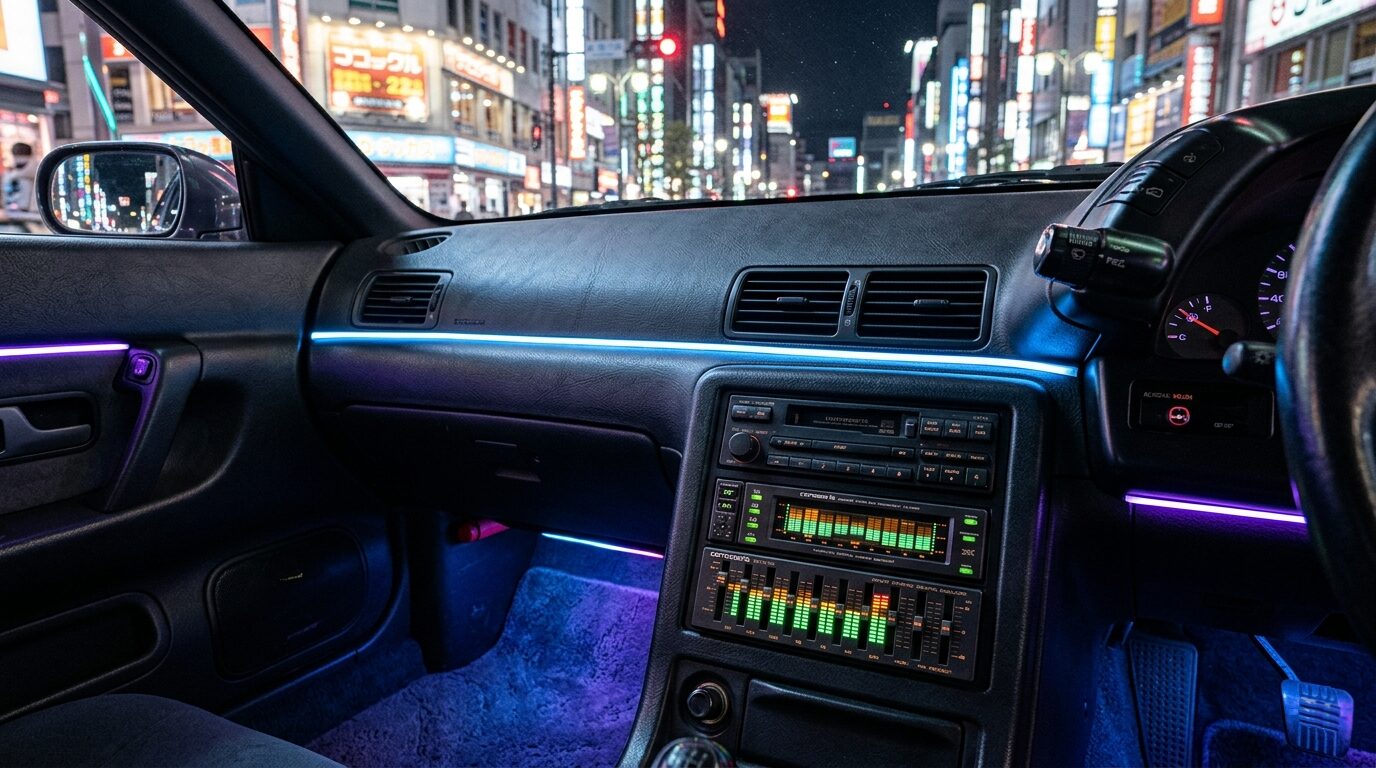
- Introduction: When Cars Became Music Machines
- 🎧 Song of the Day
- Who This Article Is For
- The Rise of Japanese Car Audio Culture
- The Major Japanese Car Audio Brands
- Japanese Youth Car Culture in the 1980s
- Japanese Racing Games and Car Culture
- The Connection Between Games, Music, and Car Audio
- Why Japanese Game Music Sounded So Advanced
- The Role of Music Distribution
- Japanese vs Overseas Car Audio Culture
- Why 80s–90s Japanese Car Audio Was So Advanced
- Why JDM Enthusiasts Still Seek Japanese Car Audio
- Experience JDM Culture in Japan
- The Future of Japanese Car Audio Culture
- 🎧 Drive into the golden era: Tatsuro Yamashita — A Defining Sound of Japanese Driving Culture
- Conclusion
- FAQ
- Related Articles
Introduction: When Cars Became Music Machines
Before smartphones.
Before streaming.
Before Bluetooth.
Cars were the most important place to listen to music.
And Japan led that revolution.
During the 1980s and 1990s, Japan didn’t just manufacture cars — it created a new lifestyle centered around driving and music.
Japanese car audio systems transformed vehicles into:
• Personal listening rooms
• Social gathering spaces
• Cultural identity symbols
• Mobile entertainment environments
Companies like Pioneer, Sony, Alpine, Panasonic, and Kenwood competed intensely.
This competition accelerated innovation and created some of the most iconic car audio systems ever built.
Today, 80s–90s Japanese car audio systems remain highly sought after by:
• JDM enthusiasts
• Collectors
• Audiophiles
• Retro tech fans
Many enthusiasts refer to these systems as JDM car audio, a term that represents Japan’s unique automotive sound culture.
But why do these systems still fascinate the world?
This article explains:
• Why Japan dominated car audio
• How youth culture shaped innovation
• Why JDM audio systems still matter today
• Where you can experience this culture in Japan
By the end of this article, you will understand why Japan turned cars into music machines — and why that legacy still matters today.
To understand Japan’s broader electronics influence:
👉 Japanese Electronics Golden Age
🎧 Song of the Day
Hand-picked 80s songs for touring, driving, and exploring Japan’s golden era.
The 1980s marked Japan’s golden age — when Japanese motorcycles, synthesizers, black audio electronics, car audio systems, karaoke machines, City Pop, and model kits helped shape modern global culture.
👇 Press play before reading
Before diving into the Japanese Car Audio Golden Age, press play on “SPARKLE” by Tatsuro Yamashita. From the very first guitar hit, the song feels like motion — sunlight reflecting off polished paint, smooth acceleration, and the unmistakable joy of driving with great sound.
Released in 1982, SPARKLE is a defining moment in Japanese 80s music and City Pop. The crisp guitar, smooth bassline, and shimmering synth layers create a refined audio experience that feels engineered for driving. This wasn’t just pop — it was music designed to be heard through high-quality speakers, capturing the rise of electronic sound and Japan’s growing obsession with premium car audio.
That sound reflects the peak of Japanese music culture. Yamaha instruments shaped the harmonic richness, Roland rhythm machines delivered tight grooves, and Korg synthesizers added texture and atmosphere. Guitar tones refined through BOSS effectors — developed by Roland in Japan — gave tracks like SPARKLE their clarity and precision. Meanwhile, Sony’s Walkman and Japan’s booming car audio systems turned everyday drives into cinematic experiences.
This same engineering philosophy defines Hamamatsu:
Music → Yamaha instruments
Sound → Sony audio innovation
Precision → motorcycles, cars, and model kits
Imagine cruising along Lake Hamana, golden reflections on the water, SPARKLE playing through a perfectly tuned JDM sound system. That moment — technology, music, and motion — is pure Japan.
Press play. Feel the sparkle. Drive into the golden era. 🚗🎶
To explore the Japanese music revolution further:
👉 How Japan Shaped Modern Music
Who This Article Is For
This guide is for:
• JDM car enthusiasts
• Retro car audio collectors
• 80s–90s car culture fans
• Japanese culture enthusiasts
• Travelers interested in visiting Japan
If you love cars, music, or Japanese culture — this article is for you.
The Rise of Japanese Car Audio Culture
During the 1980s, Japan experienced rapid economic growth.
Young people had more disposable income.
Cars became lifestyle products rather than simple transportation.
At the same time, Japan’s electronics industry was booming.
Companies such as:
• Sony
• Pioneer
• Panasonic
• Kenwood
competed aggressively.
This created a unique ecosystem:
• Car manufacturers
• Audio equipment makers
• Retail stores
• Custom shops
• Music distribution networks
All existed within Japan.
Few countries had this level of integration.
This environment allowed Japanese youth to customize cars and create personalized audio experiences.
This was the birth of Japanese car audio culture.
The Major Japanese Car Audio Brands
Pioneer (Carrozzeria)
Pioneer’s Carrozzeria became one of the most iconic brands.
Known for:
• Futuristic design
• High-quality sound
• Advanced head units
Carrozzeria became synonymous with high-end JDM car audio.
Alpine
Alpine focused on premium sound systems and professional installations.
Popular among:
• High-end builds
• Competition vehicles
• Luxury cars
Sony
Sony introduced advanced digital technology into car audio.
Innovations included:
• CD players
• Digital sound processing
• High-end cassette decks
Sony’s consumer electronics expertise gave it an advantage.
Kenwood
Kenwood focused on powerful amplifiers and reliability.
Known for:
• Strong bass
• Durable design
• User-friendly interfaces
Panasonic
Panasonic developed highly reliable car audio systems.
Their engineering focused on durability and longevity.
Other Influential Japanese Brands
• Clarion
• DIATONE (Mitsubishi)
• Eclipse (Fujitsu Ten / Denso)
These companies helped define Japanese car audio culture.
These brands became the foundation of JDM car audio culture, influencing enthusiasts around the world.
Japanese Youth Car Culture in the 1980s
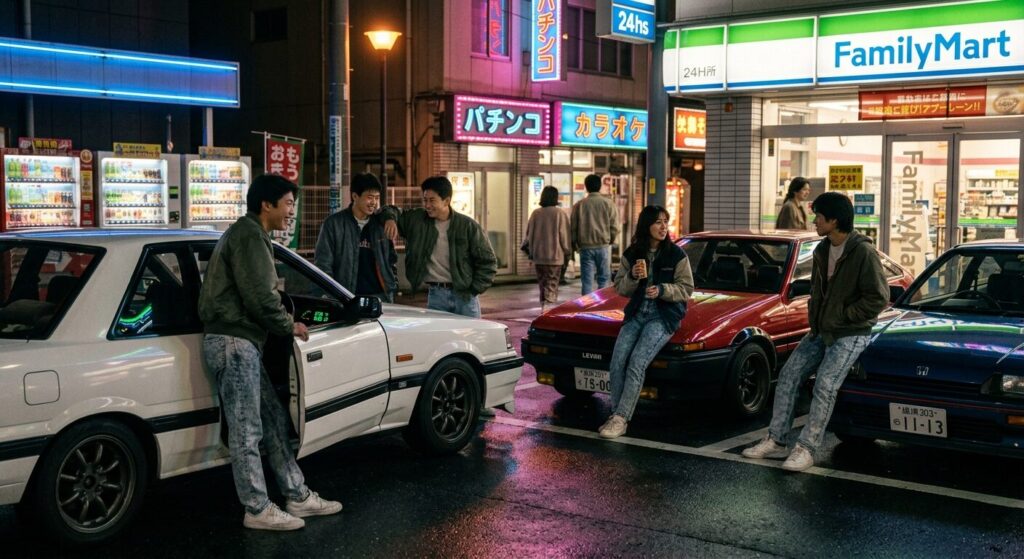
Car audio became deeply connected to youth culture.
Dating Cars and Music
Cars became private spaces for young couples.
Popular destinations included:
• Night views
• Coastal roads
• Mountain drives
Music became essential.
Cars became moving living rooms.
Street Racing Culture
Street racing also influenced car audio.
Drivers listened to:
• Eurobeat
• Rock
• Dance music
Music created energy and atmosphere.
This culture later influenced Initial D and Fast & Furious.
Parking Area Audio Culture
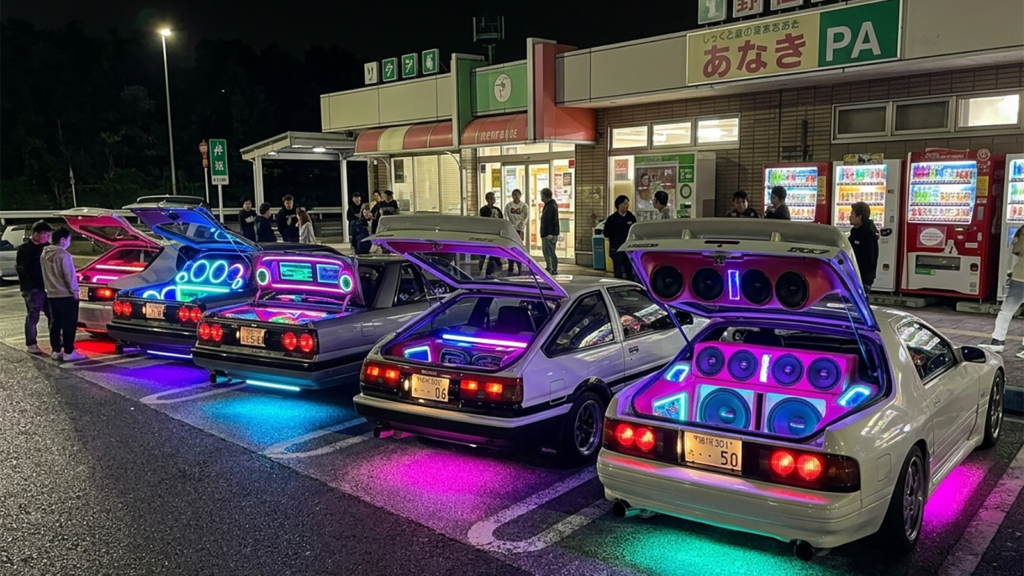
Enthusiasts gathered at:
• Highway service areas
• Parking lots
• Urban highways
They showcased:
• Loud sound systems
• Custom lighting
• Unique builds
This became a unique Japanese culture.
Japanese Racing Games and Car Culture
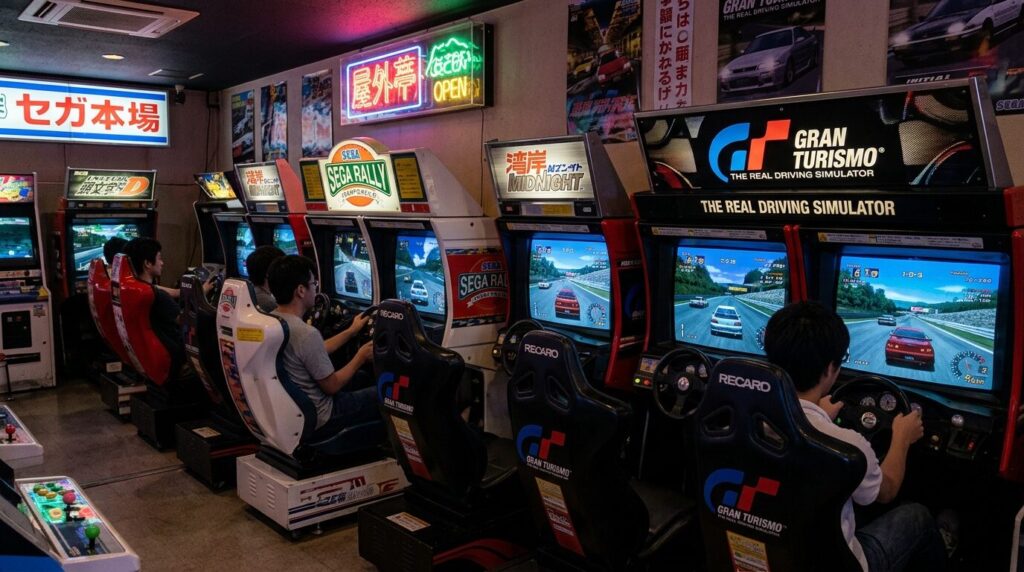
Japan’s car culture also expanded into video games.
Namco’s Pac-Man (1980) helped establish Japan as a global gaming leader.
Soon after, Namco developed racing games:
• Rally-X (1980)
• Pole Position (1982)
• Winning Run (1988)
Later, Sega pushed realism:
• Virtua Racing (1992)
• Sega Rally Championship (1994)
These innovations led to Gran Turismo (1997).
Japan’s strength came from a unique ecosystem:
• Youth car culture
• Electronics companies
• Automotive manufacturers
• Competitive game industry
These industries worked together.
The Connection Between Games, Music, and Car Audio
Japanese racing games relied heavily on music.
Game soundtracks featured:
• Electronic music
• Rock
• Dance music
• Ambient soundscapes
Driving became an experience.
Music completed that experience.
This mirrored real Japanese car audio culture.
Why Japanese Game Music Sounded So Advanced
Japan had advanced music technology.
Companies like:
• Yamaha
• Roland
• Sony
helped shape game music.
Developers were influenced by:
• City Pop
• Electronic music
• Club culture
This created sophisticated soundtracks.
To explore Japanese sound culture further:
👉 How Japan Shaped Modern Music
To explore Japanese car culture further:
👉 Complete History of Japanese Motorcycles: Global Dominance Explained
The Role of Music Distribution
Japan had CD rental shops like TSUTAYA.
This allowed:
• Music discovery
• Experimentation
• Cultural expansion
This accelerated car audio culture.
Japanese vs Overseas Car Audio Culture
Japan focused on:
• Design
• Customization
• Sound quality
Overseas focused on:
• Security
• Simplicity
Why 80s–90s Japanese Car Audio Was So Advanced
The 1980s and 1990s represented a unique period in Japan.
During this time, several industries evolved simultaneously:
• Automotive manufacturers
• Electronics companies
• Music industry
• Youth culture
• Retail distribution
Few countries had this level of integration.
Japanese manufacturers competed intensely.
This competition accelerated innovation.
New technologies emerged rapidly:
• Cassette decks
• CD players
• MiniDisc
• Graphic equalizers
• Multi-amplifier systems
Car audio became a technological showcase.
This is why 80s–90s Japanese car audio still feels advanced today.
Why JDM Enthusiasts Still Seek Japanese Car Audio
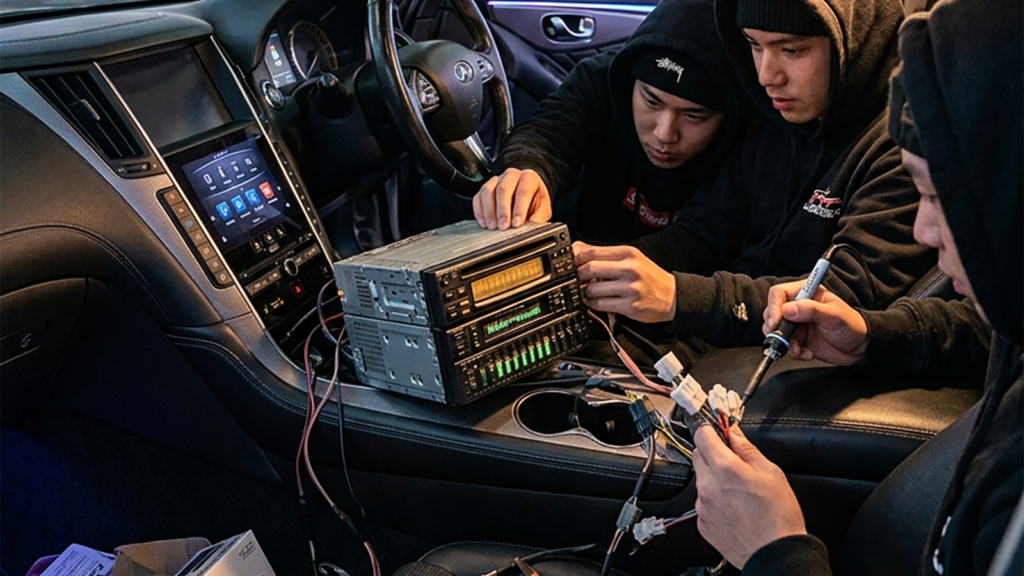
Many enthusiasts today are searching for vintage Japanese car audio systems.
Why?
Because modern systems often lack:
• Unique design
• Physical controls
• Analog sound character
Vintage Japanese car audio offers something different.
It offers personality.
For many enthusiasts, restoring vintage Japanese audio systems is part of the hobby.
This is why demand continues to grow.
Experience JDM Culture in Japan
Visit:
• Tokyo
• Osaka
• Shizuoka
• Hamamatsu
Hamamatsu is especially important.
👉 Why Hamamatsu Is the True Motorcycle Capital of the World
👉 Hamamatsu: The City That Shaped Global Sound (Yamaha, Roland, and Beyond)
The Future of Japanese Car Audio Culture
Japanese car audio culture is evolving again.
Today’s enthusiasts are combining:
• Vintage audio equipment
• Modern cars
• Digital sources
This creates a new generation of JDM culture.
The influence of Japanese car audio continues.
Discover more Japanese hobby culture:
👉 Why Japan is a Paradise for Hobby Lovers
JDM retro style
🎧 Drive into the golden era: Tatsuro Yamashita — A Defining Sound of Japanese Driving Culture
👇 Feel the golden era again
Tatsuro Yamashita is one of the most influential artists in Japanese City Pop.
His music became synonymous with driving, summer nights, and premium audio experiences.
Watch this unique song promotion video:
Through this video, you can discover more of Tatsuro Yamashita’s timeless sound — a perfect match for the Japanese Car Audio Golden Age.
Before you leave, press play and imagine yourself behind the wheel of a classic Japanese car.
Tatsuro Yamashita – FUNKY FLUSHIN’ perfectly captures the spirit of Japan’s golden age of car audio.
From the smooth groove to the refined production, this track feels designed for late-night cruising.
Released during Japan’s peak era of music and technology, FUNKY FLUSHIN’ reflects the same philosophy that shaped Japanese car audio:
• Smooth sound
• Precision engineering
• Emotional driving experience
Imagine driving through coastal roads, neon-lit cities, or quiet mountain highways — with a perfectly tuned JDM car audio system.
This is not just music.
This is the sound of Japan’s golden era.
Press play.
Drive into the golden era. 🚗🎧
Bonus Track: So nice song for summer.
🎧Every article features a curated 80s hit or Japanese City Pop track.
Press play and experience how Japan, synth culture, and 80s music shaped global sound.
👉 How Japan Shaped Modern Music: The 1980s Synth Revolution, Sony Walkman, and the Rise of Global Sound Culture
👉 80s Music Culture
👉 80s Hobby Culture
Conclusion
Japan didn’t just build car audio systems.
Japan created a culture.
The sound of the golden age still lives today.
Today, JDM car audio continues to inspire enthusiasts worldwide, connecting vintage technology with modern car culture.
FAQ
Why is Japanese car audio popular?
Because of quality, design, and innovation.
What brands are most popular?
Pioneer, Sony, Alpine, Kenwood.
Where can I experience JDM culture?
Japan, especially Shizuoka and Hamamatsu.
Why are vintage Japanese car audio systems expensive?
Because of limited supply, high quality, and growing global demand.
What is the most iconic Japanese car audio brand?
Pioneer Carrozzeria is often considered one of the most iconic.
Are vintage Japanese car audio systems still usable?
Yes, many enthusiasts still use and restore them.