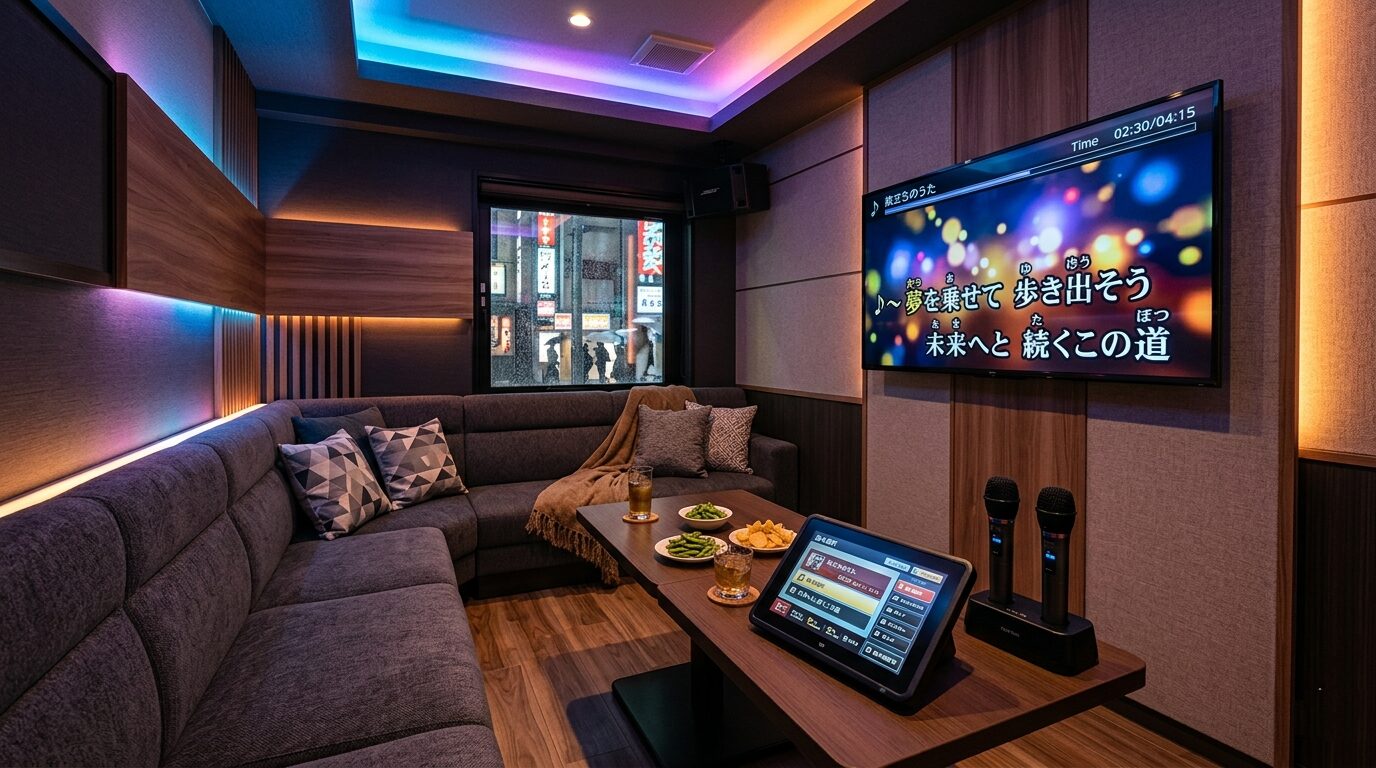
- Introduction: Japan Didn’t Just Create Karaoke — It Created a New Way to Enjoy Music
- 🎧 Song of the Day
- Who This Article Is For
- The Birth of Karaoke in Japan
- Early Karaoke Technology: 8-Track and Cassette Systems
- From Bars to Private Karaoke Boxes
- The Rise of Karaoke Box Culture
- LaserDisc and the Video Karaoke Revolution
- The Wireless Microphone Revolution
- Communication Karaoke and Digital Revolution
- Japan’s Massive Song Library
- The Evolution of Song Selection Technology
- Karaoke Culture Around the World
- Why Japan’s Karaoke Is Unique
- Karaoke and Japanese Audio Technology
- Why You Should Experience Karaoke in Japan
- Experience Karaoke in Shizuoka and Hamamatsu
- 🎧 Drive into the golden era
- Conclusion: Japan Created Karaoke Culture
- FAQ
- Related Articles
Introduction: Japan Didn’t Just Create Karaoke — It Created a New Way to Enjoy Music
Before streaming.
Before YouTube.
Before smartphones.
Japan invented something revolutionary.
Karaoke.
But karaoke wasn’t just a machine.
It was a completely new entertainment culture.
Japan transformed music from something you listen to — into something you experience.
Today, karaoke exists worldwide.
But nowhere has evolved karaoke like Japan.
In Japan, karaoke became:
• A social activity
• A personal hobby
• A music discovery platform
• A cultural experience
And today, Japan still leads the world.
If you want to experience the ultimate karaoke culture —
you must come to Japan.
This article explains:
• How Japan invented karaoke
• Why Japan dominates karaoke culture
• How technology changed karaoke
• Why Japan has the best karaoke in the world
• Where you can experience karaoke in Japan
By the end, you’ll understand why karaoke is one of Japan’s most unique cultural innovations.
🎧 Song of the Day
Hand-picked 80s songs for touring, driving, and exploring Japan’s golden era.
The 1980s marked Japan’s golden age — when Japanese motorcycles, synthesizers, black audio electronics, car audio systems, karaoke machines, City Pop, and model kits helped shape modern global culture.
👇 Press play before reading
Before you step into the world of Japanese karaoke culture, press play—because this song isn’t just music, it’s a global singalong moment waiting to happen.
“Girls Just Want To Have Fun” by Cyndi Lauper is the heartbeat of 80s music—bright, rebellious, and irresistibly joyful. With its playful synth lines and infectious energy, it captures the spirit of freedom and self-expression that defined the decade. It’s the kind of track that doesn’t stay in your headphones—it demands to be sung out loud.
And that’s where Japan quietly changed everything. While this song spread across the world, Japan was building the machines that would transform music into a shared experience. Karaoke systems—powered by Japanese audio innovation—turned songs like this into something interactive. Backed by technology from Yamaha, Roland, Korg, and BOSS guitar effectors, and amplified by Sony’s Walkman-era listening culture, music became something you didn’t just hear—you performed.
This same precision and creativity runs through Hamamatsu and Shizuoka. The craftsmanship behind musical instruments mirrors the engineering of motorcycles and the detail of model kits. It’s all connected: sound, structure, and experience—made in Japan, shared globally.
Picture a neon-lit karaoke room, friends laughing, someone grabbing the mic as this song starts. No pressure—just pure fun. That moment? That’s Japanese music culture in action.
If you want to understand it, don’t just read—press play, grab the mic, and join the world in singing.
Who This Article Is For
This guide is for:
• Music lovers
• Travelers visiting Japan
• Japanese culture fans
• Karaoke enthusiasts
• City Pop fans
If you love music and culture, this article is for you.
The Birth of Karaoke in Japan
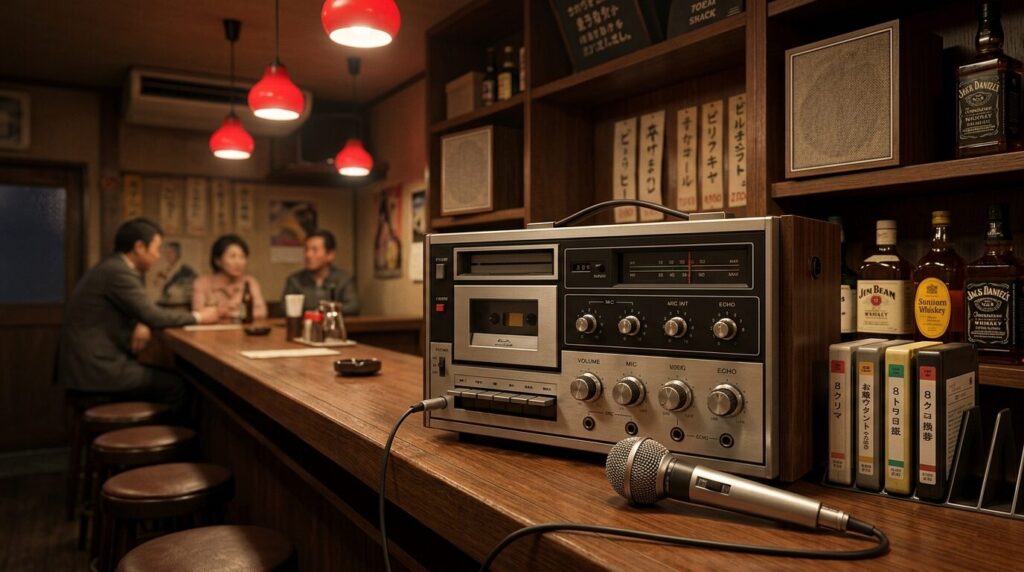
Karaoke was invented in Japan in the 1970s.
The early form of karaoke appeared in:
• Snack bars
• Small bars
• Nightlife venues
Customers would sing along with:
• Live guitar
• Instrumental recordings
In 1971, Japanese musician Daisuke Inoue developed one of the first karaoke machines.
This simple invention changed entertainment forever.
Soon, karaoke machines spread across Japan.
Early Karaoke Technology: 8-Track and Cassette Systems
Early karaoke machines used:
• 8-track tapes
• Cassette tapes
Companies like Clarion began producing karaoke equipment.
Interestingly, many karaoke manufacturers were also car audio companies.
This connection shaped both:
• Car audio culture
• Karaoke culture
Japan’s audio industry played a major role.
From Bars to Private Karaoke Boxes
Originally, karaoke was performed in front of strangers.
But Japan created something unique:
Private karaoke rooms.
This concept began in Okayama Prefecture.
Shipping containers were converted into small karaoke rooms.
This innovation allowed:
• Friends to sing together
• People to sing privately
• Beginners to feel comfortable
This changed karaoke forever.
The Rise of Karaoke Box Culture
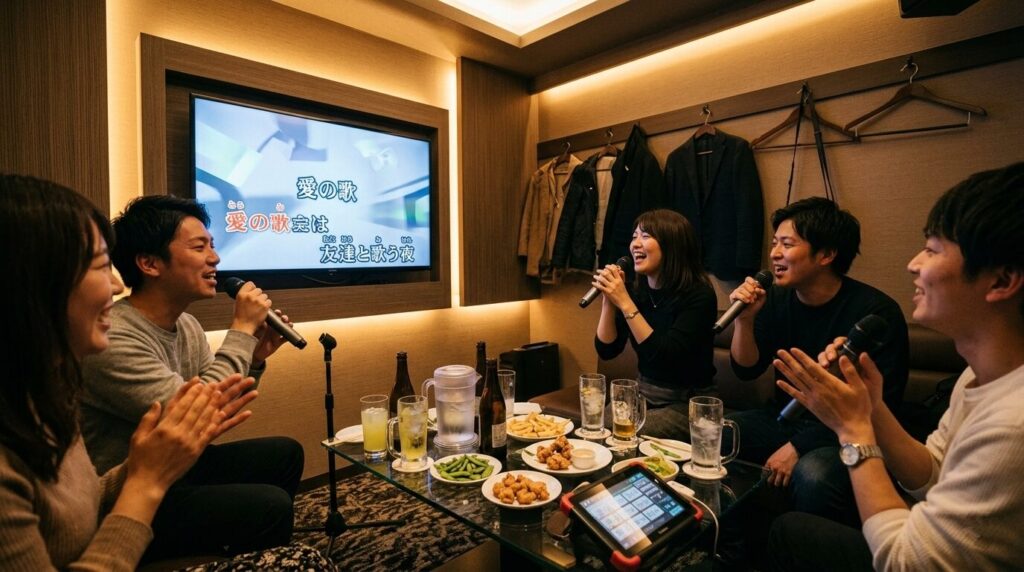
Private karaoke rooms became popular.
This led to:
• Karaoke chains
• Private party rooms
• Solo karaoke
Japan even created:
• Solo karaoke booths
• Karaoke for instrument practice
Students often use karaoke rooms to practice:
• Guitar
• Singing
• Band rehearsals
This flexibility is unique to Japan.
LaserDisc and the Video Karaoke Revolution
In the 1980s, karaoke evolved again.
Pioneer introduced LaserDisc karaoke systems.
This allowed:
• Music videos
• Background visuals
• Enhanced entertainment
This era coincided with MTV culture.
Karaoke became visual entertainment.
The Wireless Microphone Revolution
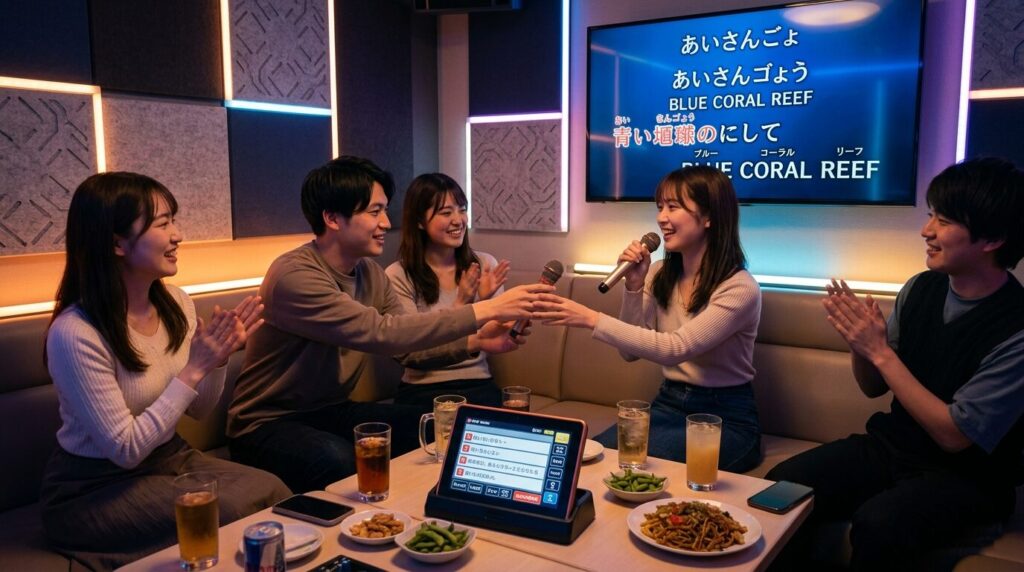
One of the most important innovations in karaoke history was the introduction of wireless microphones.
Japanese audio companies such as Sony and Audio-Technica played a major role in developing wireless microphone technology.
Early karaoke systems used wired microphones. While functional, they created several problems:
• Cables became tangled
• Limited movement
• Risk of disconnection
• Difficult setup and cleanup
Japanese engineers solved these problems by introducing wireless microphone systems.
Infrared wireless microphones became widely used in Japanese karaoke rooms.
Interestingly, karaoke remote controllers (song selection remotes) also used infrared technology.
This created a fully wireless karaoke experience.
The benefits were significant:
• Sing from anywhere in the room
• Pass microphones easily between friends
• Perfect for duets and group singing
• No cable tangling
• Faster setup and cleanup
Wireless microphones made karaoke more social and more comfortable.
This innovation helped transform karaoke from a simple machine into a full entertainment experience.
Today, karaoke technology continues to evolve.
Modern karaoke systems now use:
• Bluetooth microphones
• Digital wireless systems
• Smartphone integration
These technologies make karaoke even more flexible and accessible.
Once again, Japanese companies continue to lead innovation in audio entertainment.
This is another example of how Japan didn’t just create karaoke — Japan continuously reinvented it.
Communication Karaoke and Digital Revolution
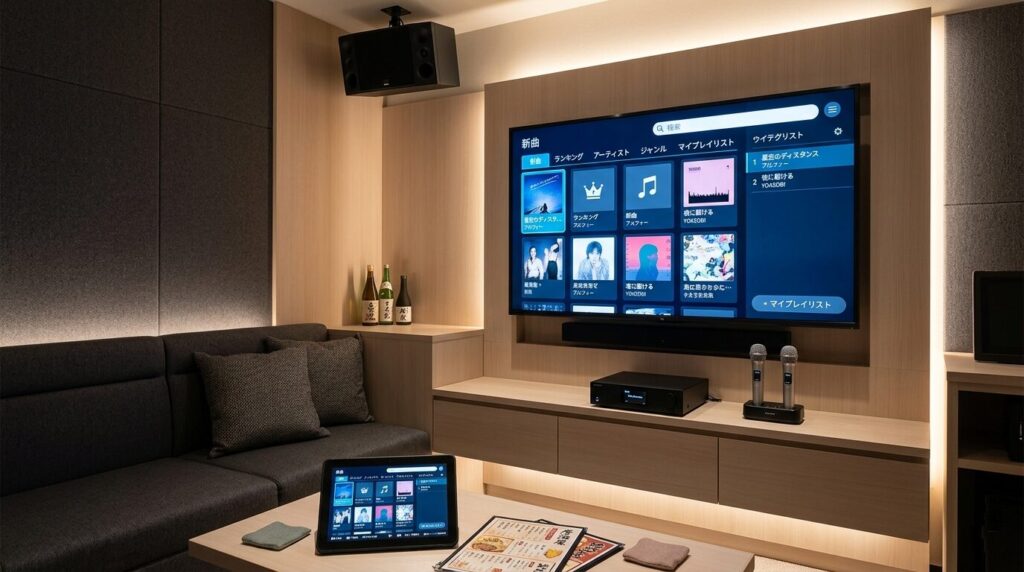
Later, communication karaoke emerged.
Major companies included:
• DAM (Daiichikosho)
• JOYSOUND (Xing)
• UGA (Brother)
These systems connected to networks.
This allowed:
• Faster song updates
• Massive song libraries
• Global music access
This was a major breakthrough.
Japan’s Massive Song Library
One of Japan’s biggest advantages:
Song selection.
Japanese karaoke systems offer:
• Japanese songs
• Western music
• Anime songs
• Indie music
• Vocaloid songs
Even songs from:
• YouTube creators
• Indie artists
• Vocaloid creators (Hatsune Miku)
This is rare globally.
Japan has one of the largest karaoke libraries in the world.
This makes karaoke exciting for younger generations.
The Evolution of Song Selection Technology
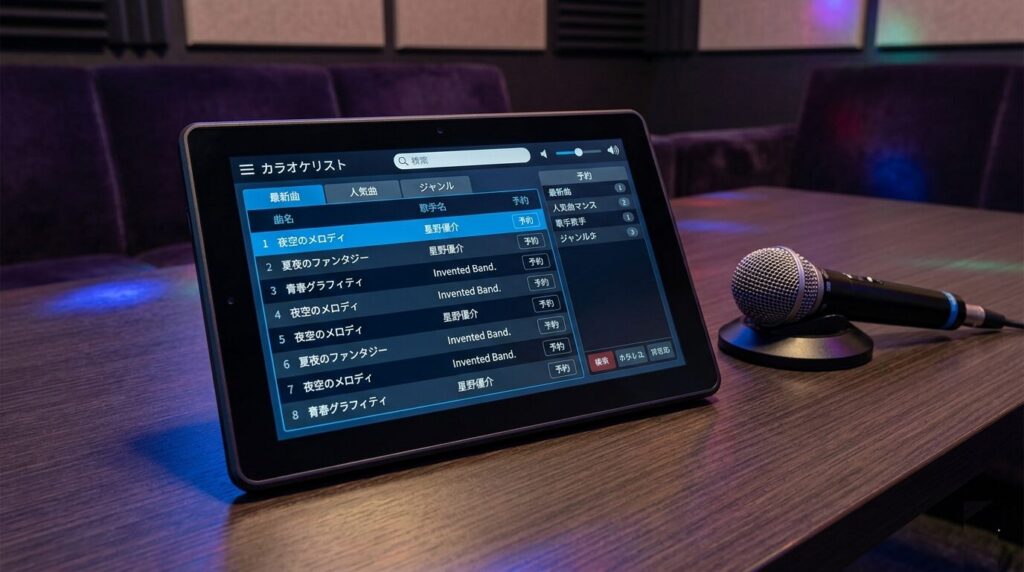
Song selection also evolved:
First:
• Paper lists
• Staff requests
Then:
• Song books
• Phone book style catalogs
Now:
• Digital touch screens
• Multi-language search
This improved usability dramatically.
Karaoke Culture Around the World
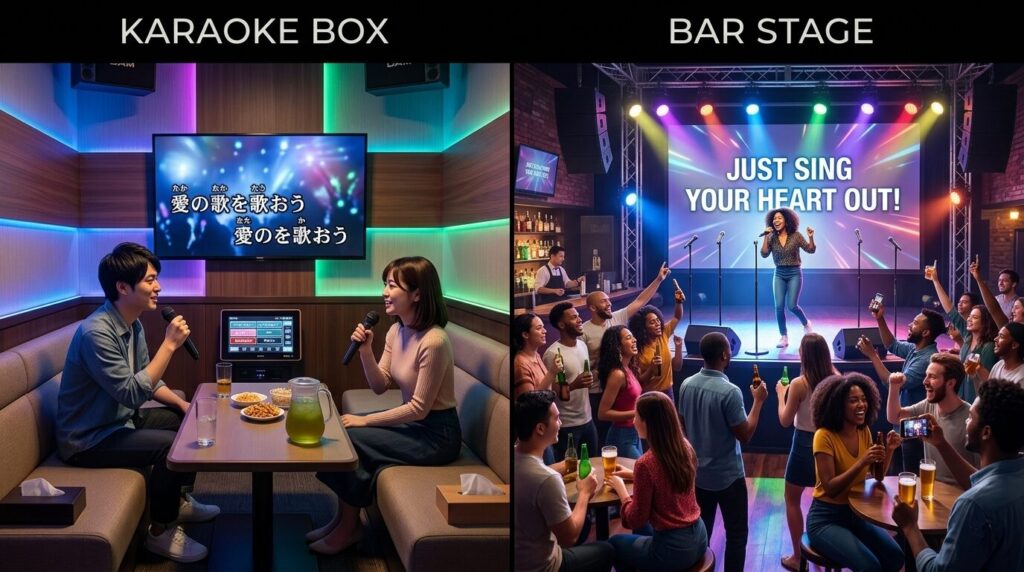
United States
In the U.S., karaoke is often:
• Performed in bars
• Public singing
• Social events
Private karaoke rooms are less common.
Europe
In Europe:
• UK — Pub karaoke nights
• Germany — Bar karaoke
• Spain — Party karaoke
Private rooms are rare.
Korea
Korea developed:
• Noraebang (private karaoke rooms)
Similar to Japan.
Taiwan
Taiwan karaoke culture:
• Large luxury karaoke rooms
• Food and drinks
Southeast Asia
Countries like:
• Philippines
• Thailand
• Vietnam
Karaoke is extremely popular.
The Philippines especially has strong karaoke culture.
Why Japan’s Karaoke Is Unique
Japan combines:
• Technology
• Culture
• Convenience
This creates a unique experience.
Karaoke and Japanese Audio Technology
Japanese companies contributed:
• Yamaha
• Roland
• Sony
These companies improved sound quality.
This made karaoke more enjoyable.
Why You Should Experience Karaoke in Japan
Japan offers:
• Massive song libraries
• Private rooms
• High-quality audio
You can enjoy:
• City Pop
• Anime songs
• Western hits
This is a unique cultural experience.
Experience Karaoke in Shizuoka and Hamamatsu
Shizuoka and Hamamatsu offer:
• Music culture
• Instrument makers
• Audio technology
This makes the experience even richer.
🎧 Drive into the golden era
👇 Feel the golden era again
Bounus track: Japanese TV program
https://youtu.be/4Mq5q34Gsgc?si=62xn_-N0SDzmX4lP
Bounus video: Interview Japanese TV program
https://youtu.be/9rdWp-HM3Ks?si=GP9FiiWdseLkRzrH
Bounus video: Cyndi Lauper in Japan (1989)
https://youtu.be/8qsEZFnhLZw?si=LOJLrk3LAVcvAyo4
🎧Every article features a curated 80s hit or Japanese City Pop track.
Press play and experience how Japan, synth culture, and 80s music shaped global sound.
👉 How Japan Shaped Modern Music: The 1980s Synth Revolution, Sony Walkman, and the Rise of Global Sound Culture
👉 80s Music Culture
👉 80s Hobby Culture
Conclusion: Japan Created Karaoke Culture
Japan didn’t just invent karaoke.
Japan created a new way to enjoy music.
And that culture continues today.
FAQ
Where was karaoke invented?
Japan, in the 1970s.
Why is Japanese karaoke special?
Song selection and private rooms.
Can tourists enjoy karaoke?
Yes. Many locations support English.