- Introduction
- Who This Article Is For
- 🎧 Song of the Day
- Why You Should Eat Gyoza in Hamamatsu (Not Just Anywhere)
- What Is Hamamatsu Gyoza?
- Why Hamamatsu Gyoza Is Different
- Common Problems Foreign Visitors Face (And Solutions)
- How to Order and Eat Gyoza Like a Local
- Understanding Teishoku Culture (Full Meal Experience)
- The True Value of Teishoku (Why It Feels So Satisfying)
- How to Enjoy Teishoku Like a Local (Avoid This Common Mistake)
- Best Hamamatsu Gyoza Restaurants (Quick Guide to Choose)
- Ishimatsu (Original Style & Light Taste): Beginner-Friendly
- Mutsugiku (Crispy & Juicy Classic): Popular
- Fukumitsu (Ultra Crispy Local Favorite)
- Kibori (Hidden Spot Near Suzuki HQ)
- Hamataro — More Than Just a Restaurant (Hamamatsu Craftsmanship)
- Experience “Monozukuri” Culture in Hamamatsu
- A City That Built Global Brands
- Explore the Full Hamamatsu Story
- Why This Matters for Your Trip
- Pro Tip — Don’t Choose Just One
- Order More Than Just Gyoza
- Visit with Friends & Share Everything
- Why This Makes Your Experience Better
- This Is How Locals Enjoy It
- Turn One Meal Into a Food Experience
- Turn It Into a Food Journey
- How to Choose the Right Gyoza Style
- Queue Strategy & Best Time to Visit
- Takeout & Lake Hamana Experience (Hidden Hack)
- Try Japanese Frozen Gyoza (A Hidden Food Experience You Shouldn’t Miss)
- Why Japanese Frozen Food Is So Good
- A Unique Experience — Cook and Compare
- Common Problem: “Why Did My Gyoza Fail?”
- The Real Reason (It’s Not You)
- Simple Solution (This Changes Everything)
- Hidden Advantage — Instructions Are on the Package
- Enjoy the Process (Not Just the Taste)
- Where to Buy Frozen Gyoza in Hamamatsu
- Turn It Into a Travel Memory
- Best Frozen Gyoza You Can Buy in Japan (Easy & Delicious Picks)
- Microwave Gyoza — The Easiest Way to Enjoy Japanese Dumplings
- Watch & Learn (Handpicked Videos for You)
- Rider-Friendly Gyoza Stops in Hamamatsu
- How to Combine Gyoza with a Perfect Riding Day
- Turn This Into a Real Experience (Step-by-Step Plan)
- 🎧 Drive into the golden era
- Conclusion
- FAQ
- Related Articles
Introduction
Imagine finishing a perfect ride around Lake Hamana…
and sitting down in a local restaurant, hearing the sound of gyoza sizzling on a hot pan.
Crispy. Juicy. Freshly made.
👉 This is one of the most unforgettable food experiences in Japan.
But here’s the reality:
Many travelers don’t fully enjoy gyoza — not because it’s bad,
but because they don’t know how to order, eat, or choose the right place.
This guide will change that.
By the end of this article, you will:
- Know exactly where to go in Hamamatsu
- Order confidently (even without Japanese)
- Eat gyoza the way locals do
- Avoid common mistakes most tourists make
👉 And turn a simple meal into a cultural experience.
What is Japanese Fried Gyoza? (NHK Documentary Style)
https://youtu.be/n7aGzxD_oI8?si=lIcZVROMx4O_RJ_4
👉 Learn the cultural background of gyoza in Japan.
👉 Understand why it’s deeply loved by locals across generations.
💡 TIP: Use YouTube’s auto-translate feature to watch in your language.
Start your journey here:
Ultimate Hamamatsu Travel Guide for Riders: Best Routes, Rider Cafes & Hidden Local Spots in Japan
Who This Article Is For
This guide is for:
- First-time visitors to Japan
- Motorcycle travelers exploring Shizuoka
- Food lovers who want authentic local experiences
- Riders looking for easy, satisfying meals
- Travelers who want to avoid mistakes and eat like locals
🎧 Song of the Day
Hand-picked 80s songs for touring, driving, and exploring Japan’s golden era.
The 1980s marked Japan’s golden age — when Japanese motorcycles, synthesizers, black audio electronics, car audio systems, karaoke machines, City Pop, and model kits helped shape modern global culture.
👇 Press play before reading
Before you dig into Hamamatsu’s legendary gyoza scene, press play—this track sets a laid-back groove that pairs perfectly with local flavor… even if we swap the wine for an ice-cold beer.
“Red Red Wine” by UB40 flows with a smooth, relaxed rhythm that became iconic across late 80s music culture. Its mellow groove, subtle synth layers, and clean production reflect a global shift toward accessible, feel-good electronic sound. It’s not loud or flashy—it’s steady, comforting, and designed to be enjoyed over time, just like a great meal shared with friends.
This era of audio was deeply influenced by Japanese innovation. Behind the scenes, synthesizers from Yamaha, Roland, and Korg helped shape the tonal clarity and balance heard in tracks like this. Meanwhile, Sony’s Walkman turned songs into everyday companions—suddenly, music wasn’t tied to a room, but to your lifestyle. That’s the essence of Japanese music culture: precision meets personal experience.
Now connect that to Hamamatsu. The same mindset that refines sound also perfects gyoza—crispy, juicy, balanced. Like tuning a synth or assembling a model kit, it’s about detail and repetition. And honestly… with gyoza, it’s not wine—it’s a cold draft beer that hits the spot🐻❄️
Picture yourself: evening lights, sizzling plates, laughter, and this track quietly playing in the background. That’s not just food—that’s Japan as a living, breathing experience.
Press play, grab a beer, and taste the rhythm of Hamamatsu.
Why You Should Eat Gyoza in Hamamatsu (Not Just Anywhere)
You can find gyoza all over Japan.
So why go out of your way to eat it in Hamamatsu?
Because here, it’s not just food.
👉 It’s part of everyday life.
Unlike tourist-heavy cities, Hamamatsu offers:
- Authentic local atmosphere
- Less crowded restaurants
- Better price-to-quality balance
And most importantly:
👉 You’re eating where locals actually eat.
After a ride around Lake Hamana, stopping at a gyoza shop feels natural — not planned.
That’s what makes it special.
👉 It’s not a “tourist activity”
👉 It’s a real moment in Japan
What Is Hamamatsu Gyoza?
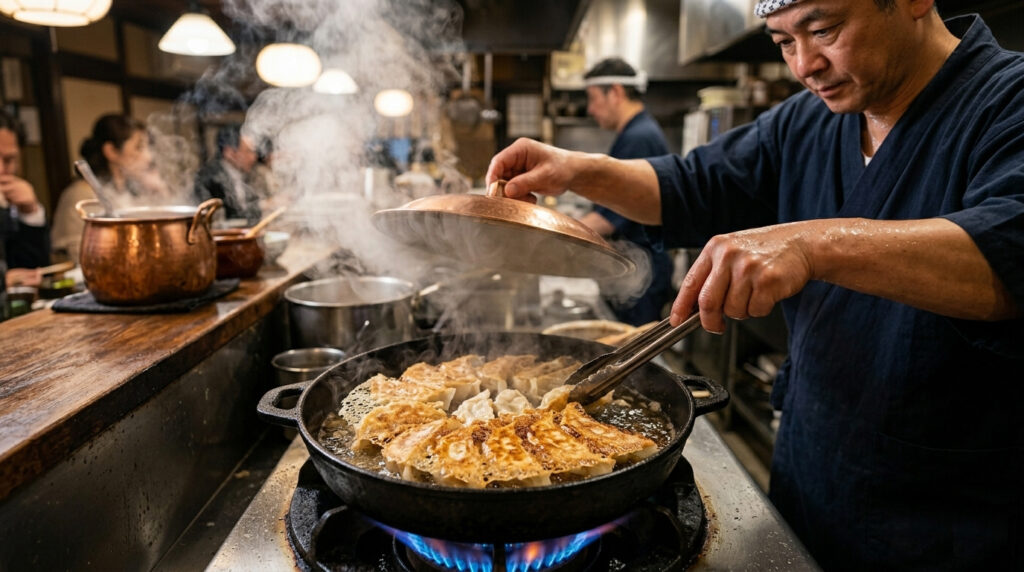
Hamamatsu gyoza is a regional style of Japanese dumplings.
Unlike typical dumplings:
- Pan-fried (crispy bottom)
- Thin wrapper
- Packed with vegetables
- Light but flavorful
👉 Easy to eat — even 15–20 pieces.
Why Hamamatsu Gyoza Is Different
Circular Style
Gyoza are arranged in a circle.
👉 Designed for sharing
👉 Perfect for photos
Bean Sprouts on Top
This surprises many visitors.
- Refreshes your palate
- Cuts oiliness
- Adds texture
👉 It’s not decoration — it’s functional.
Light & Healthy Balance
Compared to other regions:
- Less greasy
- More vegetables
- Easier to eat more
👉 That’s why locals love it.
Common Problems Foreign Visitors Face (And Solutions)
👉 Let’s remove confusion before it happens.
- How many? → Start with 10–12 pieces
- English menu? → Use Google Translate camera
- Payment? → Bring cash
- Garlic? → Usually included
👉 Preparation = better experience
What If I Feel Nervous Entering a Local Restaurant?
This is very common — and completely normal.
Many small restaurants in Japan:
- Look quiet
- Have no English signs
- Feel intimidating at first
But here’s the reality:
👉 Most places are welcoming — even if they don’t speak English.
Simple strategy:
- Open the door confidently
- Smile
- Point at the menu
That’s enough.
👉 You don’t need perfect Japanese
And once you sit down…
👉 The anxiety disappears quickly.
How to Order and Eat Gyoza Like a Local
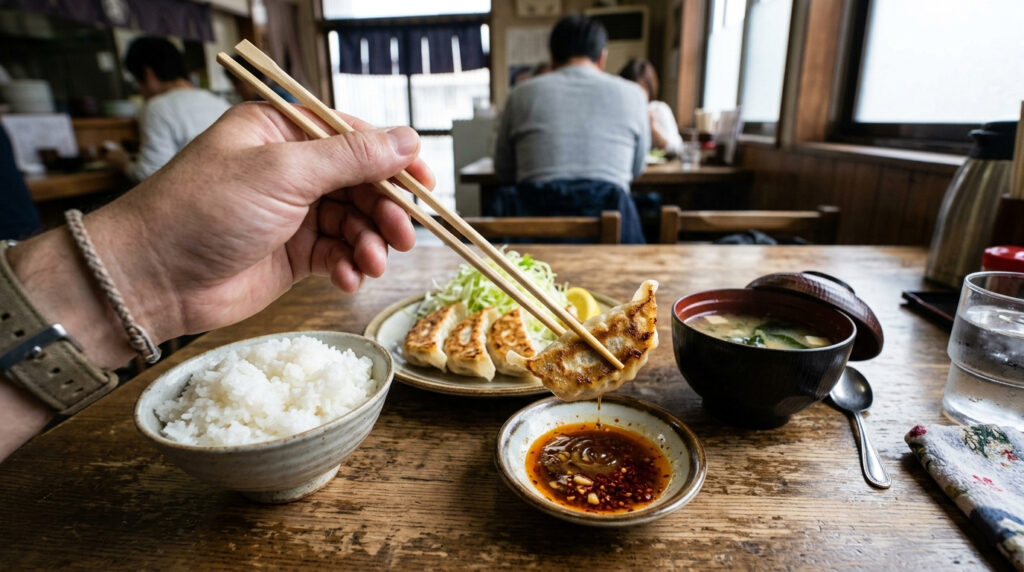
Simple Ordering
- Point at menu
- Say “one plate”
👉 No stress needed
Sauce Basics
Mix:
- Soy sauce
- Vinegar
- Chili oil
👉 Adjust freely
Understanding Teishoku Culture (Full Meal Experience)
A teishoku includes:
- Main dish
- Rice
- Soup
- Pickles
👉 Designed for balance
Real Experience
I once grabbed takeout gyoza after a long ride.
Sat by the lake.
Engine still ticking from the heat.
Opened the box…
Steam rising. Crispy sound.
👉 That moment — quiet, simple, real — stayed longer than any tourist attraction.
The True Value of Teishoku (Why It Feels So Satisfying)
At first glance, a teishoku may look simple.
Just:
- Gyoza
- Rice
- Soup
- Pickles
But once you understand how it’s designed…
👉 You realize it’s not just a meal — it’s a system.
Every element has a purpose:
- Rice balances strong flavors
- Pickles reset your taste
- Soup refreshes your palate
👉 It’s carefully built to keep every bite enjoyable until the end.
This is why many travelers say:
👉 “It felt simple, but strangely perfect.”
How to Enjoy Teishoku Like a Local (Avoid This Common Mistake)
Many first-time visitors make the same mistake.
👉 They eat one dish at a time.
For example:
- Finish all the gyoza
- Then eat rice
- Then drink soup
This seems natural in many countries.
But in Japan…
👉 This breaks the experience.
The Japanese Way — Eat Everything Together
In Japan, meals are meant to be eaten in balance.
A typical rhythm looks like this:
- One bite of gyoza
- One bite of rice
- A sip of soup
- A small bite of pickles
👉 Repeat.
This method is sometimes called:
👉 “eating in balance”
A Common Mistake Tourists Make
👉 Don’t eat all the gyoza first.
If you do:
You’ll be left with plain rice at the end.
That moment is…
👉 Surprisingly disappointing.
You will end up with:
- Plain rice
- Soup
- No main flavor left
👉 The last part of your meal becomes boring.
And many travelers experience this — without knowing why.
Think of It Like This
Imagine a burger.
Now imagine:
- Eating all the meat first
- Then finishing only the bread
👉 That’s exactly what happens.
A teishoku is like a “deconstructed meal.”
It’s meant to be combined — not separated.
Why Japanese Meals Are Designed This Way
Japanese food culture values:
- Balance
- Harmony
- Flow
Even strong-flavored items like pickles exist for a reason:
👉 To make the rice taste better.
Rice is intentionally plain —
because it’s meant to be paired with everything else.
Simple Rule to Follow
👉 Don’t finish one item first.
Instead:
- Mix bites
- Rotate dishes
- Keep balance
What Changes When You Do This
When you follow this method:
- Every bite stays interesting
- You never feel bored
- You experience the meal as intended
👉 The difference is surprisingly big.
Best Hamamatsu Gyoza Restaurants (Quick Guide to Choose)
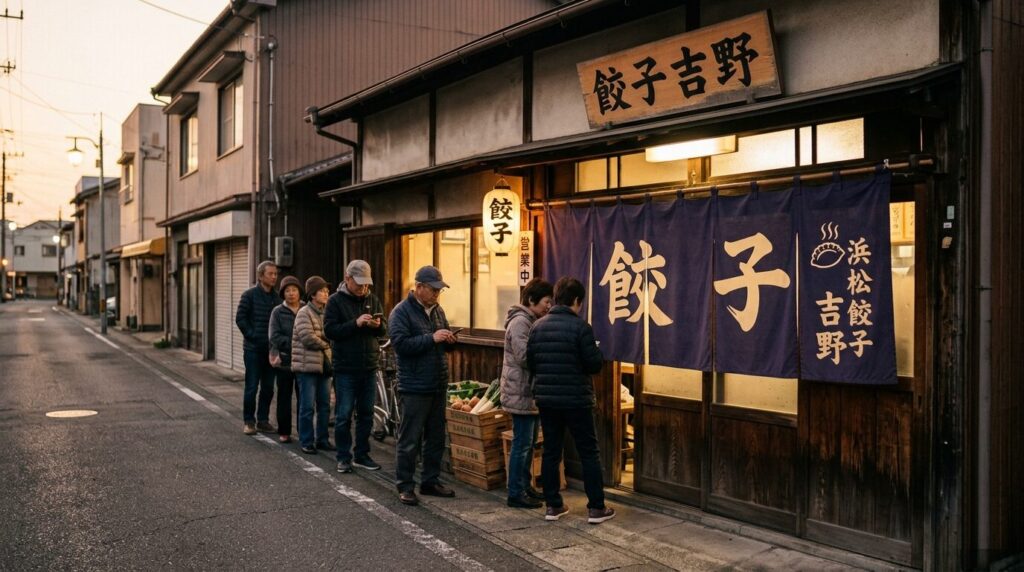
If you’re not sure where to go, don’t worry.
👉 Here’s a simple guide to help you decide fast.
note: If you’re worried about the language barrier, don’t be.
👉 Simply copy and paste the URL into Google Translate:
https://translate.google.co.jp/?hl=ja&tab=TT&sl=en&tl=ja&op=websites
Ishimatsu (Original Style & Light Taste): Beginner-Friendly
One of the original Hamamatsu gyoza restaurants.
Light, balanced, and beginner-friendly.
⚠️ The JR Hamamatsu Station location is very popular.
👉 Expect long lines.
Mutsugiku (Crispy & Juicy Classic): Popular
One of the original Hamamatsu gyoza restaurants.
Light, balanced, and beginner-friendly.
⚠️ The JR Hamamatsu Station location is very popular.
👉 Expect long lines.
Fukumitsu (Ultra Crispy Local Favorite)
👉 https://x.com/fukumitsugyouza
Very popular among Japanese riders.
Extremely crispy texture.
⚠️ Menu: Only Gyoza and Gyoza Teishoku
⚠️ Careful… it’s so crispy you might hurt your mouth (LOL)
👉 Bold flavor, strong impact.
Kibori (Hidden Spot Near Suzuki HQ)
Located near Suzuki headquarters.
Less touristy, more local atmosphere.
👉 Great if you want a quieter experience.
Hamataro — More Than Just a Restaurant (Hamamatsu Craftsmanship)
👉 https://www.hamatarou.jp/shop/#page-shop
Highly recommended for international travelers.
Clean, modern, and easy to order.
Friendly staff and clear menu.
👉 If you feel nervous, start here.
Hamataro is not just a gyoza restaurant.
👉 It represents the spirit of manufacturing in Hamamatsu.
This restaurant was opened in October 2010 by a specialized manufacturer:
👉 A company with over 50 years of experience producing gyoza-making machines.
That company is:
👉 Toa Industry Co., Ltd.
https://www.toa-industry.co.jp/english/
Experience “Monozukuri” Culture in Hamamatsu
Hamamatsu is known as a city of craftsmanship.
👉 If you want to understand real Japanese manufacturing culture (“monozukuri”)…
👉 This is the place.
You’re not just eating gyoza.
👉 You’re experiencing the result of decades of engineering and precision.
A City That Built Global Brands
Hamamatsu is home to world-famous companies:
- Yamaha (motorcycles & musical instruments)
- Suzuki (motorcycles & cars)
- Honda (motorcycles)
- Roland (electronic musical instruments)
👉 This city shaped both global mobility and global sound.
Explore the Full Hamamatsu Story
If you want to go deeper, explore these guides:
👉 Discover the music culture:
Hamamatsu: The City That Shaped Global Sound (Yamaha, Roland, and Beyond)
👉 Learn about motorcycle origins:
Why Hamamatsu Is the Heart of Motorcycle Culture: Honda, Yamaha & Suzuki Origins
👉 Understand why Japanese bikes dominate worldwide:
Why Japanese Motorcycles Are So Popular Worldwide: Reliability & Performance
Why This Matters for Your Trip
This is what makes Hamamatsu special:
👉 Food is not isolated.
👉 It connects to industry, culture, and innovation.
So when you visit Hamataro…
👉 You’re not just eating.
👉 You’re stepping into the DNA of Japan.
Pro Tip — Don’t Choose Just One
Here’s the truth:
👉 Every restaurant tastes different.
So instead of picking just one…
👉 Stay 2–3 nights and try multiple places.
You’ll discover:
- Different textures
- Different flavors
- Different styles
👉 This is how you truly experience Hamamatsu gyoza.
Order More Than Just Gyoza
Here’s something many travelers don’t realize:
👉 Gyoza restaurants in Japan don’t only serve gyoza.
You’ll often find:
- Ramen
- Fried chicken (karaage) set meals
- Rice dishes
👉 And they are surprisingly good.
Visit with Friends & Share Everything
If you’re traveling with others, this is the best strategy:
👉 Order different dishes and share.
For example:
- One orders gyoza
- One orders ramen
- One orders karaage
Then:
👉 Share everything at the table.
Why This Makes Your Experience Better
This simple approach lets you:
- Try more flavors
- Avoid food regret
- Enjoy a richer experience
👉 Instead of one dish, you get a full Japanese meal experience.
This Is How Locals Enjoy It
In Japan, meals are often:
👉 Shared and enjoyed together.
Especially with dishes like:
- Gyoza
- Side dishes
- Set meals
👉 It’s social, fun, and satisfying.
Turn One Meal Into a Food Experience
Don’t limit yourself to just gyoza.
👉 Turn your visit into a mini food festival.
More dishes.
More flavors.
More memories.
Turn It Into a Food Journey
Don’t treat this as just a meal.
👉 Turn it into a mini food adventure.
Ride → Eat → Compare → Repeat
👉 That’s the real Hamamatsu experience.
How to Choose the Right Gyoza Style
- First time → Light style
- Balanced → Crispy + juicy
- Heavy → Garlic + meat
👉 Your choice changes everything
Queue Strategy & Best Time to Visit
- Arrive early
- Weekdays best
- Rain = fewer people
👉 Avoid peak hours
Takeout & Lake Hamana Experience (Hidden Hack)
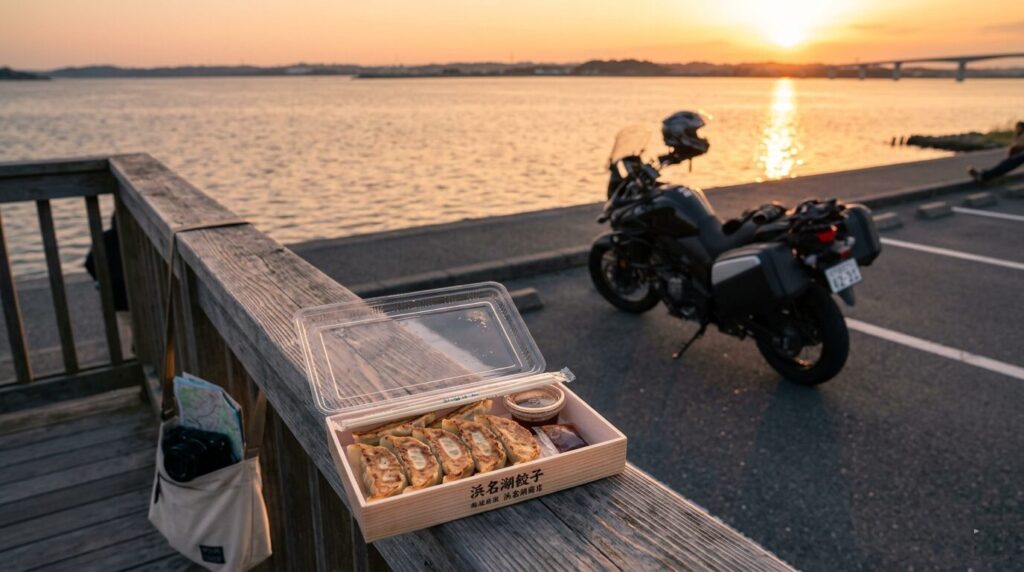
Here’s a powerful tip:
👉 Take your gyoza to-go.
Then go to:
- Lake Hamana
- Bentenjima
Eat with ocean view.
👉 This turns a meal into a memory.
Try Japanese Frozen Gyoza (A Hidden Food Experience You Shouldn’t Miss)
Here’s something many travelers completely overlook.
👉 Japanese frozen food is incredibly high quality.
In fact:
👉 Even frozen gyoza from supermarkets can taste restaurant-level.
Why Japanese Frozen Food Is So Good
When you visit a supermarket in Japan, you’ll notice something surprising:
- Huge variety of frozen foods
- Clean and well-organized sections
- Premium-level packaging
But the real surprise is:
👉 The taste.
Japanese frozen gyoza are:
- Carefully developed by food companies
- Designed to recreate restaurant flavor
- Consistently high quality
👉 This reflects Japan’s attention to detail — even in everyday products.
A Unique Experience — Cook and Compare
If your accommodation has:
- A kitchen
- Basic cooking tools
👉 You should try this:
Buy several different frozen gyoza brands from a supermarket
and cook them yourself.
Then:
👉 Compare the taste.
You’ll discover:
- Differences in flavor
- Texture variations
- Personal preferences
👉 It turns into a fun food experience, not just a meal.
Common Problem: “Why Did My Gyoza Fail?”
Many travelers try cooking gyoza for the first time…
👉 And fail.
Typical problems:
- Gyoza sticks to the pan
- Skin breaks apart
- Difficult to remove from pan
- Can’t get crispy bottom like restaurants
👉 This is very common.
The Real Reason (It’s Not You)
The problem is simple:
👉 Lack of experience.
Even Japanese people fail if they are not used to cooking gyoza.
It’s not about skill.
👉 It’s about knowing the method.
Simple Solution (This Changes Everything)
Before cooking:
👉 Watch a YouTube tutorial.
Then:
👉 Practice multiple times.
This is key:
👉 Improvement comes from repetition.
(PDCA: Try → Adjust → Improve)
Hidden Advantage — Instructions Are on the Package
Here’s something very useful:
👉 Every frozen gyoza package includes cooking instructions.
Even better:
👉 You don’t need to worry about language.
Just:
- Use Google Lens
- Scan the package
- Translate into your language
👉 Problem solved instantly.
Enjoy the Process (Not Just the Taste)
Don’t be afraid of failure.
Instead:
- Enjoy the cooking
- Learn the technique
- Improve each time
Because:
👉 Successfully cooking perfect gyoza feels incredibly satisfying.
It’s not just about eating.
👉 It’s about experiencing Japanese food culture hands-on.
Where to Buy Frozen Gyoza in Hamamatsu
You can easily find them at:
- Local supermarkets
- Beisia (MAP)
- AEON (MAP)
- MaxValu(MAP)
- Don Quixote (MAP)
- TRIAL (24-hour operation) MAP
👉 Look for frozen sections with dumplings.
Turn It Into a Travel Memory
Imagine this:
After a full day of riding…
You return to your accommodation.
Cook gyoza.
Open a cold drink.
👉 Quiet moment. Real Japan.
This kind of experience:
👉 Often becomes more memorable than restaurants.
Best Frozen Gyoza You Can Buy in Japan (Easy & Delicious Picks)
If you’re standing in front of a freezer section in Japan, you might feel overwhelmed.
👉 There are so many choices.
So here’s the good news:
👉 Some of the best frozen gyoza are available nationwide.
You can find them almost anywhere in Japan.
Top Recommended Frozen Gyoza Brands
1. Ajinomoto Gyoza (Crispy & Juicy Classic)
A household name in Japan.
- Strong flavor
- Crispy outside, juicy inside
- Very satisfying
👉 This is what many Japanese people eat at home.
👉 https://www.ffa.ajinomoto.com/gyoza
2. Osaka Ohsho Frozen Gyoza (Restaurant Taste at Home)
Inspired by the famous gyoza chain.
- Rich flavor
- Closer to restaurant-style
- Great with beer
👉 If you want a stronger taste, choose this.
👉 https://www.eat-and.jp/foods/en/
Why These Are Perfect for Travelers
These brands are:
- Available nationwide
- Affordable
- Easy to cook
- Reliable quality
👉 No need to search for rare products.
You can walk into almost any supermarket and find them.
Watch Before You Cook (Highly Recommended)
Before you start cooking, watch this:
👉 This will dramatically increase your success rate.
Pro Tip — Try a Taste Comparison
Here’s something fun:
👉 Buy 2–3 different brands.
Then:
- Cook them
- Compare taste and texture
- Find your favorite
You’ll notice:
- Some are more garlicky
- Some are lighter
- Some are crispier
👉 This turns a simple meal into a memorable experience.
Don’t Aim for Perfection (Enjoy the Process)
Even if you fail the first time:
👉 It’s part of the experience.
Cooking gyoza is not just about eating.
👉 It’s about learning and enjoying Japanese everyday life.
And when you finally cook them perfectly…
👉 The satisfaction is huge.
Microwave Gyoza — The Easiest Way to Enjoy Japanese Dumplings
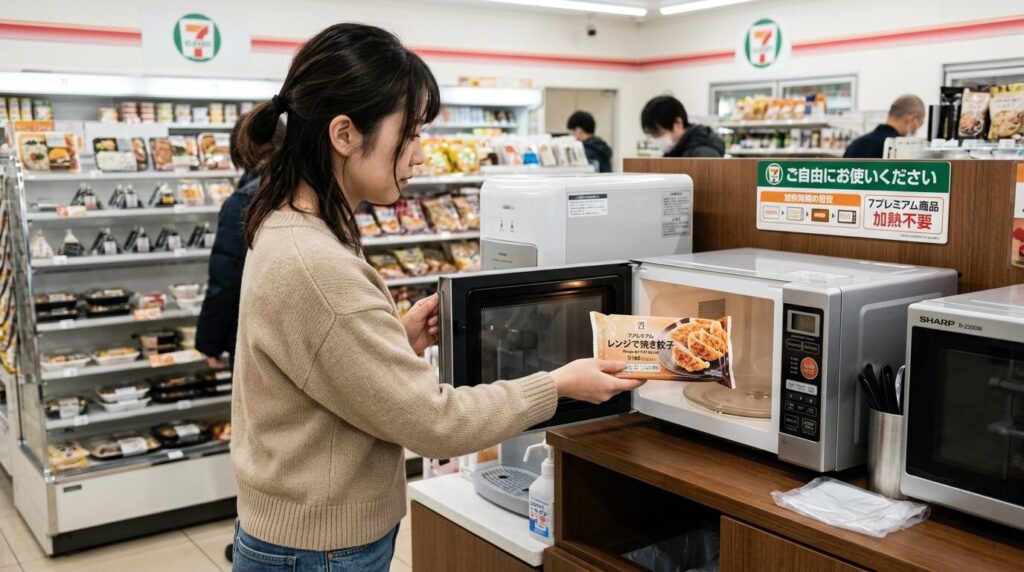
Not confident in cooking?
👉 No problem.
Japan has an even easier solution.
👉 Microwave gyoza.
Just Heat and Eat (No Cooking Skills Needed)
The biggest advantage is simple:
👉 Just use a microwave.
No pan.
No oil.
No technique.
⚠️ Important:
👉 Always follow the instructions on the package.
Easy to Find at Convenience Stores
You don’t even need a supermarket.
👉 You can buy these at convenience stores.
For example:
- Lawson
- 7-Eleven
- Familymart
👉 They are everywhere in Japan.
Recommended Microwave Gyoza
Here are easy-to-find options:
- Lawson: “Easy Microwave Grilled Gyoza”
- 7 Premium: “Microwave Grilled Gyoza”
- Familymart: “Vegetable Flavor Microwave Gyoza”
👉 Perfect for quick meals or late-night snacks.
Why Japanese Convenience Store Food Is So Good
Many travelers are shocked by this:
👉 Japanese convenience store food is incredibly delicious.
Why?
- Strict quality control
- Advanced food technology
- Constant product improvement
- High competition between brands
👉 Even cheap food is made with serious attention to detail.
That’s why:
👉 Meals, snacks, and desserts are all surprisingly good.
Compare and Find Your Favorite
Just like frozen gyoza:
👉 Try different brands.
You’ll notice:
- Texture differences
- Flavor balance
- Ingredient variations
👉 It becomes a fun tasting experience.
Perfect for Travelers
Microwave gyoza is ideal if you:
- Don’t want to cook
- Stay in a hotel without a kitchen
- Want a quick meal after riding
👉 Fast, easy, and reliable.
Turn Convenience Into Experience
This is not just “easy food.”
👉 It’s part of Japanese daily life.
Late night.
After riding.
Quick meal at your hotel.
👉 Simple moments become memorable.
⚠️ Important: Never cook frozen gyoza the wrong way.
You must follow the correct method:
- Pan-fry with water (steam-fry method)
- OR microwave (only if specified)
👉 If you use the wrong method, it will fail badly.
⚠️ Packages often look very similar, so be careful.
👉 If you’re not sure, don’t guess — ask the store staff.
Watch & Learn (Handpicked Videos for You)
Finding good Japanese videos can be difficult if you don’t understand the language.
👉 So I selected the best ones for you.
You don’t need to search.
👉 Just watch and learn.
💡 TIP: Use YouTube’s auto-translate feature to watch in your language.
Microwave Gyoza of Japanese Convenience Store Food
Supermarket Gyoza Variety (What You’ll Actually See)
👉 This shows how many types of gyoza you can find in Japan.
👉 You’ll be surprised by the variety and quality.
Taste Comparison by a Professional Chef
👉 A professional compares multiple frozen gyoza brands.
👉 Great for choosing what to buy.
How to Cook Frozen Gyoza Perfectly (Step-by-Step)
👉 Learn the basic technique to avoid failure.
👉 This alone will improve your results.
👉 Easy method anyone can follow.
👉 Ideal for first-time cooking.
👉 Avoid sticking, breaking, and burning.
👉 Fix the most common problems.
👉 Take your cooking to the next level.
👉 Small techniques make a big difference.
Rider-Friendly Gyoza Stops in Hamamatsu
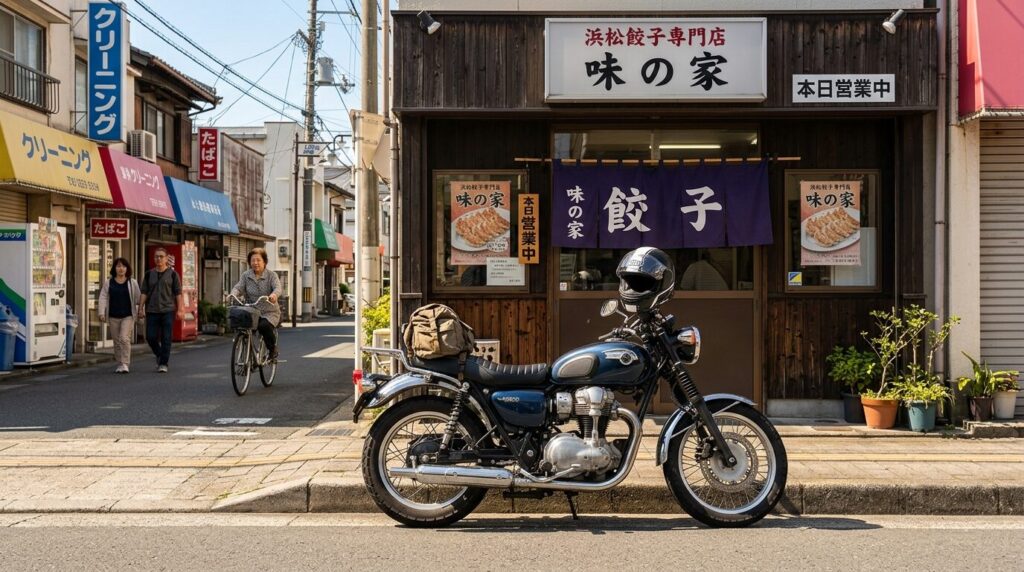
Hamamatsu is extremely rider-friendly.
- Easy parking
- Wide roads
- Relaxed atmosphere
👉 Perfect for touring breaks
What If You Don’t Have a Motorcycle?
No problem.
In Japan, you can easily rent:
- Motorcycles
- Riding gear
👉 High-quality and well-maintained
So even if you arrive without equipment:
👉 You can still enjoy the full Hamamatsu riding experience.
How to Combine Gyoza with a Perfect Riding Day
Morning:
Ride around Lake Hamana
Lunch:
Gyoza
Afternoon:
Coastal road
Sunset:
Bentenjima
👉 This is the ideal Hamamatsu experience
👉 Plan your ride here: Lake Hamana Scenic Drive Guide
Turn This Into a Real Experience (Step-by-Step Plan)
Here’s a simple way to turn this guide into reality:
Step 1
Ride around Lake Hamana (morning)
Step 2
Stop at a local gyoza restaurant for lunch
Step 3
Take a short break at a convenience store
👉 Try Japanese coffee or snacks
Step 4
Ride along the coast
Step 5
Watch sunset at Bentenjima
👉 This is not just a meal.
👉 It becomes a full-day experience.
🎧 Drive into the golden era
👇 Feel the golden era again
🎧Every article features a curated 80s hit or Japanese City Pop track.
Press play and experience how Japan, synth culture, and 80s music shaped global sound.
👉 How Japan Shaped Modern Music: The 1980s Synth Revolution, Sony Walkman, and the Rise of Global Sound Culture
👉 80s Music Culture
👉 80s Hobby Culture
Conclusion
Hamamatsu gyoza is not just food.
It’s:
- Culture
- History
- Daily life
And when you experience it the right way…
👉 It becomes unforgettable.
FAQ
Q1: Is Hamamatsu Gyoza Worth It for First-Time Visitors?
Yes — especially if:
- You want authentic food
- You want to avoid tourist traps
- You enjoy simple but high-quality meals
👉 It’s one of the easiest “local experiences” in Japan.
Q2: Is Hamamatsu gyoza different from Tokyo?
Yes — lighter, more vegetables, circular style.
Q3: Can I eat alone?
Yes, but portions are large.
Q4: Is it expensive?
No — very affordable.
Q5: Can I take it out?
Yes — highly recommended.
Related Articles
- Why Smart Riders Skip Tokyo — And Discover Japan’s Hidden Motorcycle & 80s Hobby Culture Paradise Instead
- Motorcycle Pilgrimage to Hamamatsu
- Hidden Motorcycle Roads Around Hamamatsu
- Best Rider-Friendly Spots in Hamamatsu
- Best Unagi Restaurants in Hamamatsu
- Mount Fuji Motorcycle Touring Guide
- Hakone Motorcycle Route Guide