- Introduction
- Post-War Origins: How It All Started
- The Rise of the Big Four
- The Innovation Advantage
- Why Japanese Motorcycles Took Over the World
- Cultural Foundations Behind the Industry
- Why Hamamatsu Became the Center
- Japan vs Europe: A Different Philosophy
- What This Means for Riders Today
- A Complete Motorcycle Ecosystem
- Conclusion
- RELATED ARTICLES
Introduction
Why did Japan become the global center of motorcycles?
It’s a question many riders ask—especially when they see brands like Honda, Yamaha, Suzuki, and Kawasaki dominating roads across the world.
At first glance, the answer seems simple: reliability, affordability, and performance.
But that’s only the surface.
The real story is deeper.
It involves post-war survival, cultural philosophy, engineering obsession, and a level of discipline that reshaped the entire industry.
This article will break down exactly how Japan rose to the top—and why it still holds that position today.
If you want the full picture of Japanese motorcycle culture, you can explore the main guide here:
👉 The Ultimate Japanese Motorcycle Culture Guide
Post-War Origins: How It All Started
After World War II, Japan faced a massive challenge.
The country needed affordable transportation.
Fuel was limited.
Cars were expensive.
Infrastructure was damaged.
So people started attaching small engines to bicycles.
This simple idea became the foundation of an entire industry.
Why this mattered
- Low cost made it accessible
- Easy maintenance
- Efficient transportation for daily life
Motorcycles were not a luxury.
They were a necessity.
And necessity created innovation.
The Rise of the Big Four
By the 1950s and 1960s, several companies began to stand out.
These would later become known as the “Big Four.”
Honda
Founded by Soichiro Honda, the company focused on one thing:
👉 Reliability for the masses
The Super Cub, introduced in 1958, became the best-selling motor vehicle in history.
It was simple, durable, and affordable.
Yamaha
Originally a musical instrument company, Yamaha brought something unique:
👉 Balance between performance and design
They focused on riding feel, not just function.
Suzuki
Suzuki started in textile machinery.
That background led to:
👉 Lightweight engineering and efficiency
They became known for compact, high-performance machines.
Kawasaki
Kawasaki came from heavy industry.
Their focus was different:
👉 Power and speed
They pushed performance boundaries, especially in high-speed bikes.
The Innovation Advantage
Japan didn’t just build motorcycles.
They reinvented how motorcycles were made.
Mass Production
Japanese companies perfected large-scale production.
- Lower costs
- Consistent quality
- Faster output
This made motorcycles affordable worldwide.
Engineering Precision
Japanese engineering focused on small details.
- Tight tolerances
- Smooth engines
- Balanced performance
The result? Machines that felt refined.
Reliability as a Strategy
This is key.
Japanese brands didn’t just aim for performance.
They aimed for:
👉 Machines that don’t break
That strategy changed everything.
Real-World Proof of Japanese Motorcycle Reliability
It’s easy to say that Japanese motorcycles are reliable.
But the real strength lies in measurable, real-world results.
One of the most famous examples is the Honda Super Cub.
Since its release in 1958, over 100 million units have been produced, making it the most manufactured motor vehicle in history.
This is not just a sales number.
It reflects decades of consistent performance, durability, and trust.
In many countries, it is common to see Japanese motorcycles running well beyond 100,000 kilometers with only basic maintenance.
This level of longevity is not accidental.
It comes from:
- Conservative engineering (avoiding unnecessary stress on components)
- High manufacturing precision
- A focus on long-term usability rather than short-term performance
In fact, in the global used motorcycle market, Japanese bikes often maintain higher resale value compared to competitors.
Riders trust them—not just when they are new, but for years after purchase.
If you want a deeper breakdown with data and real-world examples, you can explore this here:
👉 [How Reliable Are Japanese Motorcycles?] (Coming Soon)
Why Japanese Motorcycles Took Over the World
By the 1970s, Japanese motorcycles dominated global markets.
Here’s why.
Affordability
Compared to European bikes:
- Lower price
- Lower maintenance cost
- Better fuel efficiency
Global Expansion
Japanese companies expanded aggressively.
- North America
- Europe
- Southeast Asia
They adapted to each market.
Racing Success
Racing wasn’t just for speed.
It was marketing.
Winning races proved:
👉 Performance + reliability
This built global trust.
The Turning Point: The 1970s Global Shift
The global motorcycle industry did not change slowly.
It shifted rapidly in the late 1960s and 1970s.
One of the most important moments was the release of the Honda CB750 in 1969.
It introduced features that were rare at the time:
- Inline four-cylinder engine
- Front disc brake
- High reliability at scale
This combination of performance, safety, and affordability disrupted the entire market.
At the time, many European motorcycles were:
- Expensive
- Less reliable
- More difficult to maintain
Japanese manufacturers took a different approach.
They focused on creating motorcycles that:
- Started every time
- Required minimal maintenance
- Were accessible to a wider audience
By the mid-1970s, Japanese brands had captured a significant share of the global market, especially in the United States.
This was not just competition.
It was a complete shift in industry standards.
If you want to understand this transformation in detail, read here:
👉 [How Japan Took Over the Global Motorcycle Market in the 1970s] (Coming Soon)
Cultural Foundations Behind the Industry
This is where most people misunderstand.
Japan’s success is not just technical.
It’s cultural.
Monozukuri
This Japanese concept means:
👉 “Making things with craftsmanship and pride”
It’s not just manufacturing.
It’s a mindset.
Discipline and Detail
Japanese builders focus on:
- Clean assembly
- Precise alignment
- Invisible details
Even parts you don’t see matter.
Continuous Improvement
Known as Kaizen.
Small improvements, every day.
Over time, this creates massive advantage.
The Meaning of Monozukuri
At the core of Japanese manufacturing is a concept called Monozukuri.
It is often translated as “making things,” but the meaning is much deeper.
Monozukuri includes:
- Craftsmanship
- Pride in work
- Continuous improvement
- Attention to even the smallest details
It is not just about producing an object.
It is about the process, the mindset, and the responsibility behind creating something that people will rely on.
This philosophy is one of the key reasons why Japanese motorcycles feel balanced, refined, and trustworthy.
To explore this concept in more depth, see here:
👉 [What Is Monozukuri?] (Coming Soon)
Why Hamamatsu Became the Center
Here’s where things get strange—in a good way.
Within a 30–40 km radius:
- Honda was founded in Hamamatsu
- Yamaha is in nearby Iwata (~20 km)
- Suzuki is headquartered in Hamamatsu
This concentration is extremely rare.
Why here?
- Strong manufacturing base
- Access to skilled workers
- Culture of craftsmanship
For riders, this area feels like:
👉 The birthplace of modern motorcycling
Japan vs Europe: A Different Philosophy
European motorcycles focus on:
- Emotion
- Design
- Heritage
Japanese motorcycles focus on:
- Precision
- Reliability
- Balance
Neither is better. They are different.
But Japan optimized for global scale. And that made the difference.
Beyond Style: A Structural Difference
The difference between Japanese and European motorcycles is not just about design or feeling.
It is structural.
European manufacturers historically focused on:
- Heritage and brand identity
- Emotional design and character
- Performance at the high end
Japanese manufacturers focused on:
- Consistency and reliability
- Ease of ownership
- Scalable production
This created two very different experiences for riders.
A European motorcycle may feel more expressive.
A Japanese motorcycle is often more predictable and dependable.
Neither approach is inherently better.
But in a global market—where reliability, cost, and usability matter—Japan’s approach proved more adaptable.
For a deeper comparison, see here:
👉 [Japanese vs European Motorcycles: Full Comparison] (Coming Soon)
What This Means for Riders Today
When you ride a Japanese motorcycle, you are experiencing:
- Decades of refinement
- Cultural philosophy
- Engineering discipline
It’s not just a machine.
It’s a product of a system designed to improve constantly.
That’s why many riders trust Japanese bikes.
And why they continue to dominate.
The Experience Behind the Machine
Understanding the history and technology is one thing.
Experiencing it is something else entirely.
In Japan, riding a motorcycle often feels different from anywhere else in the world.
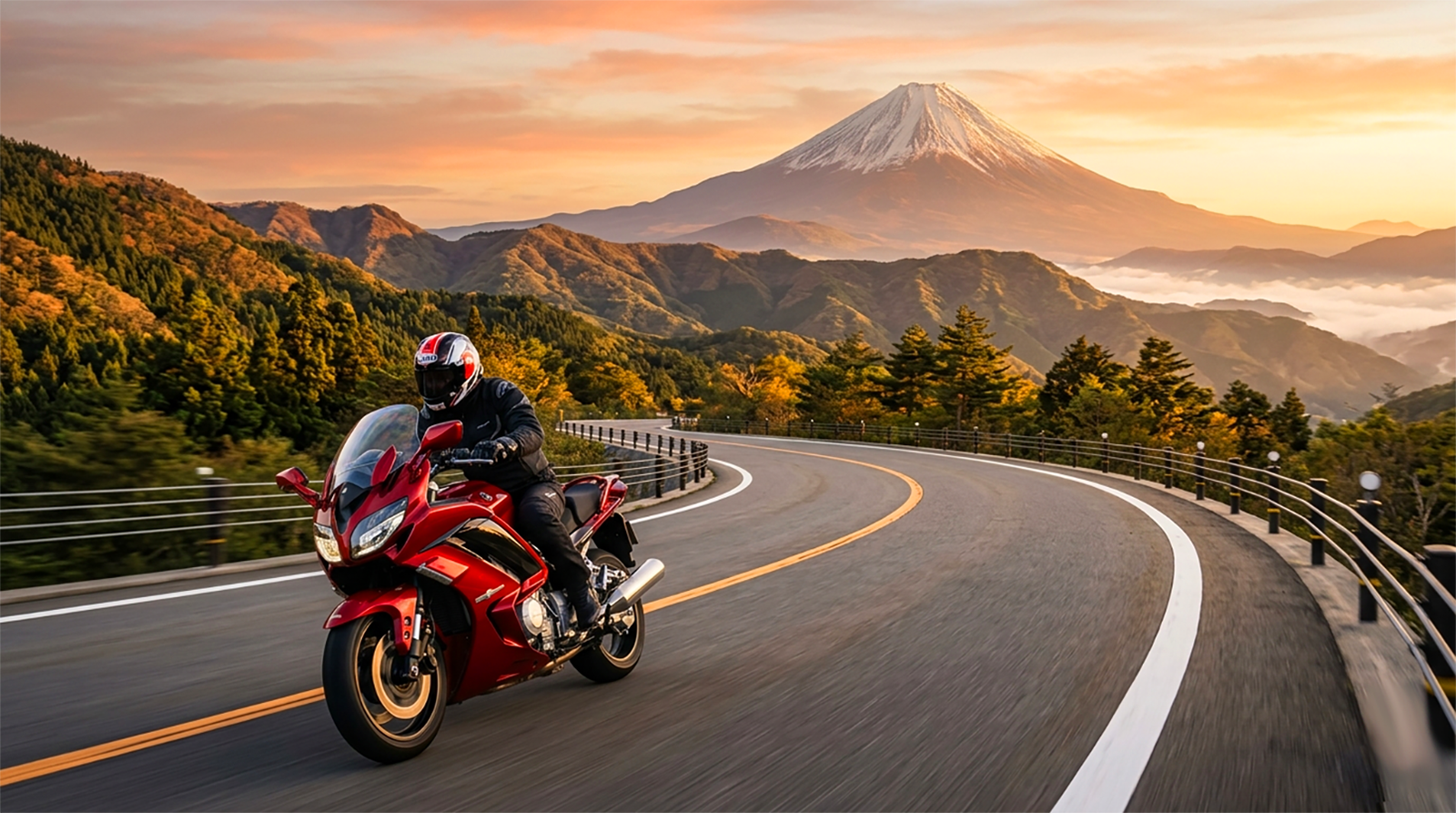
Early morning rides through mountain roads offer:
- Clean, well-maintained pavement
- Minimal traffic
- A sense of quiet rarely found elsewhere
Riders tend to be disciplined, respectful, and intentional.
There is less noise.
Less aggression.
More awareness.
Even a short ride can feel focused and almost meditative.
This is where the philosophy behind Japanese motorcycles becomes real—not in theory, but in experience.
If you want to understand what it truly feels like, explore this here:
👉 [What It Feels Like to Ride a Motorcycle in Japan] (Coming Soon)
A Complete Motorcycle Ecosystem
Japan’s success in motorcycles is not just about manufacturers.
The country also developed:
- Helmet brands
- Gear companies
- Parts manufacturers
- Touring culture
This complete ecosystem helped Japan become the motorcycle capital of the world.
Conclusion
Japan became the motorcycle capital of the world through:
- Necessity after war
- Relentless innovation
- Cultural discipline
- Global strategy
But more importantly—
They focused on creating value for riders.
Not just speed.
Not just design.
But reliability, balance, and trust.
And that is what changed the industry forever.
RELATED ARTICLES
- The Ultimate Japanese Motorcycle Culture Guide
- Why Japanese Motorcycles Are So Famous Worldwide
- Japanese vs European Motorcycles
- The Philosophy Behind Japanese Motorcycles
- Why Hamamatsu Is the Heart of Motorcycle Culture
- Motorcycle Pilgrimage in Hamamatsu