- Introduction
- Who This Article Is For
- The Origin of Suzuki: Not a Motorcycle Company
- Post-War Japan and the Birth of Suzuki Motorcycles
- Suzuki’s Core Philosophy: Lightweight & Practical Engineering
- Global Expansion and Racing DNA
- What Makes Suzuki Feel Different
- Common Questions About Suzuki Motorcycles
- Suzuki vs Other Japanese Brands
- Hamamatsu: The Birthplace You Can Still Ride Today
- Real Rider Story
- Suzuki Owner Meetups in Hamamatsu (Real Events You Can Experience)
- GSX Meetup (Held at Suzuki Factory in Hamamatsu)
- Katana Meetup (Hamamatsu Fruit Park)
- V-Strom Meetup (Adventure Touring Community)
- Why These Events Make Hamamatsu Special
- From Reading to Experiencing
- Plan Your Trip Around Suzuki Meetups
- Experience Suzuki Culture in Real Life
- Why Riders Travel to Hamamatsu
- How to Ride Suzuki in Japan
- What Makes Riding in Japan Unique
- Why Suzuki Still Matters Today
- Plan Your Suzuki Journey in Japan
- Internal Navigation: Explore More
- FAQ
- Related Articles
Introduction
Imagine this.
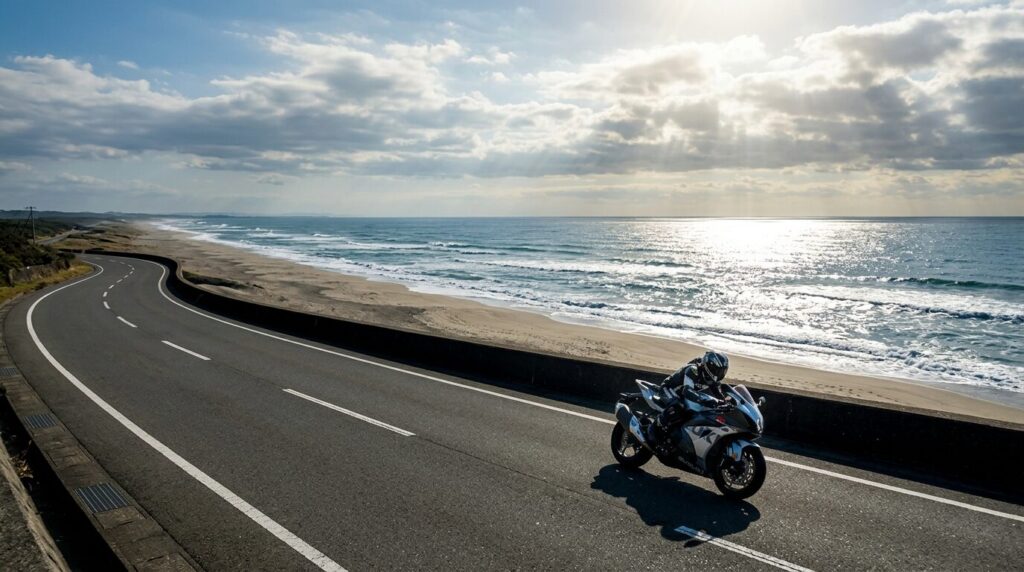
You’re riding through Japan—smooth roads, quiet mountains, and endless coastal lines.
And suddenly, everything makes sense.
Why Japanese motorcycles feel so… right.
Why Suzuki isn’t about specs—but about real riding.
And why riders from around the world eventually end up in one place:
Hamamatsu.
This article will change how you see Suzuki.
Not just as a brand.
But as a philosophy shaped by real roads, real people, and real needs.
By the end, you will understand:
- Why Suzuki feels different from Honda, Yamaha, and Kawasaki
- How its history shaped modern motorcycles
- And why visiting Hamamatsu is a must for riders worldwide
Watch: Inside Suzuki’s Motorcycle Production
Suzuki’s motorcycles are not just designed—they are carefully built through precise and controlled processes.
This video offers a rare look into how these machines are actually produced in Japan.
From assembly to final inspection, every step reflects Suzuki’s focus on consistency, efficiency, and real-world reliability.
Seeing this process adds a different level of understanding.
These are not just machines.
They are the result of disciplined engineering, built in the same environment you can experience in Hamamatsu.
Who This Article Is For
- Riders looking for a real riding experience—not tourism
- Riders interested in Suzuki motorcycles history
- Travelers planning a motorcycle trip to Japan
- Riders who want to understand Japanese motorcycle culture
- People choosing between Honda / Yamaha / Suzuki
The Origin of Suzuki: Not a Motorcycle Company
Born in Hamamatsu: The Loom Industry
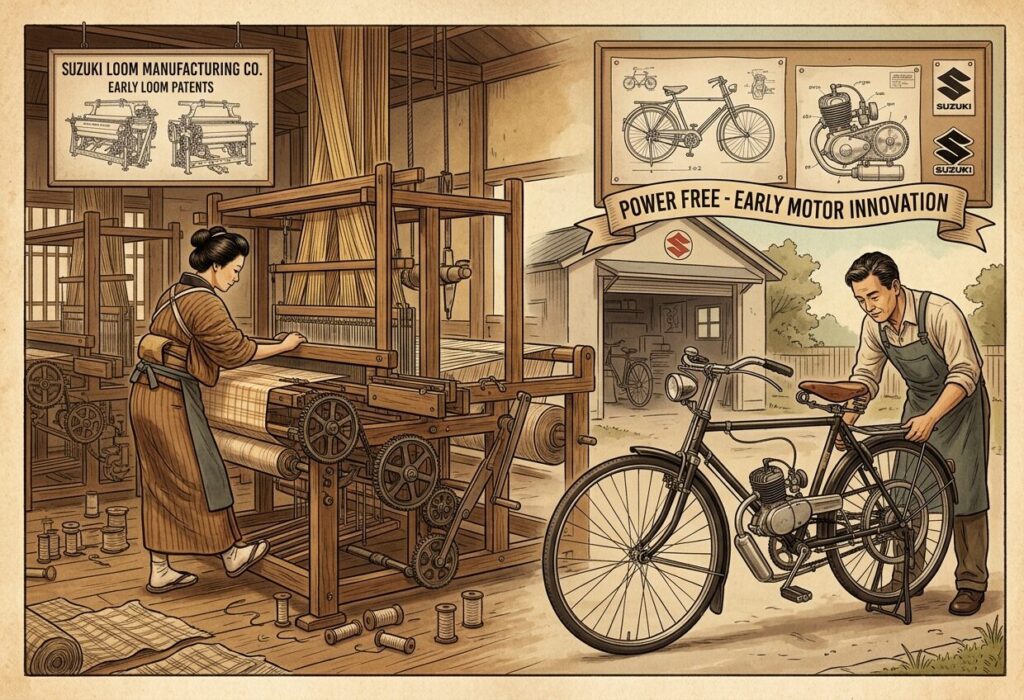
Suzuki was founded in 1909 by Michio Suzuki in Hamamatsu, Japan.
But here’s the twist:
It had nothing to do with motorcycles.
Suzuki originally built weaving looms.
These machines demanded:
- Extreme precision
- Reliability
- Simplicity
That DNA never disappeared.
It became the foundation of Suzuki motorcycles.
Why Precision Engineering Started Here
Hamamatsu wasn’t random.
It was a hub of manufacturing, innovation, and craftsmanship.
Even today, this region produces world-class machines.
👉 Want to understand why this area is special?
→ Explore here: Why Hamamatsu Became Japan’s Motorcycle Capital
Post-War Japan and the Birth of Suzuki Motorcycles
The Need for Affordable Mobility
After World War II, Japan faced a simple problem:
People needed transportation.
Not fast bikes.
Not luxury machines.
Affordable mobility.
Suzuki responded with a simple idea:
Make something anyone can use.
The Power Free Revolution (1952)
Suzuki’s first bike wasn’t really a motorcycle.
It was a hybrid:
- Pedal
- Engine assist
- Full engine
This flexibility made it revolutionary.
It wasn’t about speed.
It was about freedom.
Suzuki’s Core Philosophy: Lightweight & Practical Engineering
Why Lightweight Matters in Real Riding
Lightweight bikes offer:
- Better control
- Easier handling
- Lower fatigue
Especially important in:
- Mountain roads
- Tight corners
- Long-distance touring
Designed for Daily Riders, Not Just Specs
Suzuki doesn’t chase numbers.
It chases feeling.
That’s why riders say:
“On paper, it looks normal.
On the road, it feels perfect.”
Global Expansion and Racing DNA
Entering the World Stage
In the 1960s–70s, Suzuki entered global racing.
But instead of brute force:
It optimized balance.
Efficiency Over Raw Power
Suzuki’s racing philosophy:
- Weight optimization
- Efficiency
- Control
This made it strong in technical circuits.
What Makes Suzuki Feel Different
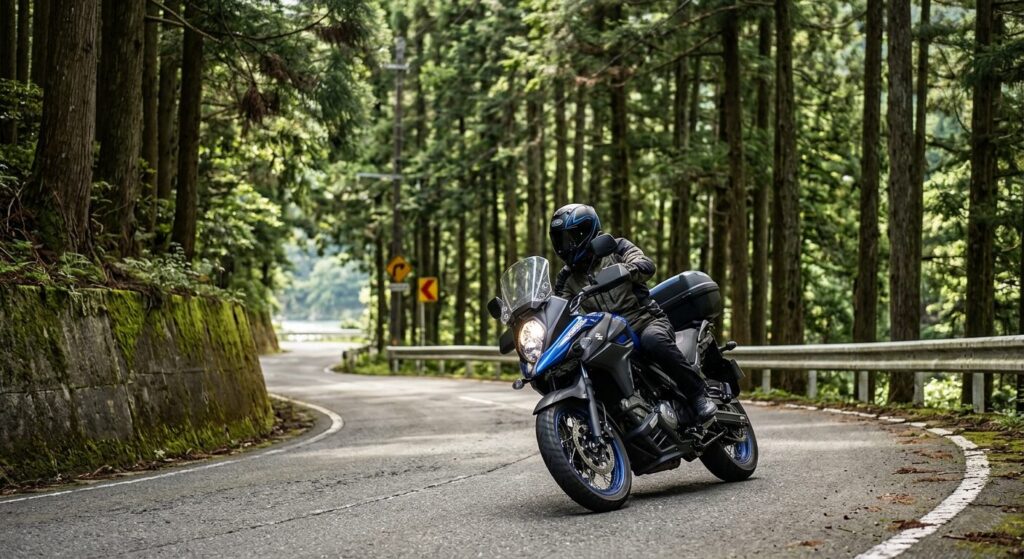
Real-World Riding vs Spec Sheets
On Japanese mountain roads:
- Tight turns
- Uneven surfaces
- Elevation changes
Power alone doesn’t help.
Control does.
Why Riders Trust Suzuki
Suzuki bikes:
- Respond predictably
- Feel natural
- Reduce rider stress
That’s why long-term riders love them.
Common Questions About Suzuki Motorcycles
Is Suzuki a Good Motorcycle Brand?
Yes — but not for the reasons you might expect.
Suzuki focuses on:
- Real-world usability
- Predictable handling
- Long-term reliability
👉 If you want a bike that feels natural from the first ride, Suzuki is one of the best choices.
Why Is Suzuki Sometimes Cheaper Than Other Brands?
Lower price does NOT mean lower quality.
Suzuki focuses on:
- Proven technology
- Efficient production
- Practical design
👉 You are paying for what actually matters.
Is Suzuki Good for Touring in Japan?
Yes — especially in Shizuoka.
Ideal for:
- Mountain roads
- Coastal riding
- Long-distance touring
👉 Plan your route here: Best Motorcycle Roads in Japan
Suzuki vs Other Japanese Brands
Suzuki vs Honda
- Honda → Reliable, beginner-friendly
- Suzuki → More raw, more connected
👉 Honda feels safe
👉 Suzuki feels natural
Suzuki vs Yamaha
- Yamaha → Sporty, emotional
- Suzuki → Balanced, practical
Suzuki vs Kawasaki
- Kawasaki → Aggressive, powerful
- Suzuki → Smooth, controllable
👉 Suzuki’s balance is ideal for real roads.
Hamamatsu: The Birthplace You Can Still Ride Today
See how Suzuki motorcycles are built in Japan with precision and craftsmanship.
Inside Suzuki’s Modern Factory
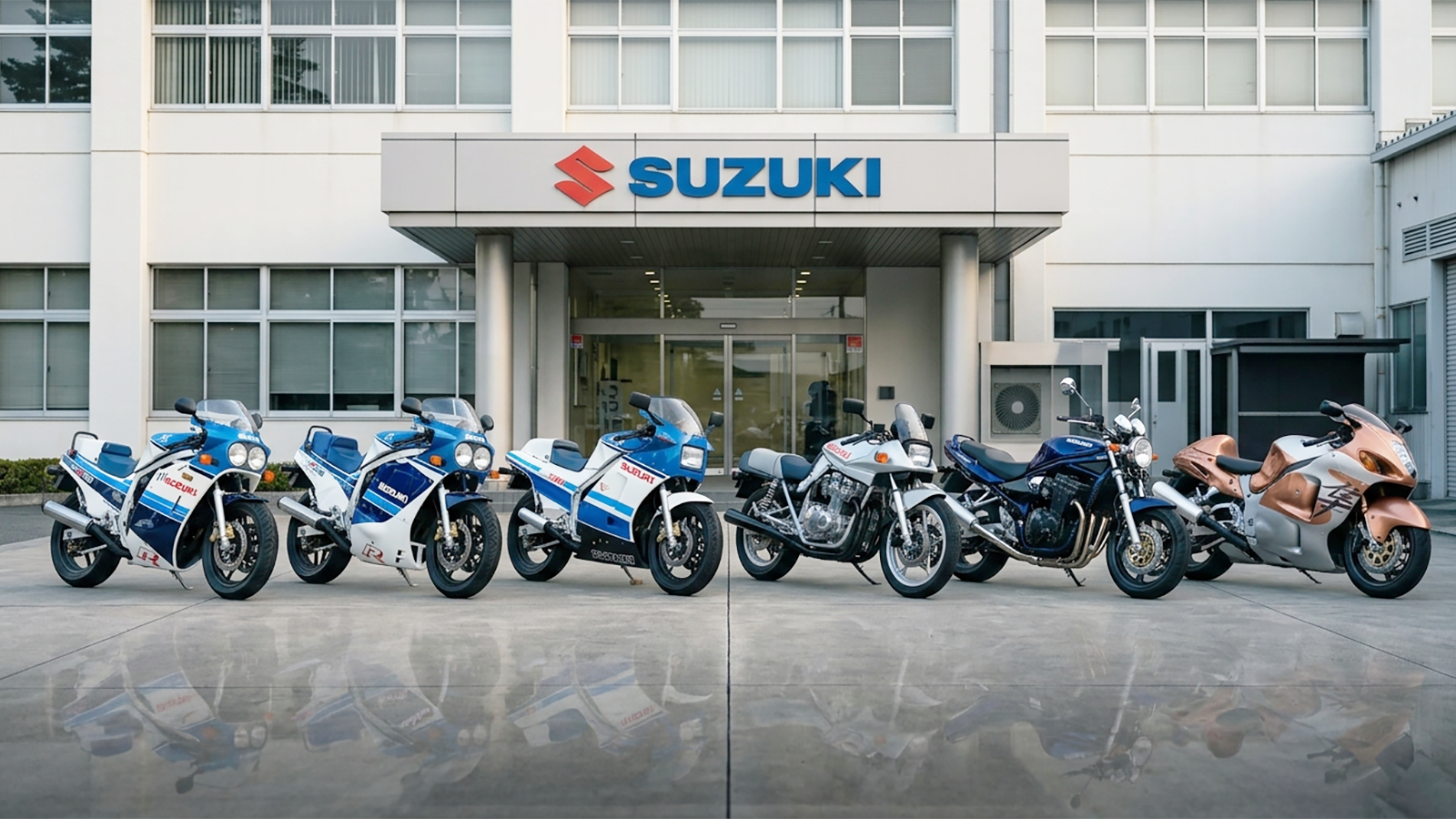
Suzuki still builds flagship models in Hamamatsu.
- Hayabusa
- V-Strom
- Katana
These represent peak engineering.
Real Riding Environment in Hamamatsu
This is not a museum.
- Local riders commuting
- Old bikes still running
- Real roads shaping machines
Real Rider Story
I still remember my first ride in Hamamatsu.
No guides. No signs.
Just quiet roads.
I rode through the mountains of Tenryu, then down to the coast.
And that’s when it clicked.
“This is why Suzuki feels like this.”
Not because of specs.
Because of these roads.
Suzuki Owner Meetups in Hamamatsu (Real Events You Can Experience)
If you want to truly understand Suzuki, there is one experience you should not miss.
Not a museum.
Not a showroom.
A real gathering of riders.
Every year, Suzuki hosts official owner meetups in Hamamatsu.
Riders from all over Japan gather in one place.
Hundreds of motorcycles.
Different generations.
Different stories.
This is where Suzuki becomes more than a brand.
It becomes a community.
GSX Meetup (Held at Suzuki Factory in Hamamatsu)
The GSX series represents Suzuki’s performance DNA.
At this event, you will see:
- Classic GSX models
- Modern sport bikes
- Custom builds by passionate riders
And most importantly:
You will meet the people behind them.
📍Location: Suzuki Motorcycle Factory (Hamamatsu)
📅 Held once a year
This is not a staged event.
This is real Suzuki culture.
Katana Meetup (Hamamatsu Fruit Park)
The Katana is not just a motorcycle.
It is a design icon.
At this meetup:
- Old and new Katana models gather together
- Riders share stories and customization
- You feel the legacy of Japanese design
📍Location: Hamamatsu Fruit Park
📅 Held once a year
If you love design, this event is unforgettable.
V-Strom Meetup (Adventure Touring Community)
The V-Strom represents adventure and long-distance touring.
From 2025, the event location has been moved to Hamamatsu.
This means:
👉 Even more riders gathering in one place
At this event:
- Touring-focused riders meet
- Travel stories are shared
- Real adventure culture is visible
📍Location: Suzuki Factory (Hamamatsu)
📅 Held once a year
This is where touring culture comes alive.
Why These Events Make Hamamatsu Special
There are many motorcycle events in the world.
But Hamamatsu is different.
Why?
Because this is where the motorcycles are born.
You are not just looking at bikes.
You are seeing:
- Their origin
- Their evolution
- Their riders
All in one place.
From Reading to Experiencing
At some point, reading is no longer enough.
You start to feel it.
“Maybe I should go.”
That feeling matters.
Because this is not just about motorcycles.
It is about connection.
Between riders.
Between machines.
Between places.
👉 If you want to experience real Japanese motorcycle culture, Hamamatsu is the place.
Plan Your Trip Around Suzuki Meetups
If you are planning to visit Japan:
👉 Try to match your trip with these events
Why?
Because this is when Hamamatsu becomes something else.
More bikes.
More people.
More stories.
👉 It becomes alive.
Experience Suzuki Culture in Real Life
Everyday Riders in Hamamatsu
You’ll see:
- Small bikes used daily
- Old models still running
- Riders maintaining machines
Coastal & Mountain Roads You Can Ride
- Enshu-nada → open coastal roads
- Tenryu → technical mountain riding
👉 Plan your route here: Best Motorcycle Roads in Shizuoka
Why Riders Travel to Hamamatsu
Not Tourism—A Pilgrimage
This isn’t sightseeing.
It’s understanding.
Understanding Through Experience
You don’t learn Suzuki.
You feel it.
How to Ride Suzuki in Japan
Step 1: Rent a Motorcycle in Japan
- High-quality rentals
- Insurance included
- Easy process
👉 You can rent gear easily in Japan.
Step 2: Choose the Right Area
Hamamatsu offers:
- Mountains
- Coast
- Culture
👉 One of the best riding areas in Japan.
Step 3: Plan Your Route
👉 Plan your route here: Best Motorcycle Roads in Shizuoka
Step 4: Stay Nearby
Stay close to riding areas for maximum experience.
What Makes Riding in Japan Unique
- Clean roads
- Respectful drivers
- Easy access to fuel
- Convenience stores everywhere
👉 Stress-free long-distance riding.
Why Suzuki Still Matters Today
Practical Innovation
- Balanced performance
- Everyday usability
The Underdog Advantage
Suzuki innovates without following trends.
Plan Your Suzuki Journey in Japan

👉 Rent a motorcycle
👉 Stay near Hamamatsu
👉 Ride real Japanese roads
Because reading is not enough.
You need to ride it.
Internal Navigation: Explore More
- Japanese Motorcycle Culture Guide
- Why Hamamatsu Became Motorcycle Capital
- Best Motorcycle Roads in Japan
- Motorcycle Touring Tips in Japan
👉 Use the search bar to explore more.
FAQ
Q1: Where are Suzuki motorcycles made?
Many are still made in Hamamatsu, Japan.
Q2: Why visit Hamamatsu?
To experience real motorcycle culture.
Q3: Is Japan safe for riding?
Yes, extremely safe.
Q4: Do I need gear?
No, you can rent it.
Q5: Best season?
Spring and autumn.
Related Articles
- Why Smart Riders Skip Tokyo — And Discover Japan’s Hidden Motorcycle & 80s Hobby Culture Paradise Instead
- Ultimate Guide to Japanese Motorcycle Culture
- Complete History of Japanese Motorcycles
- Why Japan Dominated Motorcycles (1980–1999)
- Why Japanese Motorcycles Are So Popular Worldwide
- Why Japanese Motorcycles Feel Different
- Honda Motorcycle History
- Yamaha motorcycle history
- Kawasaki Motorcycle History