- Introduction
- The Origins of Japanese Motorcycle Manufacturing
- The Core Philosophy: Monozukuri
- The People Behind Japanese Motorcycle Manufacturing
- Precision and Quality Control
- How Japanese Manufacturing Differs from Other Countries
- Real-World Testing in Japan
- The Influence of Motorcycle Touring Culture
- Why Japanese Motorcycles Last Longer
- Global Impact of Japanese Manufacturing
- What This Means for Riders
- Conclusion
- RELATED ARTICLES
Introduction
Japanese motorcycles are known around the world for one thing: reliability.
Whether it’s a high-performance sport bike or a simple commuter, riders consistently trust Japanese machines for their durability and precision.
But this reputation didn’t happen by accident.
It was built over decades through a unique manufacturing culture that combines craftsmanship, discipline, and real-world riding experience.
To understand why Japanese motorcycle gear is also highly trusted, see our related guide:
👉 Why Japan Dominated Motorcycles: The Hidden Power of Japanese Engineering and Manufacturing
The Origins of Japanese Motorcycle Manufacturing
Post-War Rebuilding
After World War II, Japan had limited resources.
Manufacturers had to focus on:
- Efficiency
- Precision
- Waste reduction
This created a mindset where quality was not optional—it was necessary.
Global Competition
In the 1960s and 70s, Japanese brands entered global markets.
They faced strong competition from Europe and the US.
Their strategy was simple:
- Build better products
- Make them more reliable
- Keep prices competitive
This approach changed the entire motorcycle industry.
The Core Philosophy: Monozukuri
Craftsmanship Mindset
“Monozukuri” means more than just manufacturing.
It represents:
- Pride in creation
- Attention to detail
- Responsibility for quality
Every part of a motorcycle reflects this mindset.
Continuous Improvement (Kaizen)
Japanese companies constantly improve their products.
Small changes are made continuously:
- Better materials
- Improved designs
- Enhanced durability
Over time, these small improvements create major advantages.
The People Behind Japanese Motorcycle Manufacturing
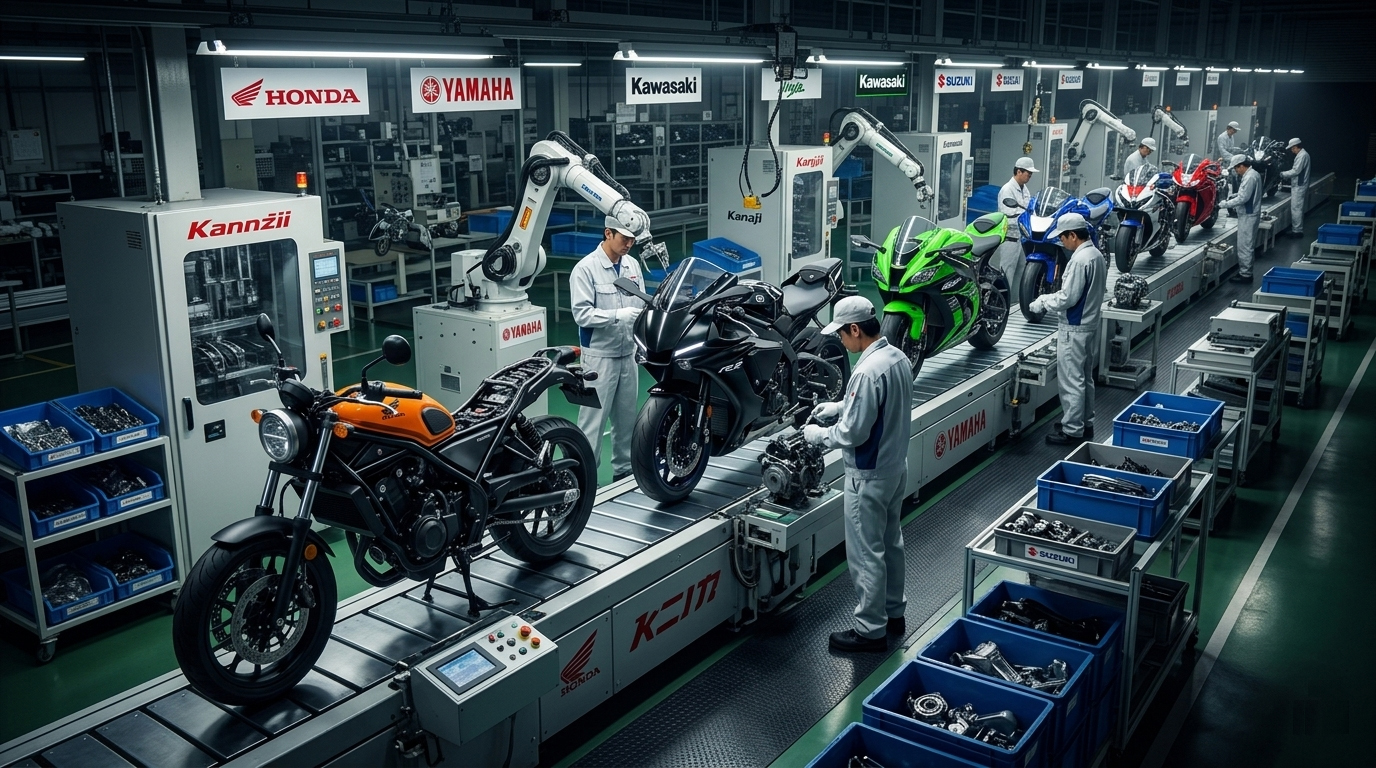
Behind every Japanese motorcycle is not just a system or a factory—but people who take pride in their work.
In many Japanese manufacturing environments, engineers and workers see their role as more than just a job. It is a responsibility.
It is common for technicians to spend years mastering a single process, whether it’s engine assembly, welding, or quality inspection.
This level of dedication leads to:
- Fewer production errors
- Higher consistency in quality
- A deep understanding of every component
Unlike mass production systems that prioritize speed, Japanese manufacturing often prioritizes precision and responsibility.
This human element is one of the key reasons why Japanese motorcycles earn long-term trust worldwide.
Precision and Quality Control
Attention to Detail
Japanese manufacturing focuses on small details.
Examples include:
- Tight tolerances in engine parts
- Smooth gear transitions
- Precise assembly
These details improve both performance and lifespan.
Consistency Across Production
One major strength is consistency.
A motorcycle produced today will perform similarly to one produced years ago.
This builds long-term trust with riders.
How Japanese Manufacturing Differs from Other Countries
Motorcycle manufacturing exists around the world, but each region has its own priorities and strengths.
Japanese manufacturers are often compared with European and American brands.
- Japan: Focus on reliability, balance, and long-term performance
- Europe: Focus on high performance, innovation, and design
- USA: Focus on power, style, and brand identity
While European motorcycles may push the limits of performance, Japanese motorcycles are designed to perform consistently in everyday conditions.
This difference becomes especially important for riders who prioritize long-distance touring and reliability over extreme performance.
Real-World Testing in Japan
For example, a typical touring route in Japan might start in the Tokyo area, pass through Hakone’s mountain roads, continue along the Izu Peninsula coastline, and end near Mount Fuji.
During this journey, riders can experience temperature drops of more than 10°C, sudden rain showers, and strong coastal winds.
Motorcycles tested in these conditions must deliver stable and predictable performance at all times.
Mountain Roads
Japan offers challenging riding environments.
Routes like:
- Hakone Turnpike
- Izu Skyline
- Mount Fuji area roads
require:
- Stable handling
- Reliable braking
- Engine durability
Weather Conditions
Japan’s climate includes:
- Hot, humid summers
- Cold winters
- Frequent rain
Motorcycles must perform well in all conditions.
The Influence of Motorcycle Touring Culture
Long-Distance Riding
Japanese riders often enjoy touring.
This creates demand for:
- Comfortable seating
- Fuel efficiency
- Reliability over long distances
Daily Usability
Motorcycles are also used for daily transport.
This means:
- Easy maintenance
- Predictable performance
- Durability in urban environments
Why Japanese Motorcycles Last Longer
Engineering Philosophy
Japanese engineering focuses on:
- Balance over extremes
- Reliability over risk
- Long-term performance
This results in machines that may not always be the most aggressive—but are often the most dependable.
Maintenance Culture
Japanese riders maintain their motorcycles carefully.
Regular maintenance includes:
- Oil changes
- Chain adjustments
- Inspections
This culture supports long-lasting performance.
Global Impact of Japanese Manufacturing
Japanese manufacturers changed the global motorcycle industry.
They introduced:
- Affordable reliability
- Mass production with quality
- High resale value
Today, many global brands adopt similar practices.
What This Means for Riders
Understanding Japanese motorcycle manufacturing is not just about history or engineering—it directly affects your riding experience.
When you choose a motorcycle built on these principles, you are choosing:
- Confidence on long journeys
- Less stress about breakdowns
- Consistency in performance across different environments
Whether you are riding through mountain roads, coastal highways, or city streets, this reliability changes how you experience every ride.
It allows you to focus less on the machine—and more on the journey itself.
Conclusion
Japanese motorcycle manufacturing culture is built on precision, discipline, and real-world experience.
It’s not about making the fastest or flashiest machines.
It’s about creating motorcycles that riders can trust—every day, in every condition.
And that’s why Japanese motorcycles continue to lead the world.
RELATED ARTICLES
- Why Japanese Motorcycle Parts Are Reliable
- Best Japanese Motorcycle Brands
- Hidden Motorcycle Companies in Japan
- Japanese Touring Roads Guide
- Motorcycle Culture in Japan