- Introduction
- Who This Article Is For
- 🎧 Song of the Day
- The Japanese Motorcycle Miracle (1980–1999)
- The Hidden Engineering Ecosystem Behind Japan’s Success
- Japanese Manufacturing Culture: Kaizen & Precision
- Japan’s Secret Weapon: Supplier Network
- Electronics: Japan’s Technological Advantage
- Precision Manufacturing and Machine Tools
- Domestic Competition That Accelerated Innovation
- Hamamatsu: The Motorcycle Capital of Japan
- Why Japan Became a Rider’s Dream Destination
- Real Rider Experience
- Why Riders Visit Japan: The Motorcycle Pilgrimage
- Is Riding in Japan Easy for Foreign Riders?
- Why Hamamatsu Should Be Your First Stop
- The Legacy of Japanese Engineering
- 🎧 Drive into the golden era
- Conclusion
- FAQ
- Related Articles
Introduction
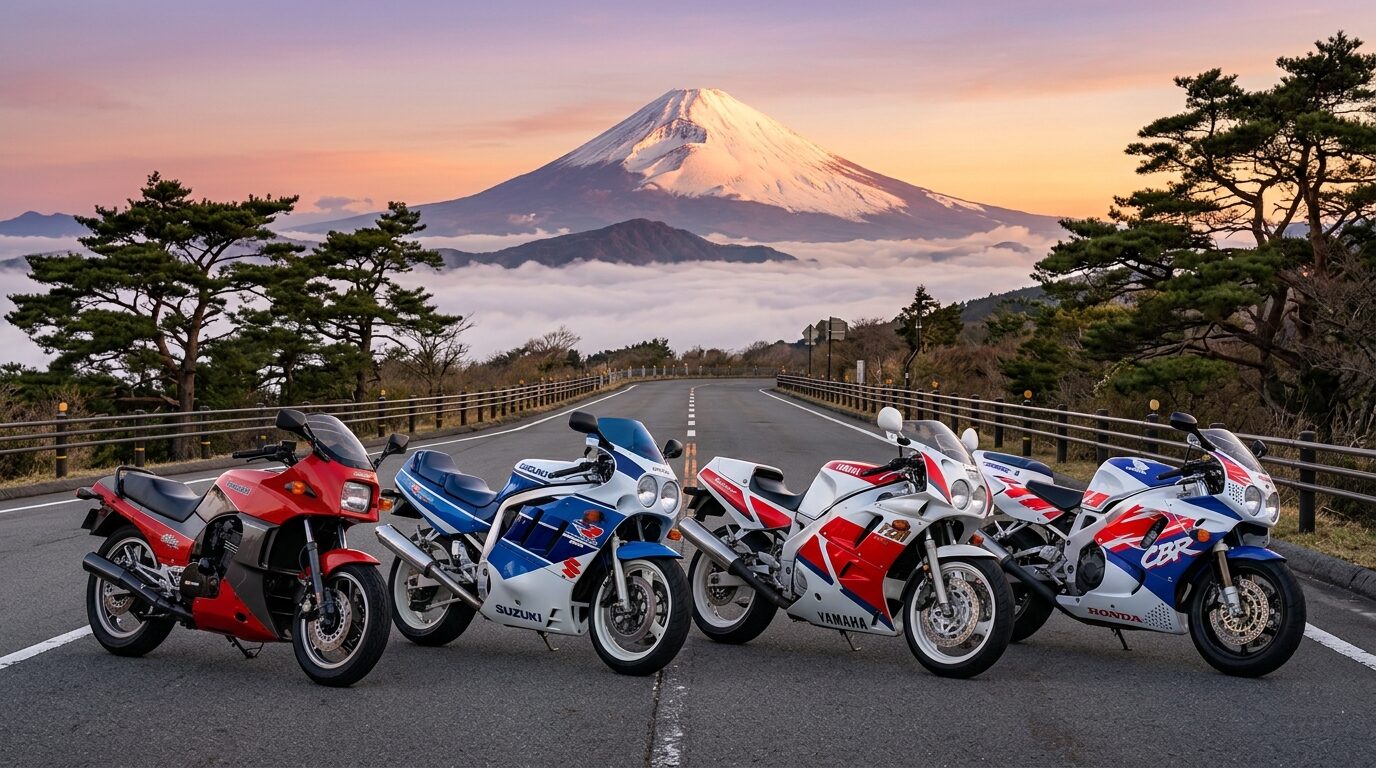
In the 1980s and 1990s, something extraordinary happened.
Japanese motorcycles didn’t just compete — they dominated the world.
Honda. Yamaha. Suzuki. Kawasaki.
These brands became symbols of speed, reliability, and engineering excellence.
But the real story goes deeper.
Japan didn’t just build motorcycles.
Japan built an entire ecosystem designed for innovation.
In this article, you’ll discover:
- Why Japanese motorcycles dominated globally
- The hidden engineering ecosystem behind their success
- Why Hamamatsu became the motorcycle capital of Japan
- Why riders still trust Japanese motorcycles today
- Why Japan is now one of the best motorcycle destinations in the world
By the end of this article, you’ll understand why Japan changed motorcycle history — and why riding in Japan today is a once-in-a-lifetime experience.
👉 For a complete travel plan including routes, costs, and rentals:
Ultimate Guide to Motorcycle Touring in Japan
Who This Article Is For
This article is for:
- Riders interested in motorcycle history
- Fans of Japanese motorcycles
- Travelers planning motorcycle touring in Japan
- Engineers and enthusiasts curious about innovation
- Riders who want to experience motorcycle culture
🎧 Song of the Day
Hand-picked 80s songs for touring, driving, and exploring Japan’s golden era.
The 1980s marked Japan’s golden age — when Japanese motorcycles, synthesizers, black audio electronics, car audio systems, karaoke machines, City Pop, and model kits helped shape modern global culture.
👇 Press play before reading
Before exploring how Japan dominated motorcycles from 1980–1999, press play on “Reach Out” by George Duke. The groove starts smooth, then lifts — like rolling onto an open road where engineering meets emotion. It’s not aggressive power. It’s refined confidence. The kind that defined Japan’s golden era.
Released in the early wave of 80s music, Reach Out blends soulful rhythm with polished synth textures and precise electronic sound. This was the sound of a world shifting toward digital clarity, where musicians embraced new audio technology and futuristic tones. The groove feels engineered — tight, efficient, and beautifully controlled.
That sound reflects the rise of Japanese music culture. Yamaha keyboards shaped the harmonic warmth, Roland drum machines tightened the rhythm, and Korg synthesizers added smooth textures. Guitar tones refined through BOSS effectors delivered clarity and reliability — technology trusted worldwide. Meanwhile, Sony’s Walkman turned tracks like this into personal soundtracks across Japan.
This same philosophy defined Japan’s motorcycle dominance:
Music → Yamaha instruments
Sound → Sony electronics
Precision → motorcycles and model kits
Different industries. Same engineering mindset.
Imagine cruising through Hamamatsu, smooth engine, refined throttle, Reach Out playing in your helmet. That’s the golden era — where technology and emotion moved together.
Press play. Reach out. Experience Japan. 🏍️🎧✨
The Japanese Motorcycle Miracle (1980–1999)
Watch: Legendary Japanese Motorcycles from the Golden Era
To understand why Japanese motorcycles dominated the world, watch these legendary machines from the 1980s and 1990s.
Between 1980 and 1999, Japanese motorcycles reshaped the global industry.
During this period, manufacturers released legendary machines:
- Honda CBR900RR Fireblade
- Yamaha FZR1000
- Suzuki GSX-R750
- Kawasaki Ninja GPZ900R
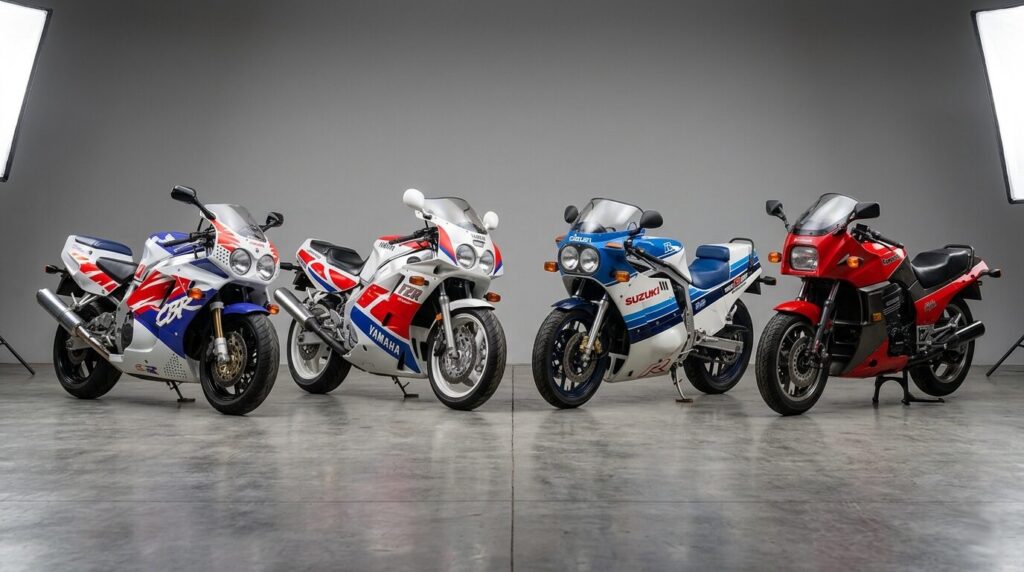
These motorcycles introduced:
- Lightweight performance
- Advanced suspension
- Reliable engines
- Aerodynamic design
European manufacturers struggled to keep up.
American manufacturers focused on cruisers.
Japan dominated performance motorcycles worldwide.
But this success wasn’t accidental.
It was built by something much bigger.
An ecosystem.
The Hidden Engineering Ecosystem Behind Japan’s Success
Watch: Inside Japanese Motorcycle Engineering
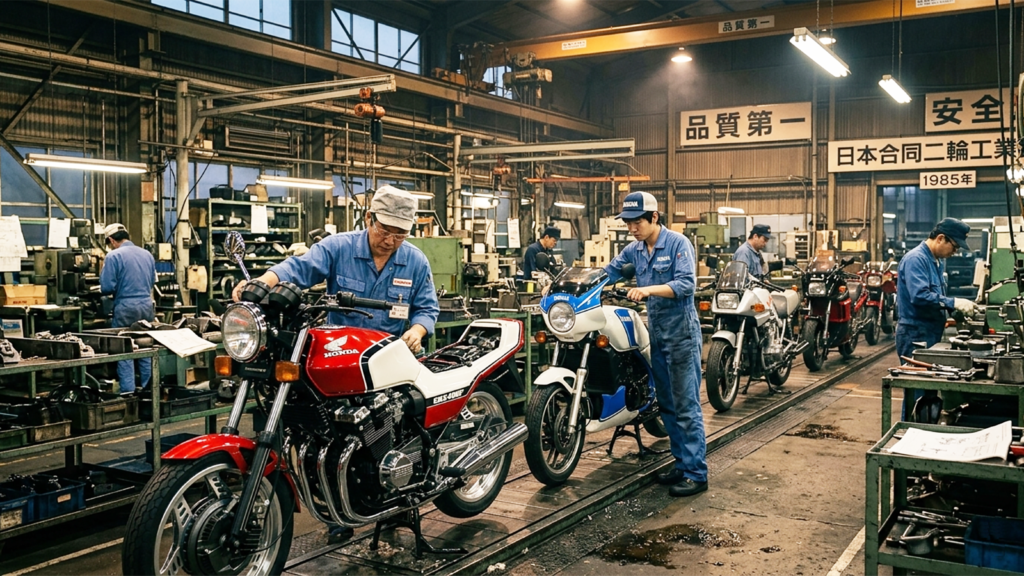
Japanese motorcycle dominance was built on precision engineering and manufacturing excellence. This video shows how Japanese motorcycles are made.
Yamaha: Iwata Motorcycles factory near Hamamatsu, Japan
Japan built a rare industrial ecosystem.
This included:
- Tire manufacturers
- Electronics companies
- Precision machining firms
- Materials specialists
- Component suppliers
This collaboration created:
- Faster innovation
- Higher quality
- Lower costs
- Better reliability
This ecosystem became Japan’s greatest advantage.
Japanese Manufacturing Culture: Kaizen & Precision
Suzuki: Hamamatsu Motorcycles factory in Shizuoka, Japan
Japanese manufacturing focused on:
- Precision
- Reliability
- Continuous improvement
- Long-term quality
This philosophy is known as Kaizen.
Small improvements every day.
Over time, small changes created massive advantages.
Examples:
- Improved engine durability
- Reduced weight
- Better aerodynamics
- Improved fuel efficiency
Riders noticed.
Japanese motorcycles became known for reliability.
Japan’s Secret Weapon: Supplier Network
Japanese manufacturers worked with specialized suppliers:
- Bridgestone — Tires
- Showa — Suspension
- Nissin — Brakes
- NGK — Spark plugs
- DID — Chains
- Denso — Electronics
Each company focused on excellence.
This specialization improved performance.
Most suppliers were located close to manufacturers.
This enabled rapid innovation.
Electronics: Japan’s Technological Advantage
In the 1980s and 1990s, Japan dominated electronics.
Companies included:
- Sony
- Panasonic
- Hitachi
- Denso
These companies developed:
- Electronic fuel injection
- Digital dashboards
- Engine management systems
Electronics became a major advantage.
Precision Manufacturing and Machine Tools
Japan also led precision manufacturing.
Companies included:
- FANUC
- Mazak
- Okuma
These companies created advanced manufacturing equipment.
This resulted in:
- Higher quality
- Better reliability
- Lower defects
Domestic Competition That Accelerated Innovation
Japan had intense competition:
- Honda
- Yamaha
- Suzuki
- Kawasaki
Competition accelerated innovation.
This led to:
- Faster development
- Better performance
- Higher quality
Hamamatsu: The Motorcycle Capital of Japan
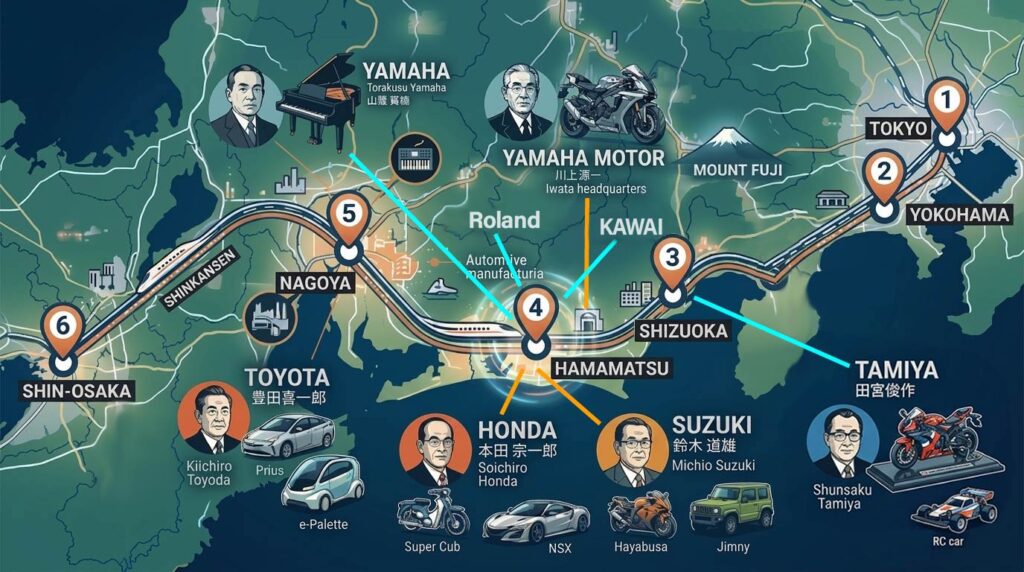
Hamamatsu, located in Shizuoka Prefecture, became the birthplace of:
- Honda
- Yamaha
- Suzuki
This regional concentration created rapid innovation.
Engineers collaborated closely.
Suppliers were nearby.
Ideas moved quickly.
Hamamatsu became Japan’s motorcycle capital.
👉 If you want the perfect riding experience, Hamamatsu is one of the best areas in Japan.
Why Japan Became a Rider’s Dream Destination
Watch: Motorcycle Touring in Japan
Japan is one of the most unique motorcycle destinations in the world. Watch this real touring experience from international riders.
Today, Japan offers one of the best motorcycle touring environments in the world.
Here’s why riders love Japan:
- Clean roads
- Safe environment
- Mountain roads
- Coastal routes
- Unique culture
Japan also offers:
- Convenience stores everywhere
- High-quality fuel
- Clean rest areas
- Roadside stations (Michi-no-Eki)
These factors make Japan one of the easiest countries to tour by motorcycle.
Real Rider Experience
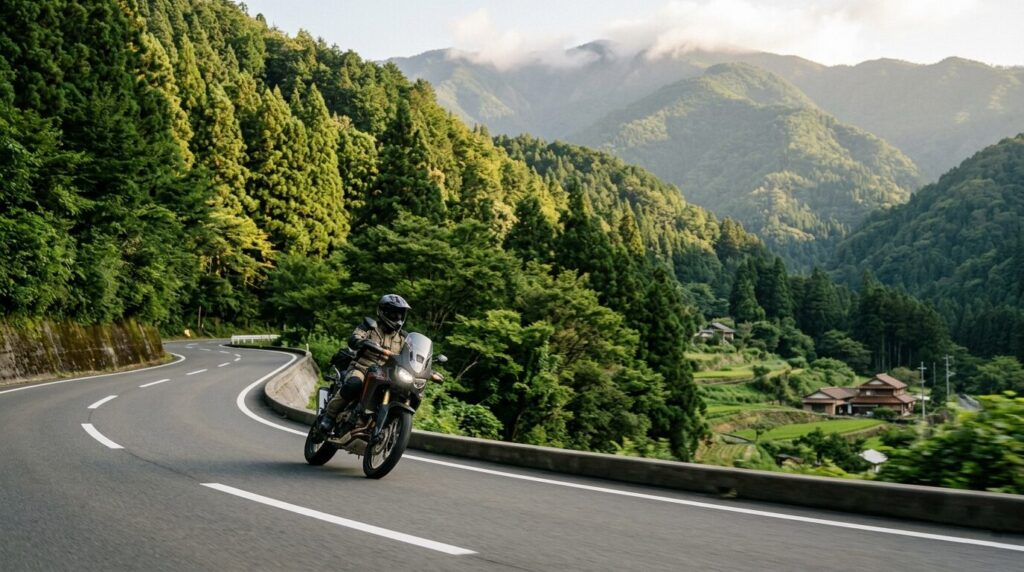
A rider from Europe once described his experience:
“I came to Japan expecting great roads.
But what I found was something more.
Clean roads. Friendly people. Amazing food.
And the feeling that motorcycles are respected here.
Japan felt like a rider’s paradise.”
Why Riders Visit Japan: The Motorcycle Pilgrimage
Many riders visit Japan to experience:
- Hamamatsu (Honda, Yamaha origins)
- Suzuka Circuit
- Mount Fuji
- Hakone
- Izu Peninsula
Japan is not just a destination.
It’s a motorcycle pilgrimage.
👉 Plan your route here: Ultimate Guide to Motorcycle Touring in Japan
Is Riding in Japan Easy for Foreign Riders?
Yes.
Japan is one of the safest countries for motorcycle touring.
You’ll find:
- English signs
- Navigation apps
- Friendly locals
- Clean roads
You can also:
- Rent motorcycles easily
- Rent gear
- Book guided tours
👉 If you don’t want to bring gear, you can easily rent high-quality equipment in Japan.
Why Hamamatsu Should Be Your First Stop
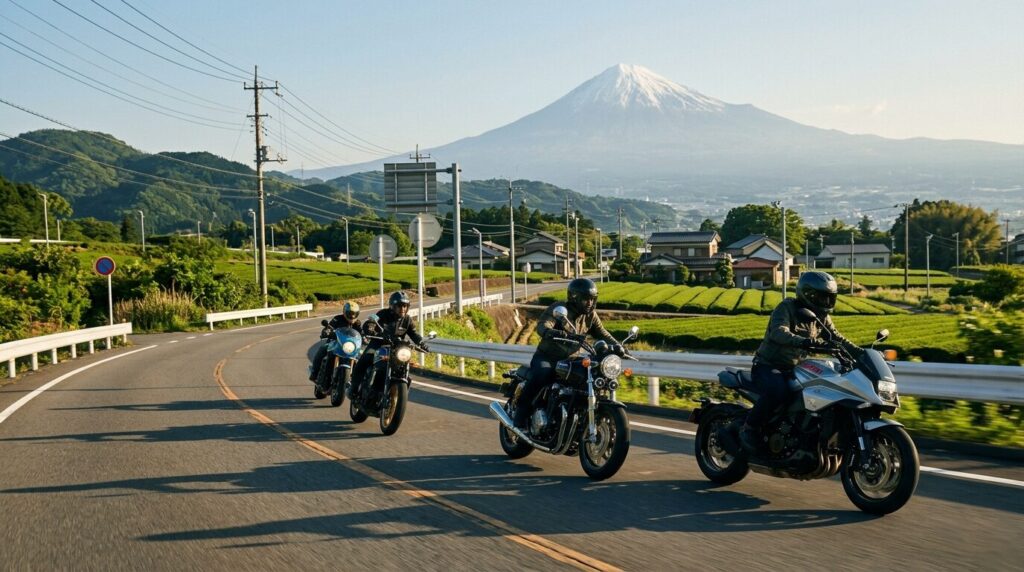
Hamamatsu offers:
Hamamatsu is the heart of Japanese motorcycle culture.
The Legacy of Japanese Engineering
Even today:
- 1980s motorcycles remain popular
- Collectors value Japanese bikes
- Riders trust reliability
Japanese engineering still influences the industry.
🎧 Drive into the golden era
👇 Feel the golden era again
George Duke – Shine On
Smooth, uplifting, and filled with elegant 80s groove, Shine On captures the refined sound of the golden era.
Layered synth textures and polished production reflect the rise of Japanese music technology.
It’s the perfect soundtrack for cruising — calm, confident, and effortlessly stylish.
A sound shaped by Yamaha keyboards, Roland innovation, and Japan’s evolving audio culture.
Press play, and let the golden era shine through your ride.
🎧Every article features a curated 80s hit or Japanese City Pop track.
Press play and experience how Japan, synth culture, and 80s music shaped global sound.
👉 How Japan Shaped Modern Music: The 1980s Synth Revolution, Sony Walkman, and the Rise of Global Sound Culture
👉 80s Music Culture
👉 80s Hobby Culture
Conclusion
Japan didn’t dominate motorcycles by accident.
It built an ecosystem.
Engineering excellence.
Supplier networks.
Innovation culture.
This combination created legendary motorcycles.
Today, Japan remains one of the best motorcycle destinations in the world.
Maybe it’s time to ride where history was made.
FAQ
Why did Japanese motorcycles dominate in the 1980s?
Because of engineering innovation, supplier networks, and manufacturing culture.
Why are Japanese motorcycles reliable?
Japanese manufacturers focused on precision and continuous improvement.
Where is the motorcycle capital of Japan?
Hamamatsu, Shizuoka Prefecture.
Is Japan good for motorcycle touring?
Yes. Japan offers safe roads, great scenery, and unique culture.
Related Articles
- Ultimate Guide to Motorcycle Touring in Japan
- Why Japanese Motorcycle Gear Is the Best
- Philosophy Behind Japanese Motorcycles
- Best Japanese Motorcycle Parts Brands
- Hidden Motorcycle Companies in Japan
- Best Japanese Motorcycle Helmet Brands