- Introduction
- Why Mount Fuji Is One of Japan’s Best Motorcycle Destinations
- Best Motorcycle Routes Around Mount Fuji
- Recommended One-Day Touring Itinerary
- Best Scenic Spots for Riders
- Best Time to Ride Around Mount Fuji
- Practical Riding Tips Around Mount Fuji
- Common Mistakes to Avoid
- How This Fits Into Your Japan Motorcycle Trip
- Conclusion
- RELATED ARTICLES
Introduction
Motorcycle touring around Mount Fuji is one of the most iconic riding experiences in Japan. With its perfectly symmetrical shape rising above lakes, forests, and winding roads, Mount Fuji offers a backdrop that feels almost unreal.
For riders, this region delivers more than just views. It combines smooth mountain roads, scenic lakeside routes, and well-maintained infrastructure, making it one of the most accessible and rewarding touring destinations in the country.
Whether you’re planning a short ride from Tokyo or a longer motorcycle journey across Japan, the Mount Fuji area is a must-visit. This guide will show you the best routes, scenic stops, and practical tips to help you make the most of your ride.
Why Mount Fuji Is One of Japan’s Best Motorcycle Destinations
Unique landscape and road variety
Few places in Japan offer the variety of riding conditions found around Mount Fuji.
Within a single day, you can experience:
- Lakeside cruising along Lake Kawaguchi
- Twisty mountain roads in Hakone
- Open scenic highways with Fuji views
The roads are generally well-paved and clearly marked, making them suitable for both experienced riders and beginners.
Accessibility from Tokyo
One of the biggest advantages of this region is its proximity to Tokyo.
- Distance: about 100–130 km
- Travel time: 1.5 to 2.5 hours depending on route
This makes Mount Fuji ideal for:
- Day trips
- Weekend touring
- First-time riders in Japan
Best Motorcycle Routes Around Mount Fuji
Fuji Five Lakes Loop
The Fuji Five Lakes area (Fujigoko) is the heart of Mount Fuji touring.
Key lakes include:
- Lake Kawaguchi
- Lake Yamanaka
- Lake Saiko
The loop around these lakes offers:
- Flat, relaxed riding
- Frequent Fuji viewpoints
- Plenty of cafes and rest stops
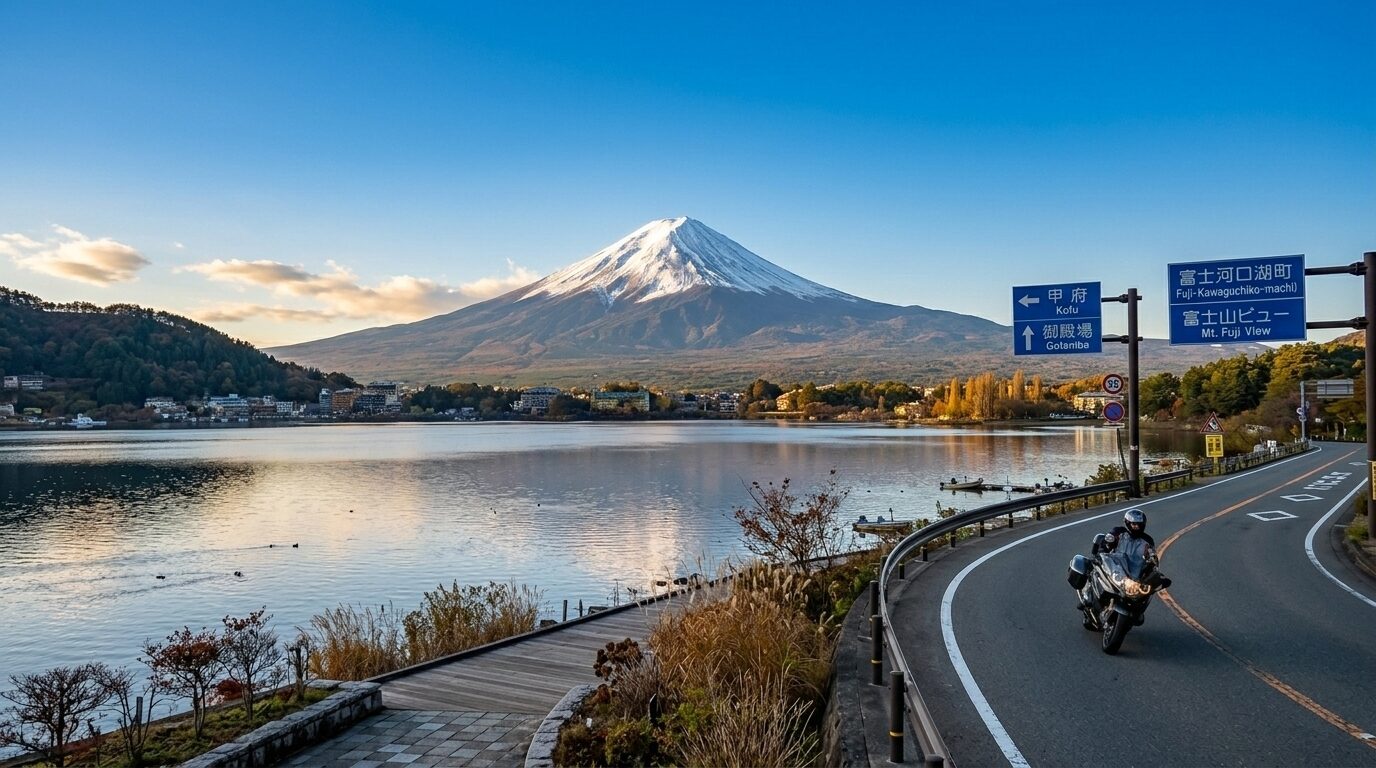
Lake Kawaguchi is especially popular for its postcard-perfect reflections of Mount Fuji.
Hakone Turnpike
The Hakone Turnpike is legendary among riders in Japan.
Location: Kanagawa Prefecture, southwest of Tokyo
Highlights:
- Smooth asphalt and sweeping curves
- Elevation changes
- Panoramic views of Mount Fuji
The road is a toll road, but the quality of riding makes it worth every yen.
Fujisan Skyline Road
For riders who want elevation and nature, the Fujisan Skyline is a great option.
- Connects Gotemba to the southern slopes of Mount Fuji
- Less crowded than Hakone
- Offers a more natural, forested riding experience
This route is especially beautiful in autumn when the leaves change color.
Recommended One-Day Touring Itinerary
Starting from Tokyo
Start early from central Tokyo (e.g., Shinjuku area).
Suggested route:
- Tokyo → Tomei Expressway
- Exit near Gotemba
- Ride Fujisan Skyline
- Continue to Lake Kawaguchi
- Loop around Fuji Five Lakes
- Return via Chuo Expressway
Total distance: 250–300 km
Suggested route plan
This route balances:
- Highway efficiency
- Scenic riding
- Rest stops
Plan for:
- 6–8 hours total including breaks
- Multiple photo stops
Best Scenic Spots for Riders
Lake Kawaguchi viewpoints
One of the best Fuji views can be found along the northern shore of Lake Kawaguchi.
Look for:
- Oishi Park
- Kawaguchi Asama Shrine
Early morning offers the clearest views.
Oshino Hakkai village
A small traditional village between Lake Kawaguchi and Lake Yamanaka.
Features:
- Clear spring water ponds
- Traditional houses
- Walking areas
Perfect for a relaxing stop during your ride.
Michi-no-Eki stops
Roadside stations (Michi-no-Eki) are essential for riders.
They offer:
- Food and drinks
- Clean restrooms
- Local products
Recommended stops:
- Michi-no-Eki Subashiri
- Michi-no-Eki Fujiyoshida
Best Time to Ride Around Mount Fuji
Seasonal breakdown
Spring (March–May)
- Cherry blossoms
- Mild temperatures
Summer (June–August)
- Green landscapes
- Possible fog around Fuji
Autumn (September–November)
- Red and orange foliage
- Best riding season
Winter (December–February)
- Clear skies
- Cold temperatures
Weather and visibility tips
Mount Fuji is often hidden by clouds.
Tips:
- Ride early morning
- Check weather apps
- Avoid humid afternoons
Practical Riding Tips Around Mount Fuji
Traffic and congestion
Weekends and holidays can be crowded.
Avoid:
- Golden Week (early May)
- Obon (mid-August)
Ride early to avoid traffic.
Fuel and rest stops
Fuel stations are available, but:
- Some close early in rural areas
- Always refuel before mountain routes
Safety tips
- Watch for sudden weather changes
- Be cautious on wet roads
- Respect speed limits
Common Mistakes to Avoid
- Starting too late in the day
- Not checking Fuji visibility
- Underestimating travel time
- Skipping fuel planning
How This Fits Into Your Japan Motorcycle Trip
Mount Fuji is often the first stop for riders touring Japan.
It connects easily to:
- Hakone
- Shizuoka coastal routes
- Lake Hamana
Mount Fuji is often the starting point, but connecting multiple regions will turn your trip into a much more rewarding journey.
👉 For a complete travel plan, see the main guide:
Ultimate Guide to Motorcycle Touring in Japan
This pillar article helps you connect Fuji with longer touring routes across the country.
Conclusion
Motorcycle touring around Mount Fuji offers one of the most memorable riding experiences in Japan.
With its combination of scenic roads, cultural stops, and iconic views, it’s a destination that delivers on every level.
Whether you’re riding for a single day or building a longer journey, the Mount Fuji region is the perfect place to experience what motorcycle travel in Japan is all about.