- Introduction
- A City That Should Not Exist
- The Birthplace of Motorcycle Giants
- Why Hamamatsu Became a Motorcycle Hub
- What Makes Hamamatsu Unique Today
- Experiencing Motorcycle Culture in Hamamatsu
- Motorcycle Industry Cluster in Hamamatsu
- Why Riders Call It a Pilgrimage
- How to Plan Your Visit
- Conclusion
- RELATED ARTICLES
Introduction
There is a place in Japan that most people have never heard of.
It is not Tokyo.
It is not Kyoto.
It is Hamamatsu.
At first glance, it looks like an ordinary regional city.
But within a radius of just 30–40 kilometers, something unusual happened.
- Honda was founded here
- Yamaha grew here
- Suzuki is still based here
Three global motorcycle giants—born in the same place.
This is not normal.
This is not coincidence.
👉 This is culture.
If you want to understand Japanese motorcycle culture, you cannot ignore Hamamatsu.
A City That Should Not Exist
From a global perspective, Hamamatsu makes no sense.
It is not the capital.
It is not the largest city.
It is not a financial center.
Yet it produced some of the most influential motorcycle companies in history.
Why?
Because Hamamatsu was never about status.
It was about making things.
This region developed around:
- Textile manufacturing
- Mechanical innovation
- Small workshops and factories
Over time, this created a unique environment:
👉 A city where craftsmanship was normal
The Birthplace of Motorcycle Giants
Honda
Soichiro Honda started his journey in Hamamatsu.
He was not a businessman at first.
He was a mechanic.
After World War II, he began attaching small engines to bicycles.
This simple idea changed mobility forever.
Honda grew into the world’s largest motorcycle manufacturer.
But its origin was humble—and local.
Yamaha
Yamaha Motor was born from a different background.
Originally a musical instrument company, Yamaha entered the motorcycle industry in 1955.
Its strength was not just engineering.
It was design and precision.
Even today, Yamaha motorcycles are known for balance and performance.
Suzuki
Suzuki also began in textiles.
Like many companies in Hamamatsu, it evolved.
From weaving machines to motorcycles.
Suzuki focused on lightweight engineering and efficiency.
This made it competitive globally.
Why Hamamatsu Became a Motorcycle Hub
Geography and Industry
Hamamatsu sits between Tokyo and Nagoya.
It has access to:
- Coastal routes
- Mountain roads
- Trade routes
This made it ideal for both manufacturing and testing.
Nearby areas like:
- Iwata (Yamaha)
- Kosai (Suzuki)
form a tight industrial cluster.
Craftsmanship Culture
More important than geography is mindset.
In Hamamatsu:
- Small workshops collaborate
- Skills are passed down
- Quality is respected
This created a culture where:
👉 Innovation was natural
What Makes Hamamatsu Unique Today
Even today, Hamamatsu feels different.
It is not a tourist-heavy city.
It is quiet.
But for those who understand motorcycles—
👉 It feels like a living museum
You can find:
- Factory facilities
- Engineering heritage
- Local workshops
And most importantly:
👉 The atmosphere of creation
Experiencing Motorcycle Culture in Hamamatsu
What It Actually Feels Like to Be There
Hamamatsu does not try to impress you.
There are no massive crowds.
No loud tourist attractions.
Instead, you notice small things:
– Local riders quietly maintaining their motorcycles
– Clean, organized garages
– Early morning rides with almost no traffic
Even the air feels different.
Calmer. More focused.
This is not a place built for tourism.
It is a place where people live—and where motorcycle culture naturally exists.
Motorcycle Industry Cluster in Hamamatsu
Hamamatsu is also home to several motorcycle-related companies:
- KUSHITANI
- HYOD
- DAYTONA
This makes Hamamatsu one of the most concentrated motorcycle industry clusters in the world.
Places to Visit
If you visit Hamamatsu, start with:
- Honda Collection Hall (Motegi – day trip possible)
- Soichiro Honda Craftsmanship Center (Hamamatsu)
- Yamaha Communication Plaza (Iwata)
- Suzuki Plaza (Hamamatsu)
These are not just museums.
They tell the story of innovation.
Routes to Ride
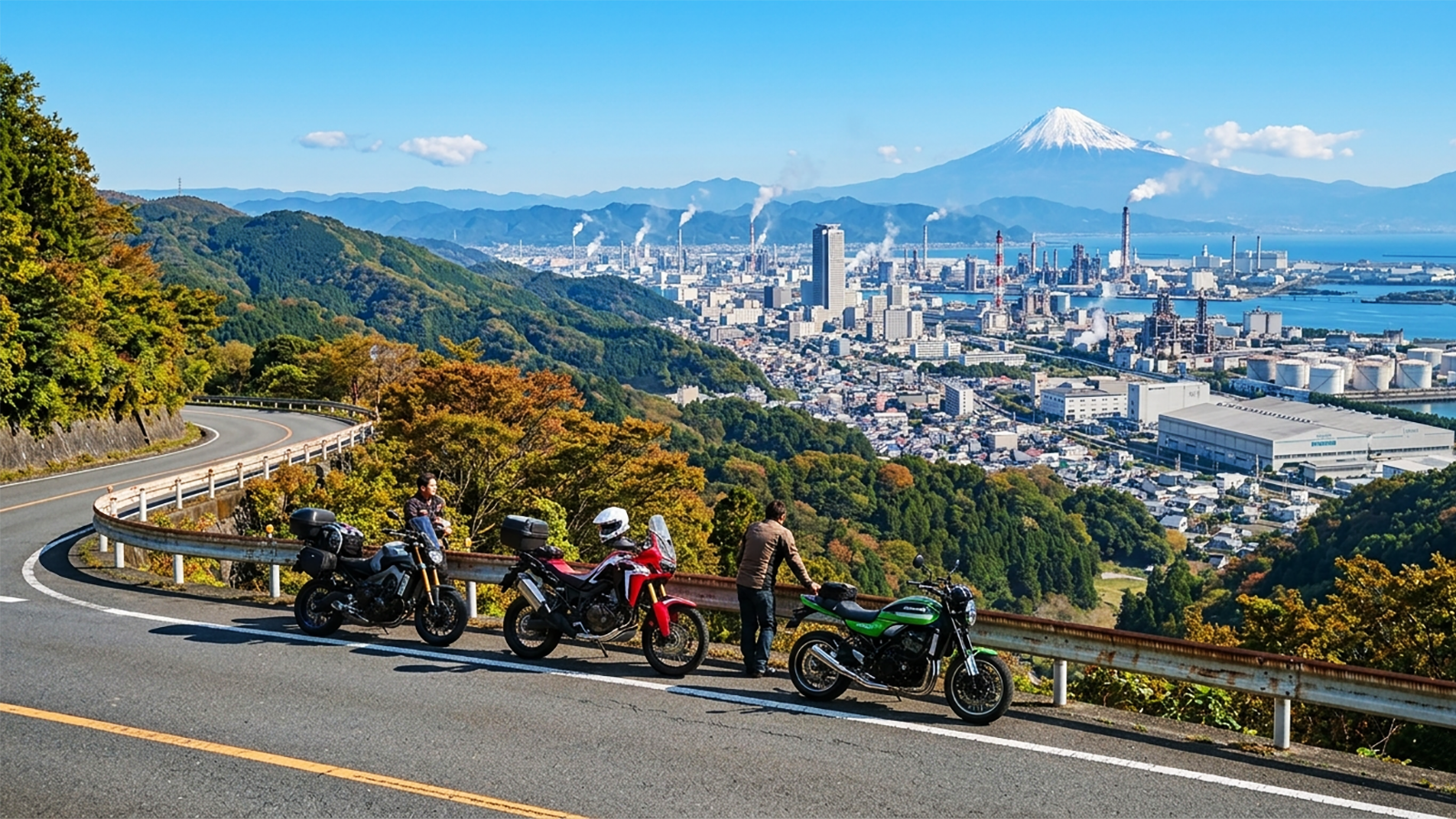
Hamamatsu is surrounded by excellent riding roads:
- Tenryu mountain roads – quiet and technical
- Enshu coastline – open and scenic
- Hamamatsu to Lake Hamana routes – relaxed touring
Early morning is best.
Less traffic.
Better flow.
Why Riders Call It a Pilgrimage
For many riders, visiting Hamamatsu is not just travel.
It is a pilgrimage.
Because this is where:
- Machines were born
- Ideas became reality
- Culture was created
When you ride here, you are not just exploring roads.
👉 You are connecting to history
The Moment It Becomes Real
At some point during your visit, something changes.
It might be when you stand inside a museum and see the first machines ever built.
Or when you ride through a quiet road near Hamamatsu, knowing that the engineers who created your motorcycle once rode here too.
There is no sign.
No dramatic announcement.
But you feel it.
A connection between past and present.
Between machine and human.
And in that moment, Hamamatsu is no longer just a place on the map.
👉 It becomes part of your story as a rider.
How to Plan Your Visit
Getting to Hamamatsu is easy.
- From Tokyo: ~1.5 hours by Shinkansen
- From Nagoya: ~30 minutes
Best seasons:
- Spring (March–May) → mild weather
- Autumn (October–November) → clear skies
Tips:
- Rent a motorcycle in nearby cities
- Start early in the morning
- Avoid peak tourist seasons
If you want a complete travel plan:
👉 [A Rider’s Travel Guide to Japan] (Coming Soon)
Simple 1-Day Riding Plan in Hamamatsu
If you only have one day, here is a simple plan:
**Morning (6:30–10:00)**
Ride along the Hamana Lake area or head toward the Tenryu mountains.
This is the best time for empty roads and smooth riding.
**Late Morning (10:30–12:00)**
Visit Suzuki Plaza or Yamaha Communication Plaza.
Take your time to understand the history behind the machines.
**Afternoon (13:00–16:00)**
Ride coastal routes along the Enshu Sea.
Enjoy open views and a relaxed pace.
**Evening**
Return before sunset and explore local restaurants.
This simple plan already gives you:
– Riding
– History
– Culture
All in one day.
And for many riders, that is enough to understand why Hamamatsu matters.
Conclusion
Hamamatsu is not famous.
But it should be.
Because it represents something rare:
👉 A place where global culture was born from local craftsmanship
Honda, Yamaha, and Suzuki did not just come from Hamamatsu.
They were shaped by it.
And when you visit, you begin to understand why.
This is not just a destination.
👉 It is the origin of something much bigger
RELATED ARTICLES
- The Ultimate Japanese Motorcycle Culture Guide
- Why Japan Became the Motorcycle Capital of the World
- Motorcycle Pilgrimage in Hamamatsu
- Best Motorcycle Roads in Shizuoka
- A Rider’s Travel Guide to Japan
- Japanese Garage Culture
- What It Feels Like to Ride in Japan