- Introduction
- Who This Article Is For
- 🎧 Song of the Day: The Pretenders – Don’t Get Me Wrong
- Why Japanese Road Signals Can Save Your Life
- Hazard Lights in Japan (Meaning + What You Should Do)
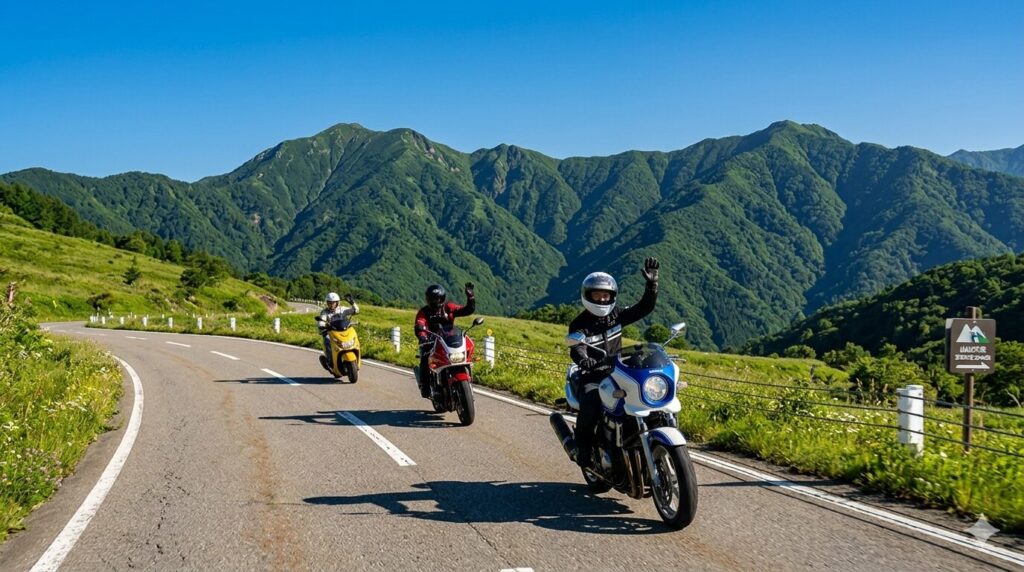
- Motorcycle Greeting Culture “Yaeh”
- Rider Hand Signals (Slow Down = Warning)
- Hidden Driver Communication You Must Notice
- Real Story: When a Signal Prevented an Accident
- Practical Actions: How to Ride Safely in Japan
- Conclusion
- FAQ
- Related Articles
- 🎧 Drive into the golden era: Minako Honda – Oneway Generation
Introduction
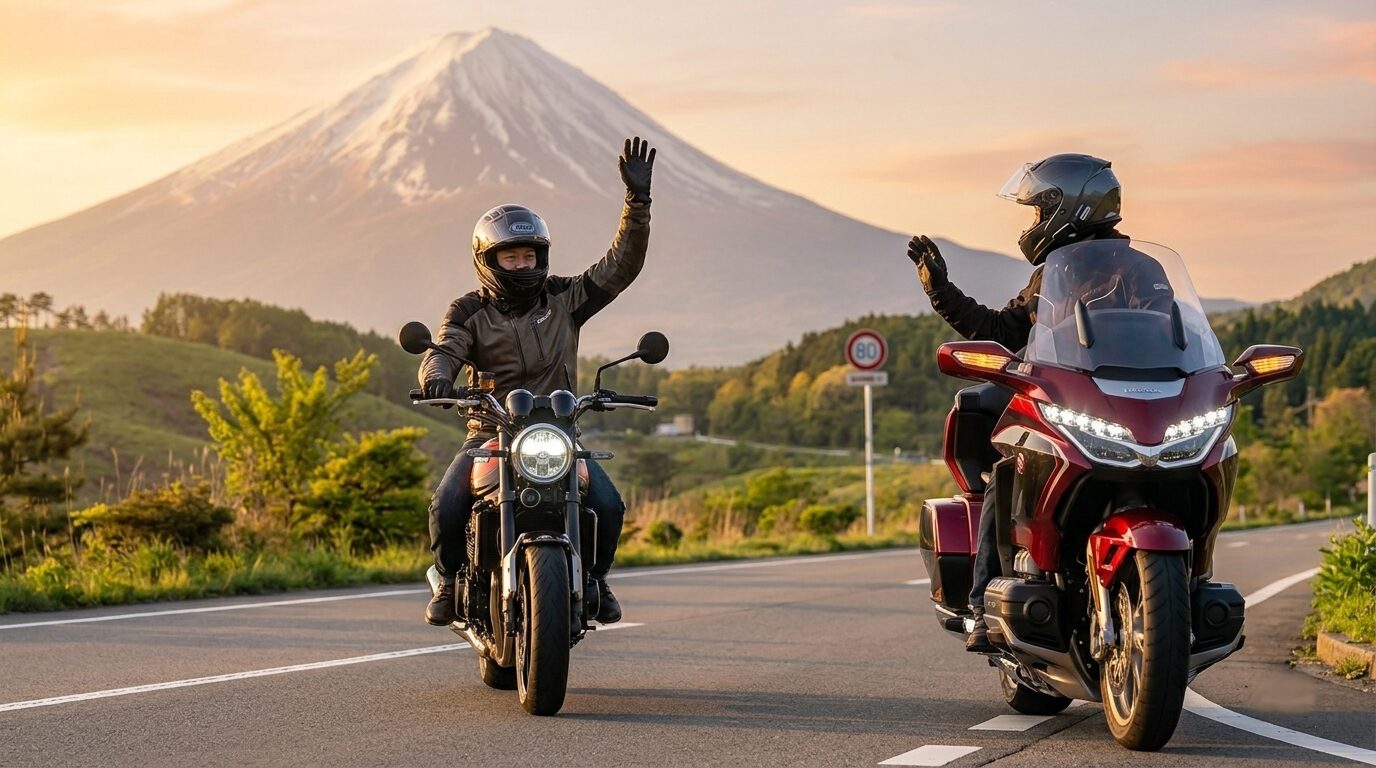
A car ahead flashes its hazard lights—just once.
No braking. No turn. No obvious reason.
You slow down, unsure.
But everyone else moves naturally, as if nothing happened.
And that’s when it hits you:
You’re not reading the road.
You’re missing the conversation.
In Japan, riding isn’t just about rules.
It’s about understanding the people around you—without a single word.
👉 For a complete safety overview, see: Motorcycle Touring Safety in Japan
👉 Learn the rules first: Motorcycle Laws in Japan for foreign riders
Who This Article Is For
- Foreign riders visiting Japan for the first time
- Riders confused by Japanese driving behavior
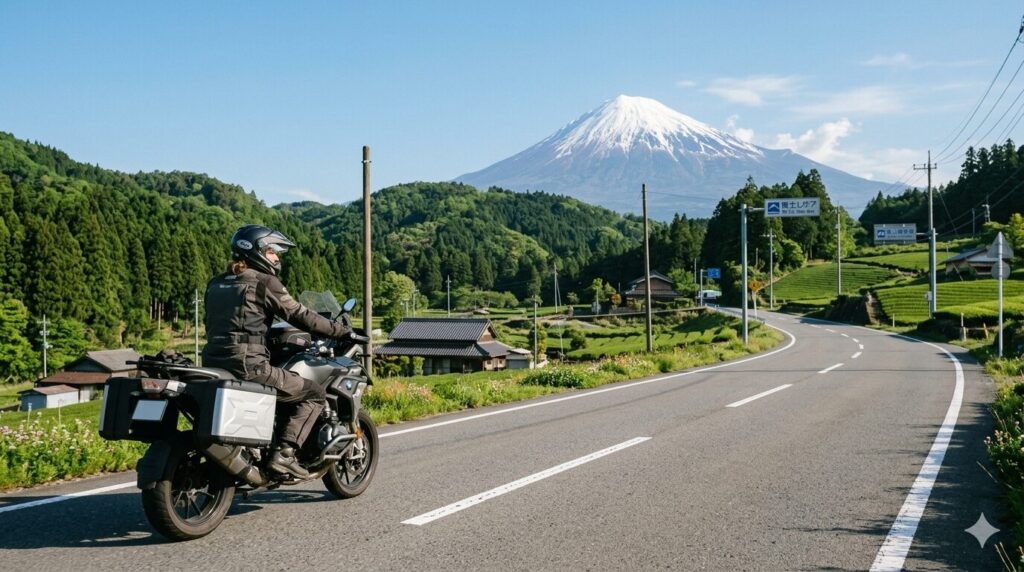
- Motorcycle tourists planning routes like Mt. Fuji or Hokkaido
- Anyone who wants to ride safely and avoid misunderstandings
🎧 Song of the Day: The Pretenders – Don’t Get Me Wrong
Hand-picked 80s songs for touring, driving, and exploring Japan’s golden era.
The 1980s marked Japan’s golden age — when Japanese motorcycles, synthesizers, black audio electronics, car audio systems, karaoke machines, City Pop, and model kits helped shape modern global culture.
👇 Press play before reading
Before you try to decode Japan’s road signals, press play. Let “Don’t Get Me Wrong” by The Pretenders set the tone—because here, misunderstanding isn’t just awkward… it can be dangerous.
At first listen, this track feels light and catchy, a perfect slice of 80s music with bright energy and polished audio clarity. But beneath that pop surface lies a deeper message about miscommunication. The tight production, subtle electronic sound, and restrained use of synth reflect an era when music was becoming cleaner, sharper—every detail intentional.
That same attention to nuance was being perfected in Japan. Yamaha’s craftsmanship, Roland’s synth innovation, and Sony’s Walkman culture helped define global Japanese music culture, where listening closely mattered. Sound wasn’t just heard—it was interpreted.
And that’s exactly how Japanese roads work.
A quick flash of headlights, a slight hand gesture, hazard lights blinking for a second—these aren’t random. They’re a language. Miss the meaning, and you miss the message.
But here’s the mindset shift: don’t fear it—enjoy it.
Even if Japan’s road etiquette feels different from your home country, treat it like a game. Learn the signals, read the rhythm, and respond in kind. Suddenly, the road becomes a shared conversation.
Somewhere in Shizuoka, riding through quiet streets, you’ll realize…
You’re not just driving.
You’re understanding.
Press play—and don’t get it wrong.
🎧 Bonus Track Awaits
Finish the article to unlock a hidden track for your ride.
If you love “Don’t Get Me Wrong” by The Pretenders, here’s a Japanese 80s track you absolutely need to hear.
And if you’re into Japan City Pop, this one will hit you right in the heart.
https://www.hamagolden.tokyo/en/japanese-motorcycle-etiquette-guide/#toc32
Why Japanese Road Signals Can Save Your Life
In Japan, drivers and riders communicate constantly—but rarely with words.
Instead, they use:
- Hazard lights
- Hand gestures
- Subtle movements
If you understand these signals, you gain a huge advantage.
If you don’t, you miss warnings that could prevent accidents.
👉 For full safety context: Motorcycle Touring Safety in Japan
Hazard Lights in Japan (Meaning + What You Should Do)
“Thank You” Signal
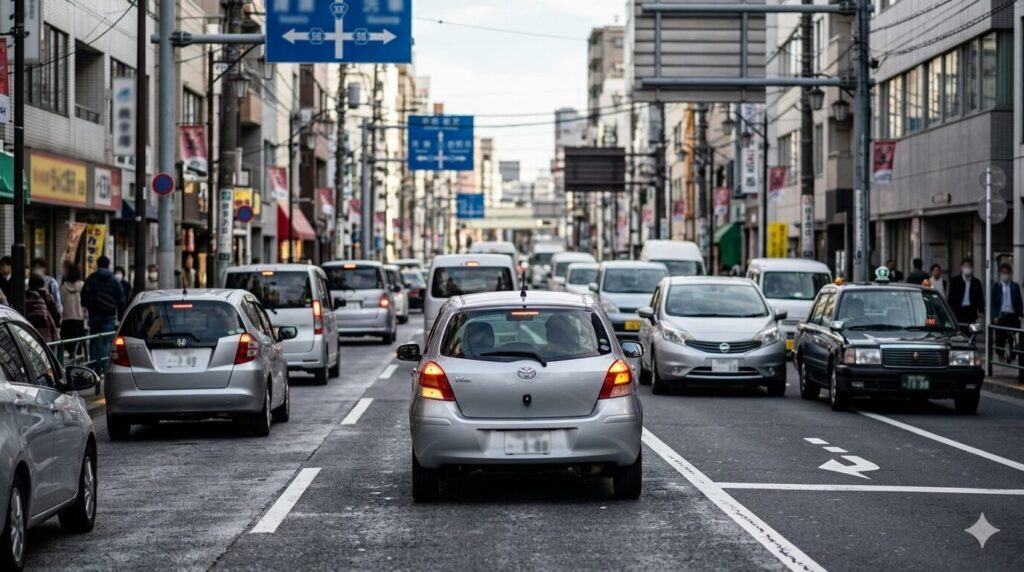
In Japan, hazard lights often mean:
👉 “Thank you”
Used when:
- Someone lets you merge
- Changing lanes
- Being given space
✅ What You Should Do
- Stay calm
- Maintain your speed
- Recognize it as courtesy
Real Danger Signal (Original Meaning)
Hazard lights are still used for their true purpose:
- Sudden stops
- Roadside parking
- Breakdowns
✅ What You Should Do
- Reduce speed
- Increase distance
- Prepare for unexpected stops
Expressway Hazard Warning (Critical)
On highways, hazard lights can mean serious danger ahead.
- Sudden traffic jam
- Accident ahead
✅ What You MUST Do
- Slow down immediately
- Cover your brakes
- Prepare to stop
👉 This is one of the most important signals in Japan.
Motorcycle Greeting Culture “Yaeh”
Where It Happens
You’ll see it in:
- Hokkaido
- Venus Line in Nagano
- Mt. Fuji area in Shizuoka
- Aso in Kumamoto
- Iroha-zaka in Nikko, Tochigi
- Lake Hamana in Hamamatsu, Shizuoka
- Lake Biwa in Shiga
What You Should Do
- Small wave or nod
- Keep control
- Don’t overreact
👉 It’s about connection, not performance
Rider Hand Signals (Slow Down = Warning)
Police / Speed Trap Warning
Riders may signal:
👉 Hand moving downward
Meaning:
- Police ahead
- Speed enforcement
✅ What You Should Do
- Reduce speed immediately
- Stay alert
Road Hazard Signals
Signals may indicate:
- Obstacles
- Dangerous curves
- Traffic issues
✅ What You Should Do
- Slow down
- Scan ahead
Hidden Driver Communication You Must Notice
Indicator Reminder
If your signal is on:
👉 Others may notify you
Action
- Check immediately
- Turn it off
Eye Contact at Intersections
Drivers often use eye contact.
Action
Don’t assume priority
Confirm intention
Flashing Headlights = “I Let You Go” (What You Should Do)
If an oncoming driver flashes their headlights, it often means they are giving way to you.
This commonly happens when you are turning right at an intersection.
However, never assume it is completely safe.
Always check for pedestrians, cyclists, and other vehicles before proceeding.
Real Story: When a Signal Prevented an Accident
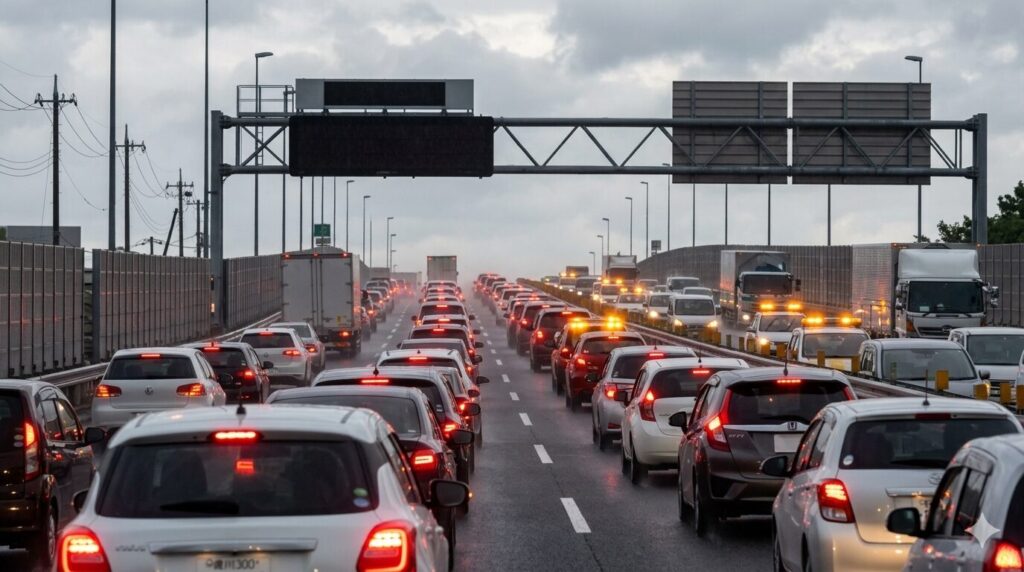
I was riding on the Tomei Expressway when traffic suddenly slowed.
The car ahead flashed its hazard lights.
At first, I thought it was just a polite signal—but within seconds, I saw brake lights stacking up ahead.
I slowed down immediately.
A few hundred meters ahead, traffic had completely stopped due to an accident.
That single signal gave me enough time to react.
Practical Actions: How to Ride Safely in Japan
- Always observe signals
- Assume every signal has meaning
- Ride predictably
- Don’t rush
👉 Prepare properly: Ultimate Japan Motorcycle Packing List
👉 Plan your route: Ultimate Guide to Motorcycle Touring in Japan
Conclusion
Japanese road etiquette is not just culture—it’s communication.
If you understand it:
👉 You ride safer
👉 You feel confident
👉 You enjoy the journey
Ignore it—and you miss critical information.
👉 Before learning Japanese motorcycle etiquette, make sure you understand the traffic laws. See our complete Motorcycle Laws in Japan guide for foreign riders.
FAQ
Q1: Why do Japanese drivers use hazard lights?
A: To say thank you or warn of danger.
Q2: What is “Yaeh” in Japan?
A: A friendly greeting between motorcyclists.
Q3: Are hand signals common in Japan?
A: Yes, especially among riders to warn about danger.
Q4: Is it important to understand etiquette?
A: Yes, it improves safety and communication.
Related Articles
- Why Smart Riders Skip Tokyo — And Discover Japan’s Hidden Motorcycle & 80s Hobby Culture Paradise Instead
- Motorcycle Touring Safety in Japan
- Ultimate Guide to Motorcycle Touring in Japan
- Best Season for Motorcycle Touring in Japan
- Mount Fuji Motorcycle Touring Guide in Japan
- Ultimate Japan Motorcycle Packing List
🎧 Drive into the golden era: Minako Honda – Oneway Generation
👇 Feel the golden era again:
Minako Honda – Oneway Generation
Bright, energetic, and full of that unmistakable 80s Japanese pop sound, this song captures the spirit of youth pushing forward—no looking back.
The lyrics tell the story of a new generation chasing freedom, independence, and their own path, even when it means breaking away from expectations.
Bonus track: Pretenders – Day After Day
Perfect for a smooth, easy ride.
Makes every drive feel effortless—just right.
👇 Feel the golden era:
🎧Every article features a curated 80s hit or Japanese City Pop track.
Press play and experience how Japan, synth culture, and 80s music shaped global sound.
👉 How Japan Shaped Modern Music: The 1980s Synth Revolution, Sony Walkman, and the Rise of Global Sound Culture
👉 80s Music Culture
👉 80s Hobby Culture