- Introduction
- Who This Article Is For
- Why the Best Mountain Roads in Japan Are Different
- ⚠️ Important Safety Notes for Japan Mountain Riding
- Best Mountain Roads in Japan (Top Scenic Routes)
- Hakone Turnpike – Japan’s Most Famous Riding Road
- Mount Fuji 5th Station – Ride Japan’s Most Iconic Mountain
- ⚠️ Important: Mount Fuji 5th Station Access Restrictions
- Venus Line (Nagano) – Japan’s Most Scenic Mountain Road
- Riding the Venus Line – A Personal Experience
- Aso (Kumamoto) – Ride Inside a Volcano
- Norikura Skyline – Above the Clouds
- Shiga Kusatsu Road – Japan’s Highest National Road
- Irohazaka – Legendary Hairpins
- Bandai-Azuma Skyline – The Sky Road
- Mount Haruna – Initial D Legendary Route
- ⚠️ Real Riding Experience: Afternoon Ride on the Venus Line (Late July)
- Why Japan’s Motorcycle Culture Is Unique
- Where to Experience This Culture: Shizuoka
- Best Seasons for Riding the Best Mountain Roads in Japan
- Practical Motorcycle Touring Tips
- How to Start Riding in Japan
- Recommended Beginner Gear
- Conclusion
- FAQ
- Related Articles
Introduction
Japan is quickly becoming one of the best mountain roads in Japan destinations for motorcycle touring.
But here’s what makes Japan different.
This isn’t just about riding roads.
It’s about experiencing a motorcycle culture shaped by craftsmanship, precision, and lifelong passion.
From Mount Fuji’s volcanic roads to Nagano’s alpine plateaus, the best mountain roads in Japan deliver something rare:
- Smooth technical riding
- Stunning scenery
- Deep cultural experience
And something most riders don’t expect:
Japan isn’t just a place to ride.
It’s a place where motorcycle culture connects with hobby culture, craftsmanship, and lifelong creativity.
This guide covers:
- Best mountain roads in Japan
- Where to ride
- When to go
- How to plan
- Why Japan is unique
👉 For a complete travel plan including routes, costs, and rentals:
Ultimate Guide to Motorcycle Touring in Japan
Who This Article Is For
This guide is perfect for:
- Motorcycle touring enthusiasts
- Riders planning Japan trips
- Scenic road lovers
- Adventure travelers
- Japan culture fans
- Riders looking for new destinations
Why the Best Mountain Roads in Japan Are Different
Perfect Roads Built for Precision Riding
The best mountain roads in Japan feel like they were designed specifically for motorcycles.
Even remote mountain areas offer:
- Smooth asphalt
- Clean corners
- Clear road markings
- Consistent guardrails
This isn’t accidental.
Japan’s manufacturing culture — the same culture behind Honda, Yamaha, and Suzuki — influences road design.
This is the same attention to detail seen in:
→ Explore Japanese precision culture:
Tamiya Hobby Culture Guide
Japan builds things carefully.
Roads included.
Landscape Variety in a Single Ride
Few countries offer this much diversity.
In one day you can ride:
- Volcanic mountains
- Alpine plateaus
- Dense forests
- Coastal roads
This creates a uniquely addictive riding experience.
⚠️ Important Safety Notes for Japan Mountain Riding
While Japan’s mountain roads offer incredible natural beauty, they also come with real risks that riders should be aware of.
Watch for road hazards such as:
- Wet leaves
- Gravel after rain
- Small rocks
- Fallen branches
- Sudden fog
These conditions can make road surfaces unexpectedly slippery and significantly increase the risk of losing traction.
Animals such as deer and wild boar may suddenly enter the road, especially in remote or forested areas.
These encounters are more likely during:
- Early morning
- Evening and dusk
- Low-traffic periods
Collisions with wildlife can cause serious accidents, even at moderate speeds.
Weather Changes Quickly in Summer (June–August)
Mountain weather in Japan can change rapidly, especially during summer.
Even if it’s sunny at lower elevations, sudden heavy rain or thunderstorms may develop in the mountains.
Heavy rain can cause:
- Slippery road surfaces
- Poor visibility
- Sudden temperature drops
- Lightning risk
Always carry rain gear and store it in an easy-to-access location. Waterproof gloves and boots are also strongly recommended.
If dark gray clouds begin forming or visibility worsens, consider stopping at a parking area and waiting for conditions to improve. Avoid riding through heavy rain whenever possible.
Changing Light Conditions
Mountain roads often shift between bright sunlight and deep shade.
Visibility can also change suddenly when entering tunnels or forested sections.
These conditions can make hazards harder to detect and increase accident risk.
To improve safety:
- Avoid dark or tinted helmet visors
- Avoid dark sunglasses
- Slow down in shaded areas and tunnels
Limited Shops and Fuel
Gas stations and shops in mountain areas often close earlier than in cities.
Before entering mountain routes:
- Fuel up in advance
- Carry water and snacks
- Plan rest stops ahead of time
Best Time to Ride Mountain Roads
In general, early morning or late morning offers the safest riding conditions.
Afternoon riding increases risks due to:
- Sudden weather changes
- Reduced visibility
- Increased wildlife activity
- Tourist traffic
For the safest and most enjoyable experience, plan to ride in the morning and avoid late afternoon or evening whenever possible.
⚠️ Important: Traffic Congestion
The famous scenic motorcycle roads can become heavily congested with cars and motorcycles during peak holiday periods in Japan:
- Golden Week (Early May)
- Summer holidays (July–August)
- Silver Week (September)
Traffic is especially heavy on weekends and public holidays.
Best Tip:
Visit on weekdays for a smoother and more enjoyable ride.
Best Mountain Roads in Japan (Top Scenic Routes)
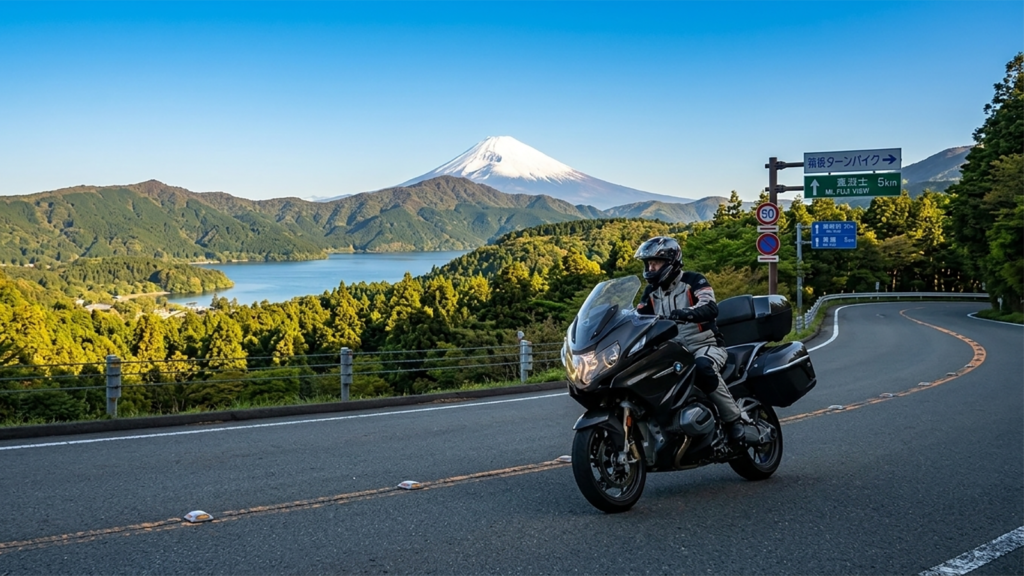
Hakone Turnpike – Japan’s Most Famous Riding Road
Located near Tokyo, the Hakone Turnpike is one of the most famous motorcycle roads in Japan.
- Location: Kanagawa
- Length: ~15 km
- Type: Toll road
What makes it special:
- Smooth sweeping curves
- Elevation changes
- Mount Fuji views
- Smooth pavement
Best time: Early morning for clear views.
👉 Stop at Daikanzan Observatory for stunning views.
👉 Explore more routes: Hakone Motorcycle Route Guide
Mount Fuji 5th Station – Ride Japan’s Most Iconic Mountain
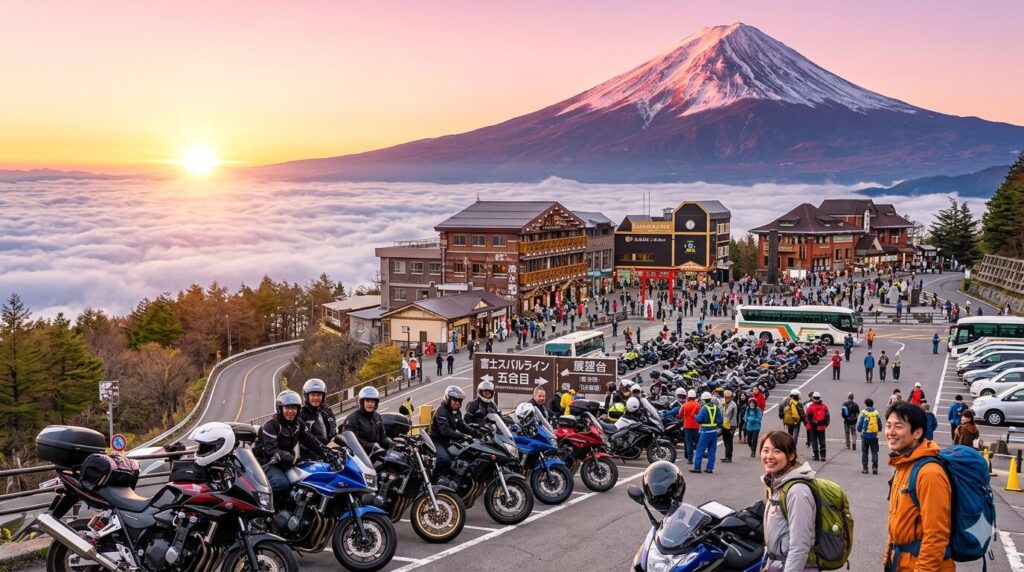
Yes — you can ride up Mount Fuji.
This is one of the most unique riding experiences in Japan.
Location: Shizuoka or Yamanashi
Elevation: 2,300m
Major Route: Fuji Subaru Line
Highlights:
- Ride above the clouds
- Volcanic landscapes
- Changing scenery
⚠️ Important: Mount Fuji 5th Station Access Restrictions
Private vehicles, including motorcycles, are restricted on Mount Fuji 5th Station routes — including the Fuji Subaru Line — typically from mid-July to early September.
This restriction is implemented to:
- Reduce traffic congestion during climbing season
- Protect the natural environment and reduce emissions
- Improve safety and reduce crowding at the 5th Station
Always check the latest access information before planning your ride.
👉 Explore the full guide: Mount Fuji 5th Station Motorcycle Guide
Venus Line (Nagano) – Japan’s Most Scenic Mountain Road
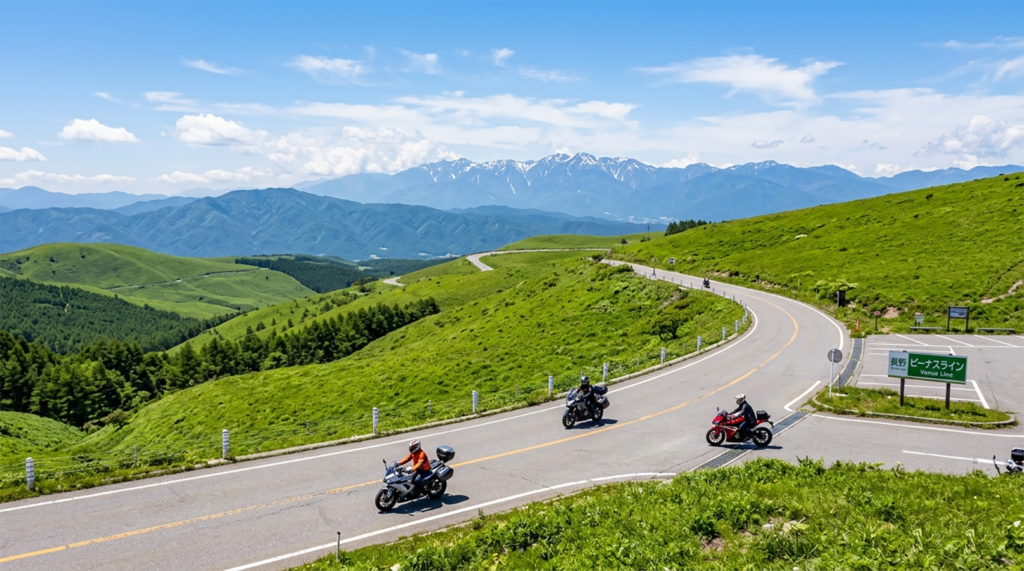
The Venus Line is widely considered Japan’s most scenic motorcycle road.
- Location: Nagano
- Length: 76 km
- Elevation: 2,000m
Highlights:
- Open grasslands
- Wide curves
- Panoramic mountain views
- Minimal traffic lights
This is less about speed — more about pure riding enjoyment.
Riding the Venus Line – A Personal Experience
You lean into a wide curve.
The wind gets colder as you climb higher.
Suddenly, the trees disappear.
And then — the view opens.
Mountains stretch endlessly in every direction.
The road flows smoothly ahead.
You forget about speed.
You forget about time.
This is why riders fall in love with Japan.
Aso (Kumamoto) – Ride Inside a Volcano
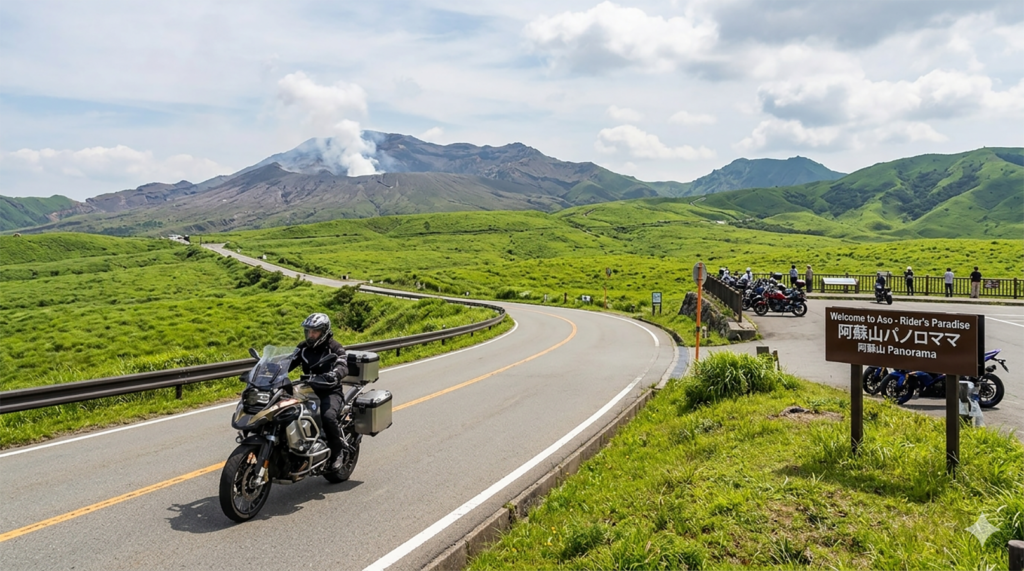
Mount Aso offers a surreal experience.
You’re literally riding inside a giant volcano.
Key routes:
- Aso Milk Road
- Kusasenri
- Aso Panorama Line
- Kennys roads
- Daikanbo Lookout
Highlights:
- Relaxed riding
- Wide landscapes
- Wide roads
- Volcanic terrain
Norikura Skyline – Above the Clouds
Elevation: 2,700m
Location: Nagano / Gifu
One of Japan’s highest roads.
Expect:
- Alpine scenery
- Cold temperatures
- Thin air
Shiga Kusatsu Road – Japan’s Highest National Road
Elevation: 2,172m
Location: Nagano / Gunma
Highlights:
- Snow walls (spring)
- Volcanic terrain
- Wide sweeping curves
Irohazaka – Legendary Hairpins
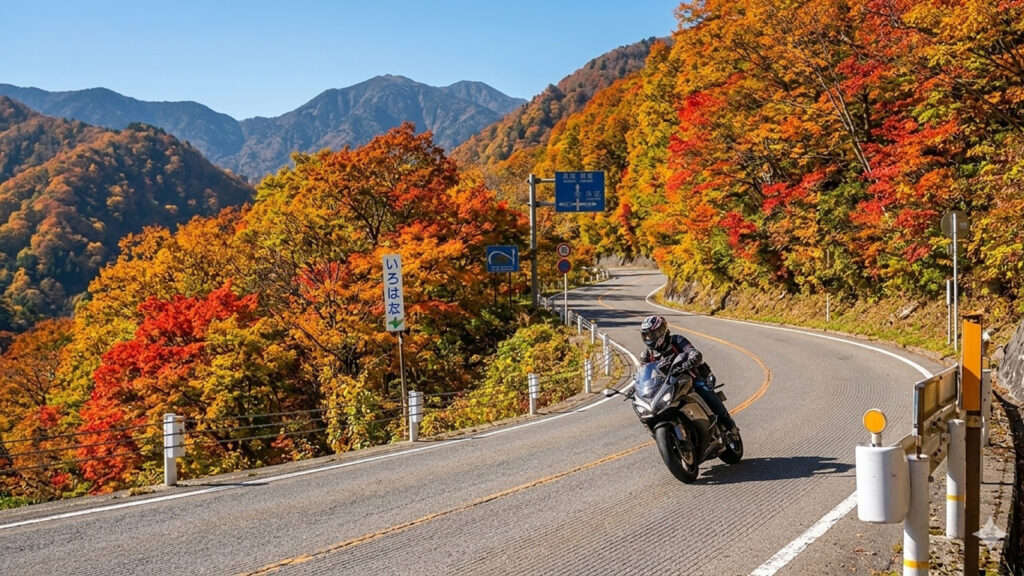
48 hairpin turns.
Perfect for:
- Technical riding
- Scenic stops
👉 Explore the full guide: Nikko Scenic Motorcycle Route
Bandai-Azuma Skyline – The Sky Road
Location: Fukushima
Length: 29 km
Feels like riding on Mars.
Mount Haruna – Initial D Legendary Route
Perfect for advanced riders.
Legendary touge road
Tight corners
Technical riding
⚠️ Real Riding Experience: Afternoon Ride on the Venus Line (Late July)
I once rode the Venus Line in late July, starting around noon.
As expected, summer mountain weather changed quickly.
Dark cumulonimbus clouds started forming in the distance, and within minutes, heavy rain began.
I had anticipated this and put on my rain gear before heading into the mountains.
However, I made one critical mistake.
My gloves and boots were not waterproof.
Within minutes, my hands and feet were completely soaked.
Wet gloves made throttle control uncomfortable, and wet boots became cold and unpleasant.
But the biggest issue came next.
I had prepared my helmet visor with anti-fog treatment.
However, I didn’t expect my sunglasses to fog up.
Suddenly, my visibility dropped.
I had no choice but to open the visor slightly while riding in the rain.
Later, as evening approached, visibility became even worse.
The sunglasses that helped during bright daylight became too dark in shaded areas and tunnels.
At one point, I almost collided with a bicycle because I couldn’t see clearly.
I quickly removed my sunglasses and stored them in my bag.
That experience taught me an important lesson:
Mountain riding conditions change quickly, and small mistakes can become dangerous.
Lessons Learned
- Afternoon mountain riding increases risk
- Avoid dark sunglasses in mountains
- Weather changes rapidly in summer
- Visibility drops quickly in shaded areas
Best Advice:
Ride early in the morning and finish before afternoon.
Why Japan’s Motorcycle Culture Is Unique
Japan didn’t just create motorcycles.
It created a lifelong mechanical culture.
This culture connects:
- Motorcycles
- Model kits
- DIY
- Craftsmanship
For example:
Many riders grew up building:
→ Mini 4WD racing cars
→ Gunpla model kits
These hobbies build mechanical understanding.
Explore deeper:
→ Mini 4WD Culture Guide
→ Gunpla Beginner Guide
Japan didn’t create toys.
It created a creative culture.
Where to Experience This Culture: Shizuoka
Shizuoka is the center of Japan’s hobby culture.
Home to:
- Tamiya
- Model manufacturers
- Hobby events
This is where engineering culture begins.
Explore here:
→ Shizuoka Hobby Culture Guide
This is why many riders eventually visit Shizuoka.
Because Japan’s riding culture starts with craft culture.
Best Seasons for Riding the Best Mountain Roads in Japan
Spring
Cherry blossoms and mild weather
Summer
Cool mountain riding
Autumn
Best season — stunning foliage
Winter
Many roads closed
Practical Motorcycle Touring Tips
Ride on left side
Carry international license
Fuel early in mountains
Use “Michi-no-Eki” roadside stations.
They offer:
- Food
- Restrooms
- Local products
How to Start Riding in Japan
Step 1
Plan route
Step 2
Rent motorcycle
Step 3
Choose season
Step 4
Ride
Recommended Beginner Gear
Helmet
Gloves
Touring Jacket
Beginner friendly:
→ Motorcycle Touring Gear Guide
Conclusion
The best mountain roads in Japan offer more than scenery.
They offer emotion.
They connect:
- Riding
- Craftsmanship
- Culture
Japan isn’t just a destination.
It’s an experience.
Start your journey:
- Plan your trip
- Rent a bike
- Ride Japan
Your journey starts here.
FAQ
Q: Is Japan good for motorcycle touring?
Yes. Japan offers some of the best mountain roads in the world.
Q:Do I need an international license?
Yes. Most visitors need an International Driving Permit.
Q:Best season for riding?
Spring and autumn are ideal.
Q:Is Japan safe for foreign riders?
Yes. Japan is one of the safest countries for riders.
Q: Can beginners ride?
Yes. Many roads are beginner-friendly.
Related Articles
- Why Smart Riders Skip Tokyo — And Discover Japan’s Hidden Motorcycle & 80s Hobby Culture Paradise Instead
- The Ultimate Japanese Motorcycle Culture Guide
- Best Coastal Motorcycle Routes in Japan
- How to Rent a Motorcycle in Japan
- Motorcycle Touring Safety in Japan
- Motorcycle Travel Tips for Japan
- Best Time for Motorcycle Touring in Japan