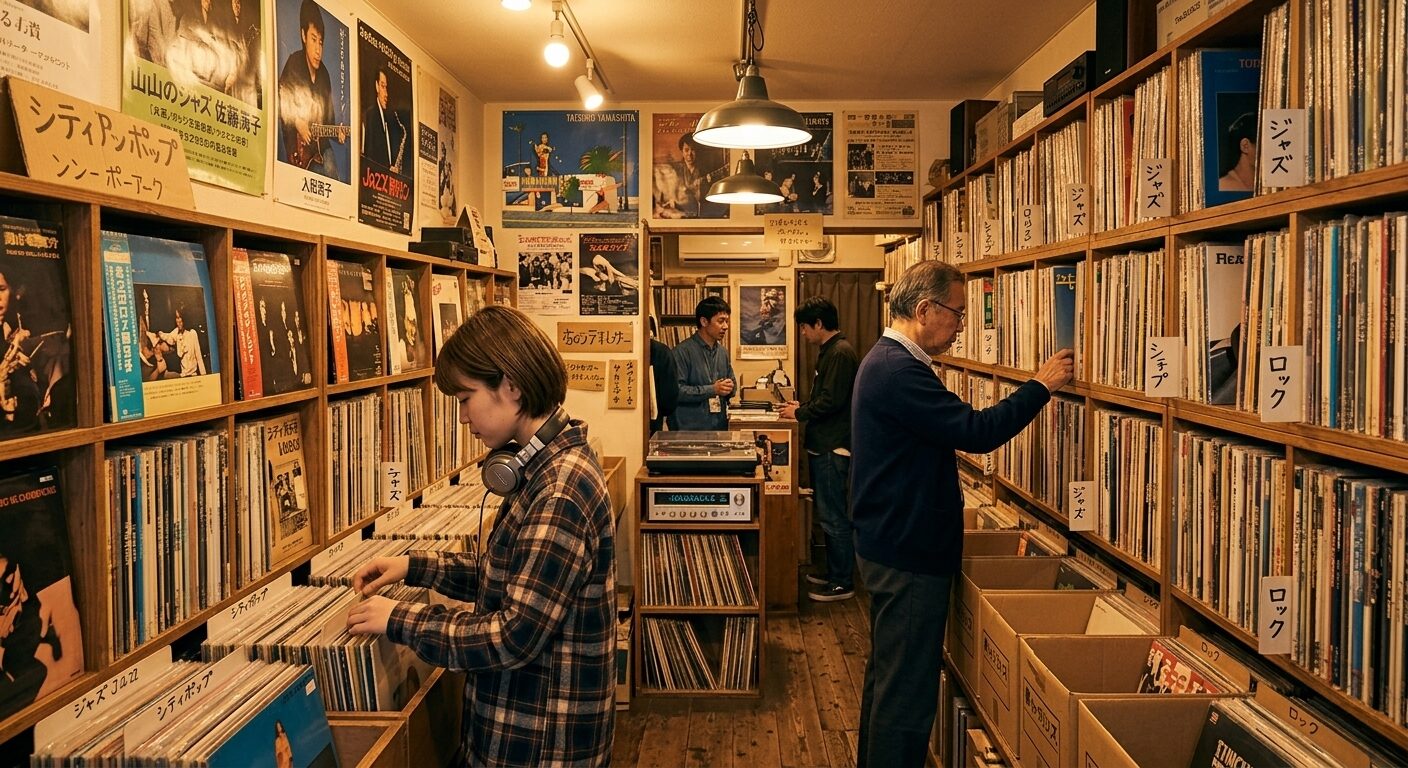
- Introduction: The Place Where Music Was Not Forgotten
- 🎧 Song of the Day: Timely!! by Anri
- The Global Disappearance of Vinyl
- Why Vinyl Survived in Japan
- The Rise of Japanese Record Stores
- The Discovery by Global DJs
- The City Pop Revival Movement
- Why Japanese Used Records Are the Best in the World
- The Unique Features of Japanese Vinyl Records (What the World Often Doesn’t Know)
- A Personal Story: The Difference Between Japanese and Western CDs
- The Hidden Value: More Than Just Music
- What You Should Do Next
- Japan as the Global Vinyl Archive
- Why International Buyers Come to Japan
- Tokyo Record Culture: A Living Experience
- Hamamatsu: The Origin of Japan’s Sound Culture
- Cultural Significance: Preservation vs Consumption
- Why You Should Visit Japan for Vinyl Hunting
- What You Should Do Next (CTA)
- Internal Reading Path (Increase Your Knowledge)
- FAQ
- Final Thought
- Featured Snippet
- 🎧 Drive into the golden era
- Related Articles
Introduction: The Place Where Music Was Not Forgotten
Imagine this.
You walk into a quiet record shop in Tokyo.
Shelves stacked from floor to ceiling. Perfectly aligned vinyl.
No dust. No chaos. No neglect.
You pick up a record from 1982.
It looks… almost new.
And that’s the moment you realize something:
While the world abandoned vinyl, Japan protected it.
This article will show you:
- Why Japanese vinyl is globally trusted
- How Japan became the world’s record archive
- Why DJs and collectors fly to Japan
- How you can experience it yourself
If you care about music—even a little—this will change how you see it.
🎧 Song of the Day: Timely!! by Anri
Hand-picked 80s songs for touring, driving, and exploring Japan’s golden era.
The 1980s marked Japan’s golden age — when Japanese motorcycles, synthesizers, black audio electronics, car audio systems, karaoke machines, City Pop, and model kits helped shape modern global culture.
👇 Press play before reading
To understand Japanese music culture, you cannot ignore City Pop.
One of the most iconic albums from this genre is:
Timely!! – Anri (1983)
This album represents the peak of Japan’s urban sound — blending pop, funk, and smooth electronic production into a polished, sophisticated style that defined the era.
Featured Track: WINDY SUMMER
Bright, breezy, and effortlessly stylish, this track captures the feeling of coastal Japan in the 1980s — a world of neon lights, ocean drives, and analog warmth.
Why this song matters:
The clean production, layered synthesizers, and rhythmic groove reflect the influence of Japanese audio technology and studio precision during the 1980s. It’s not just a song — it’s a sonic snapshot of Japan’s golden age of music.
Press play and experience the sound of City Pop.
A Personal Story: My First City Pop Album
In 1983, this wasn’t just another album.
Timely!! by Anri was the first album I ever bought with my own money.
At the time, I was just a kid.
I saved my allowance, walked into a record store, and chose this album without fully understanding what it meant.
And now, decades later, I’m sharing it with readers around the world as one of the defining albums of City Pop.
Honestly, I never imagined this would happen.
Back then, my experience of the music was probably the same as many international listeners today.
I didn’t understand the lyrics about love and relationships.
I simply enjoyed the sound.
The groove.
The atmosphere.
The feeling.
And that’s the power of this music.
It goes beyond language.
Like many people in Japan at the time, I was careful not to damage the vinyl record.
So I recorded it onto a Sony cassette tape and listened to it over and over until the tape began to wear out.
Looking back now, I realize something interesting.
Maybe this is one reason why so many Japanese vinyl records remain in such good condition today.
That attention to detail — that respect for quality — is part of Japanese culture.
And yes, I still own that original album.
Even now, it feels like holding a piece of history.
Note:
As this blog continues to grow, I’ll be adding carefully selected songs to each article — so feel free to come back and discover more sounds that shaped Japan and the world.
The Global Disappearance of Vinyl
In the early 2000s, vinyl records were considered obsolete.
The world moved fast:
- CDs replaced records
- MP3 replaced CDs
- Streaming replaced everything
Convenience won.
Record stores across the US and Europe shut down. Entire collections were discarded. Warehouses were cleared. Music became data.
But here’s the key question:
What happens when a culture prioritizes convenience over preservation?
It loses history.
That’s exactly what happened.
Except in one country.
Why Vinyl Survived in Japan
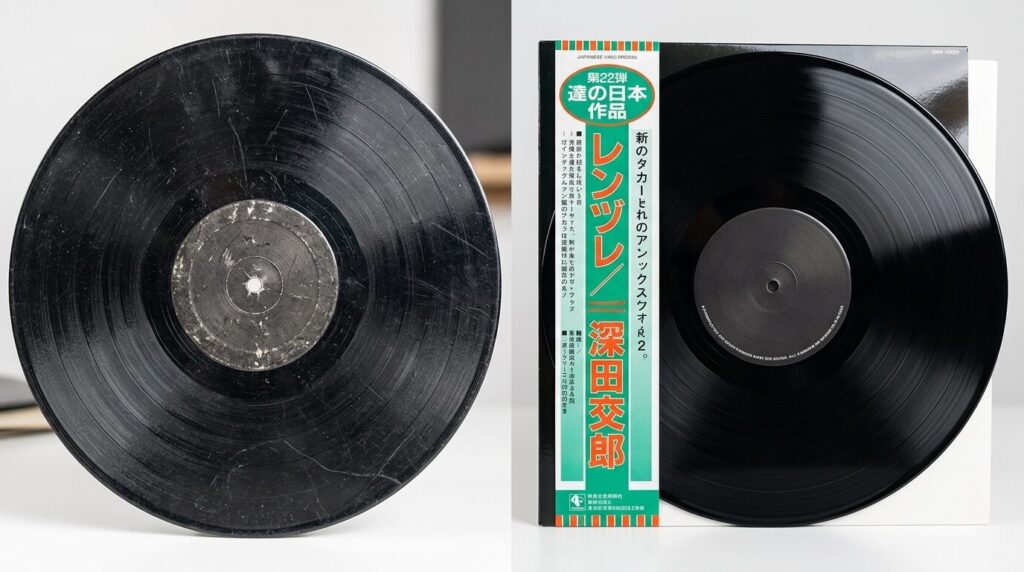
Japan did not follow the same path.
Vinyl never fully disappeared.
Why?
Because Japanese culture treats objects differently.
1. Respect for Ownership
People don’t “use and throw away.”
They care, maintain, and preserve.
2. Indoor Storage Culture
- Controlled environments
- Minimal sunlight exposure
- Protection from humidity
3. Packaging Mindset
- Original sleeves kept
- Plastic covers added
- Obi strips preserved
4. Collector Identity
Owning something means responsibility, not consumption.
This mindset created something powerful:
A country where physical media could survive long-term.
The Rise of Japanese Record Stores
While record shops were closing globally, Japan evolved.
Instead of disappearing, stores became more specialized.
The Japanese Model
- Genre-specific stores
- Deep catalog curation
- Expert staff knowledge
- High-quality grading systems
Walking into a major Tokyo record store is not shopping.
It’s exploration.
You don’t browse randomly.
You dig with intention.
And here’s the business insight:
Specialization increases perceived value.
Instead of selling everything to everyone, Japan built ecosystems for enthusiasts.
That’s why they survived.
The Discovery by Global DJs
In the 2000s, something unexpected happened.
International DJs started visiting Japan.
Not for performances.
For records.
Why DJs Came
- Rare pressings unavailable elsewhere
- Exceptional condition
- Accurate cataloging
- Fair pricing (at the time)
UK club culture played a massive role.
DJs from London, deeply rooted in vinyl digging culture, began discovering Japan’s hidden inventory.
Their reaction was simple:
“How is all of this still here?”
From there:
- European DJs followed
- American collectors joined
- Japan became a global destination
This wasn’t marketing.
This was discovery.
The City Pop Revival Movement
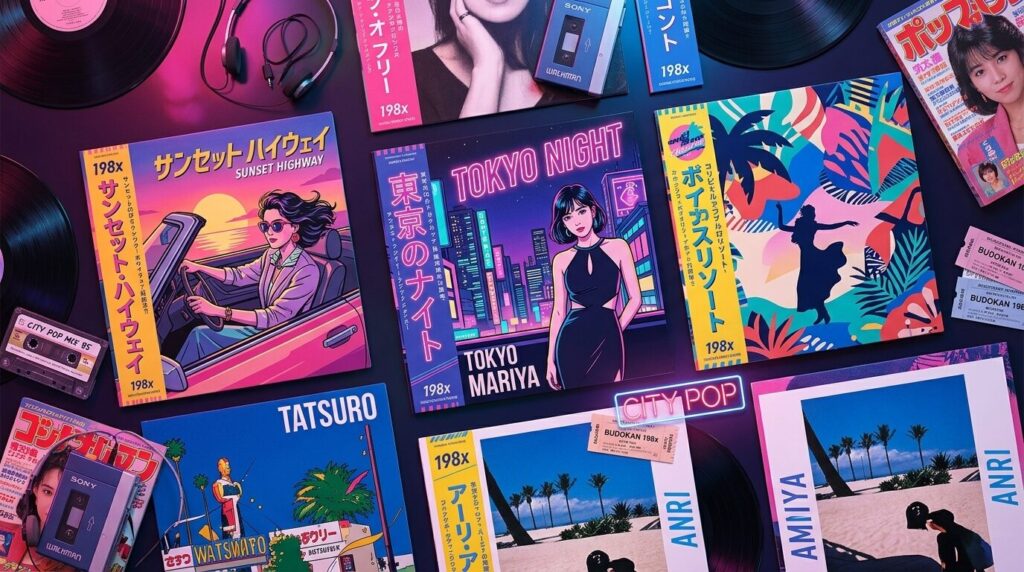
Then came the explosion.
City Pop.
Originally a domestic Japanese genre from the 1970s–80s, it was rediscovered globally through:
- YouTube algorithms
- Vinyl collectors
- DJ sets
Artists like Mariya Takeuchi and Tatsuro Yamashita reached global audiences decades later.
Why City Pop Resonated Globally
- Polished production quality
- Nostalgic yet timeless sound
- High recording standards
And most importantly:
Availability of physical records in Japan
This created a direct link:
Interest → Demand → Travel
People didn’t just stream the music.
They wanted the original vinyl.
And that meant going to Japan.
Why Japanese Used Records Are the Best in the World
Let’s answer the core question directly:
Why do global collectors trust Japanese used vinyl?
1. Careful Ownership Culture
Records are handled gently. Always.
2. Controlled Storage
No garages. No basements. No exposure.
3. Preservation Standards
Sleeves, inserts, obi strips—kept intact.
4. Resale Awareness
People assume items may be resold.
So they maintain value from day one.
Cultural Comparison: Beyond Music
This behavior is not limited to records.
You see it in:
- Used motorcycles exported globally
- Japanese used cars dominating foreign markets
Same pattern:
High care → High quality → High trust
That’s not coincidence.
That’s culture.
The Unique Features of Japanese Vinyl Records (What the World Often Doesn’t Know)
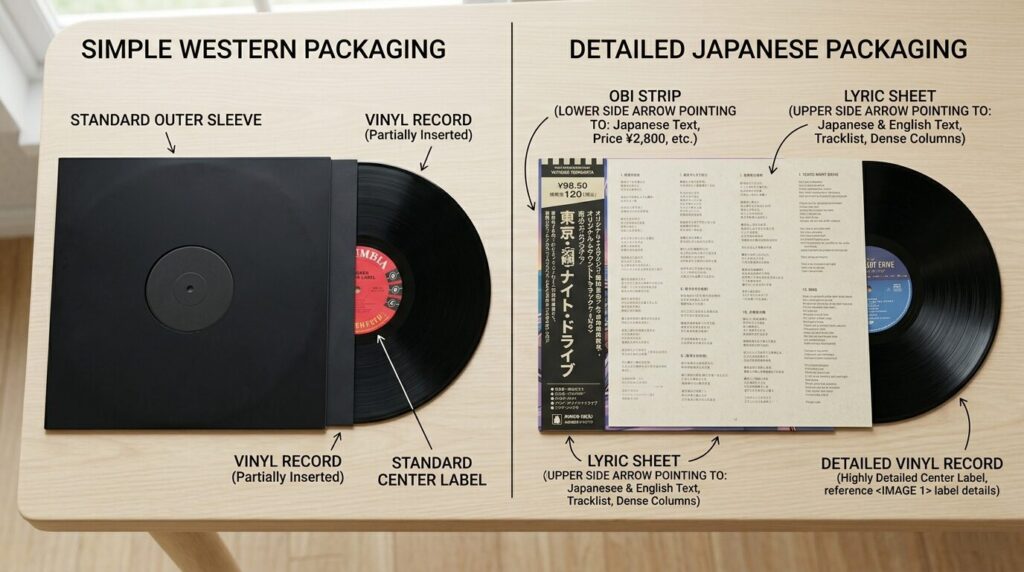
Most people outside Japan don’t realize this:
Japanese vinyl records are physically different from Western releases.
And these differences are not minor.
They reflect a completely different philosophy of music ownership.
Japanese Language Packaging
Unlike Western records, Japanese releases often include:
- Japanese titles and artist names
- Translated album information
- Detailed liner notes in Japanese
This makes the record more than just a product.
It becomes a localized cultural artifact.
For international collectors, this adds a layer of uniqueness that cannot be replicated.
The Obi Strip (A Defining Feature)
One of the most iconic elements of Japanese vinyl is the obi strip.
This is a paper band wrapped around the record sleeve, typically containing:
- Pricing information
- Catalog number
- Promotional text
- Japanese descriptions
For collectors, the presence of an obi strip significantly increases value.
But beyond value, it represents something deeper:
Completeness.
Owning a record with its original obi is like owning history in its original form.
Lyric Sheets: A Small Detail That Means Everything
Here’s something that surprises many international buyers:
Most Japanese vinyl records include printed lyric sheets.
Even for foreign artists.
These inserts often contain:
- Original lyrics
- Japanese translations
- Additional notes
And here’s the emotional part.
When you buy an out-of-print record in Japan and find the lyric sheet still inside…
It feels like discovering something preserved with care across decades.
It’s a small detail.
But it tells a big story.
A Personal Story: The Difference Between Japanese and Western CDs
Let me share a real experience.
Back in the late 1980s, CDs started becoming popular in Japan.
At the time, due to a strong yen, many imported Western CDs were available at lower prices.
As a kid with limited pocket money, I naturally chose the cheaper option.
It felt like a smart decision.
Until I opened the case.
What I Noticed
The imported CD was different:
- No Japanese text
- Simpler booklet
- Fewer pages
- No additional content
Meanwhile, Japanese domestic versions often included:
- Japanese liner notes
- Detailed lyric booklets
- Bonus tracks (sometimes 1–2 extra songs)
That moment hit me harder than expected.
I realized I didn’t just buy a cheaper CD.
I bought a lesser experience.
Why This Matters
This difference reveals something fundamental:
Japan doesn’t just sell music.
It enhances it.
The Japanese version is not just about listening.
It’s about:
- Understanding
- Appreciating
- Preserving
And once you experience that difference…
You start to see why collectors around the world prefer Japanese editions.
The Hidden Value: More Than Just Music
These details—obi strips, lyric sheets, bonus tracks—may seem small.
But together, they create something powerful:
Emotional value.
This is what turns a record into a collectible.
And this is why Japan continues to dominate the global vinyl market.
What You Should Do Next
If you’ve never owned a Japanese pressing, try this:
- Buy one Japanese vinyl or CD
- Compare it with a Western version
- Pay attention to the details
You won’t just hear the difference.
You’ll feel it.
Japan as the Global Vinyl Archive
Let’s connect the dots.
- The world discarded vinyl
- Japan preserved it
- Global demand returned
Result:
Japan became the archive of global music history
This is not exaggeration.
It’s structural reality.
Rare records lost in the West often still exist in Japan.
In business terms:
Japan accumulated undervalued assets and held them long enough for demand to return.
That’s strategic patience.
Why International Buyers Come to Japan
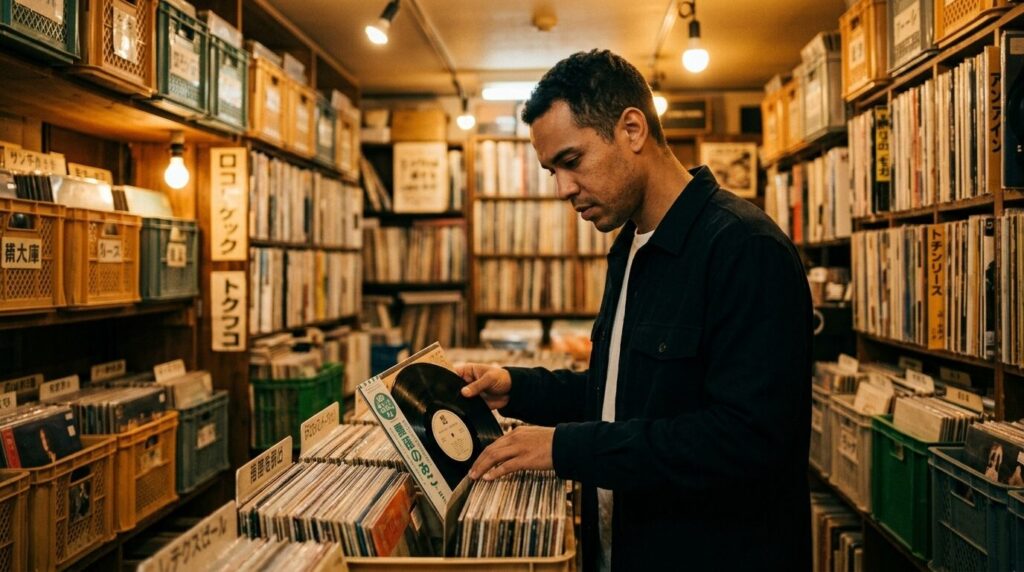
Today, buyers come from all over the world.
Here’s why:
1. Quality Assurance
You trust what you buy.
2. Inventory Depth
Records you cannot find elsewhere exist here.
3. Pricing Advantage
Currency exchange (especially yen weakness) creates opportunity.
4. Market Transparency
Clear grading and pricing systems.
Real Experience Story
A European collector once shared this:
“I spent years searching for a record in Berlin.
I found three copies in one afternoon in Tokyo.”
That’s the difference.
Not better.
Unmatched.
Tokyo Record Culture: A Living Experience
Tokyo is not just a city.
It’s a vinyl ecosystem.
Key Areas
- Shibuya
- Shinjuku
- Shimokitazawa
Within walking distance, you can visit multiple specialized stores.
The Experience
- Digging through crates
- Discovering unknown artists
- Talking with staff
- Listening before buying
This is not e-commerce.
This is immersion.
Hamamatsu: The Origin of Japan’s Sound Culture
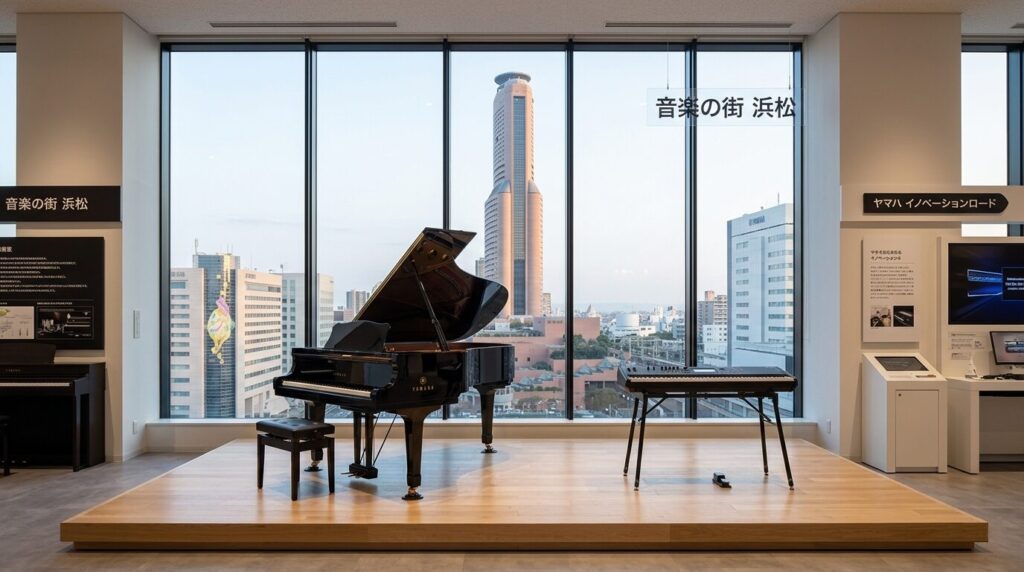
Now let’s go deeper.
To understand Japan’s vinyl culture, you must understand its sound culture.
And that leads us to Hamamatsu.
Located in Shizuoka, Hamamatsu is known as the city of musical instruments.
- Yamaha was founded here
- Kawai developed here
- Instrument manufacturing culture thrives
Why This Matters
Japan didn’t just preserve music.
It built the tools that create music.
So the ecosystem looks like this:
Sound creation → Music production → Physical preservation
That’s why Japan’s position is unique.
Cultural Significance: Preservation vs Consumption
Here’s the core insight:
Most countries consume culture.
Japan preserves it.
That changes everything.
Preservation creates:
- Scarcity over time
- Historical continuity
- Cultural authority
And eventually:
Economic value
Why You Should Visit Japan for Vinyl Hunting
Let’s make it practical.
If you are:
- A collector
- A DJ
- A music lover
Then visiting Japan is not optional.
It’s essential.
What You Gain
- Access to rare records
- Confidence in quality
- Cultural understanding
- A unique experience
This is not shopping.
This is discovery.
What You Should Do Next (CTA)
If this article changed your perspective, don’t stop here.
Step 1
Search within this blog:
- “Japanese record stores guide”
- “Tokyo vinyl guide”
- “City Pop vinyl”
Step 2
Plan your trip:
- Tokyo for record digging
- Shizuoka (Hamamatsu) for sound culture
Step 3
Start small:
Buy your first Japanese vinyl online or from a trusted shop.
Internal Reading Path (Increase Your Knowledge)
Continue exploring:
- Japanese Music Culture Guide
- Tokyo Vinyl Hunting Guide
- Hamamatsu Sound Culture Deep Dive
- Japanese Synthesizer History
FAQ
Why is Japanese vinyl considered the best?
Because of consistent care, storage, and preservation culture.
Is it worth traveling to Japan for records?
Yes. The density, quality, and experience cannot be replicated elsewhere.
Why are prices sometimes higher?
Because you are paying for condition, rarity, and trust.
Final Thought
The world optimized for speed.
Japan optimized for value.
And when time passed, value won.
So here’s the real question:
Are you consuming music… or preserving it?
Your answer will define how you experience it.
Featured Snippet
Japan became the global center of vinyl culture because it preserved records while the rest of the world abandoned them. Today, collectors and DJs travel to Japan for rare, high-quality vinyl and a unique music culture rooted in preservation.
🎧 Drive into the golden era
👇 Feel the golden era again
🎧Every article features a curated 80s hit or Japanese City Pop track.
Press play and experience how Japan, synth culture, and 80s music shaped global sound.
👉 How Japan Shaped Modern Music: The 1980s Synth Revolution, Sony Walkman, and the Rise of Global Sound Culture
👉 80s Music Culture
👉 80s Hobby Culture
Related Articles
- Why Smart Riders Skip Tokyo — And Discover Japan’s Hidden Motorcycle & 80s Hobby Culture Paradise Instead
- How Japan Shaped Modern Music: The 1980s Synth Revolution, Sony Walkman, and the Rise of Global Sound Culture
- Hamamatsu: : The City That Shaped Global Sound (Yamaha, Roland, and Beyond)
- Japanese Electronics Golden Age: Why 80s–90s JDM Appliances Still Fascinate the World
- Japanese Motorcycle Manufacturing Culture: Why Japan Builds the Best
- Why Japan is a Paradise for Hobby Lovers: The Ultimate Travel & Culture Guide to Model Kits, Gunpla, and Shizuoka
- Ultimate Guide to Japanese Hobby Culture: Why Shizuoka is the World’s Model Kit Capital
- Ultimate Guide to Motorcycle Touring in Japan